
Odalovic: Kurti stops at nothing to bolster his position through an anti-Serb campaign; EU acts selectively
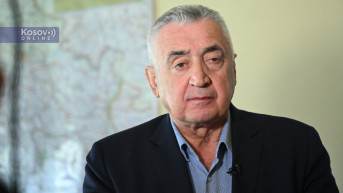
The backbone of Albin Kurti’s campaign is a negative attitude toward Serbs and continuous pressure on Serbian institutions in Kosovo, Veljko Odalovic, President of the Serbian Government’s Commission on Missing Persons, told RTS, warning that such a policy enjoys support through the international community’s selective approach. He believes that the issue of missing persons is often abused for political purposes.
Odalovic views the Bahamas’ recognition of Kosovo as a violation of the agreement that such steps should not be taken until the Belgrade–Pristina dialogue yields results.
“This is the first breach of that understanding. The European Union, which facilitates the dialogue, should react and say: this is not right, this is not in line with what we agreed. But they react selectively, just as they apply the Brussels and Ohrid agreements selectively. They choose what suits them. This speaks to an unfair attitude and an attempt to humiliate Serbia, primarily by the Brussels administration,” Odalovic said, adding that he does not believe people in the Bahamas know where Kosovo is, nor that people in Pristina know where the Bahamas are.
According to Odalovic, Kurti stops at nothing to strengthen his position during this election campaign. One such move, he recalls, is the opening of a pedestrian bridge over the Ibar River and the announcement of new bridges.
“At the very opening of the pedestrian bridge over the Ibar, Albin Kurti told those present that he speaks Serbian, but that it is very important that they learn Albanian as well. The so-called constitution provides for two official languages. I was active in public life in the 1990s and 1980s. Never did any politician, at any level, say anything like that. Kurti is the last person who should be doing this. Perhaps a local politician might do so—in Srbica, Malisevo, Glogovac, Kacanik, and so on—somewhere people may not be sufficiently informed, but a translator is always there to handle such matters,” Odalovic said.
He noted that he personally understands Albanian but does not speak it in official settings for the sake of precision, and that Kurti could have acted the same way.
“And then he says: I speak Serbian excellently, but you should… But that’s him,” Odalovic added.
He believes that everything Kurti has done during his term amounts to a campaign against Serbs and Serbian institutions, and that he would be surprised if anything were to change.
“If he allows himself to run a campaign by effectively taking away one mandate from the Serbian List in the last elections; by installing a man he and his followers placed as Deputy Speaker of the Kosovo Assembly outside any existing criteria and rules; by trying four times to prevent the Serbian List from participating in elections—what can we expect from him? He does not see Serbs in institutions at all. Not to mention the ‘container’ mayors and what else he did in the north, with a handful of votes he received in those elections. My problem is no longer him. My biggest problem is that the international community tolerated all of this and continues to tolerate it,” Odalovic said.
He also sees inconsistency in the international community’s announcement of lifting punitive measures against Kurti’s administration—measures introduced precisely because of its treatment of Serbs—which, he says, has not changed.
Odalovic also commented on reports that a body was exhumed near Orahovac and sent to the Institute of Forensic Medicine in Pristina, under suspicion that it may be a person killed during the 1998 or 1999 conflict.
“In June 1998, Holbrooke was in Junik with Thaçi. That day, the Kosovo Liberation Army, until then designated a terrorist organization, was proclaimed a ‘liberation army’ and given full legitimacy. A few days later, precisely in Orahovac, the first mass kidnappings occurred, the first disappearances, the first killings. Entire villages were cleansed of Serbs. By coincidence, Beate Svehla from the International Committee of the Red Cross brought me nuns, children, and women who had allegedly been left in the forest by the terrorists who abducted them. But we found the men in two mass graves, in Malisevo and Volujak. Around forty people from those cleansed villages were killed,” Odalovic said.
He noted that ad hoc teams of the Hague Tribunal, searching for evidence for already-filed indictments against Milosevic and Serbia’s military and political leadership, among other things searched all those graves.
“As far as I am concerned, I am for finding every missing person—Albanian, Serb, everyone. But today we are witnessing a tirade and a presentation of all this in an entirely wrong way. A terrorist organization entered Orahovac, attacked it, clashes occurred, and both Serbs and Albanians were killed—and I do not claim there were no crimes. But that is a matter for those tasked with dealing with it. The most elementary thing would have been to inform us, since this is a working group,” Odalovic said.
He recalled that an Analytical Team of the Red Cross was formed for this purpose, comprising both Serbs and Albanians and headed by a representative of the international community.
“We continue to cooperate. But it is a one-way cooperation. For 45 days we were at the Kožlje site at Pristina’s request, searching a landfill. We went 25 meters deep into the dump looking for a potential point indicated by Pristina. We searched Pazarska Banja. We took Pristina to Stavlje to show the location they insisted on as a new site,” he added.
He stressed that Serbia has no problem fulfilling its obligations, including Pristina’s requests.
“But we are nowhere in Pristina. Nowhere. Not at any site verification, not at any exhumation—nowhere. Quite simply, Pristina does not want to cooperate with us. We will see—in January it was announced that a joint commission would be formed, stemming from the agreed declaration of Presidents Vucic and Kurti. That is a good basis for securing stronger support, for the European Union—its Commission—to stand behind this and provide additional support in a process that is clearly stalled. Because 1,574 persons are still listed as missing. That is an enormous number,” Odalovic said.
He assessed that the issue of missing persons is being abused for political purposes, with accusations coming from Zagreb and Pristina, even though Serbia consistently calls for joint verification of all locations and full cooperation.
He emphasized that representatives of the Pristina side had already been to certain locations, that joint bodies and reports existed—including those submitted via the International Committee of the Red Cross—but that in recent years Serbia has not even been informed or invited to participate in activities in Croatia.
“Zagreb mentions missing persons in the campaign it is running against us. They had three requests, and we repeatedly invited them to come and jointly verify them. We prepared everything—from the river stretch from Smederevo to Kladovo, to Kudeljar near Sremski Karlovci, and so on. We invite them; they refuse, because if they come, they cannot say what they are saying now. Secondly, the request for archives is a legitimate request of both Pristina and Zagreb, but it is also our legitimate request. Crimes occurred in Croatia, in Bosnia and Herzegovina, and in Kosovo and Metohija,” Odalovic said.
He noted that more than 900 bodies were found in morgues in Zagreb and Osijek, at least 400 of them Serbian. He recalled that joint work resolved more than 2,000 cases in Croatia and about 1,900 in Kosovo, which, he said, shows that cooperation yields results.
Odalovic stressed that resolving the issue of missing persons is прежде свега a humanitarian and civilizational issue of crucial importance for families, not a tool for political campaigns. He said Serbia has institutional support and readiness to continue cooperation and called on all sides to return to the joint process, because the unresolved fate of the missing deepens families’ dissatisfaction and further burdens relations in the region.


0 comments