
Nikolic: Demolition of weekend cottages at Gazivode proves Kurti controls both the police and the judiciary
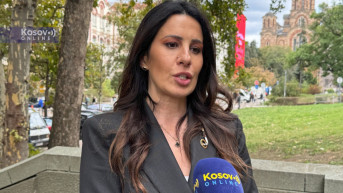
The Chair of the Serbian Parliament's Committee on Kosovo and Metohija, Danijela Nikolic, and Deputy Speaker of the National Assembly Jovan Janjic assessed that Serbs in Kosovo are exposed to continuous pressure and legal violence, stressing that Serbia must continue to protect its people, insist on the implementation of international agreements, and strengthen its diplomatic efforts to safeguard its state and national interests.
Speaking on Radio Belgrade's First Program show "In the Spotlight" about the position of Serbs in Kosovo, Nikolic and Janjic pointed to the demolition of 11 weekend cottages on the shores of Lake Gazivode, describing it as a continuation of policies directed against the Serbian community.
"We saw what happened in Zubin Potok and at Lake Gazivode - 11 weekend cottages were demolished without any court decision, which proves the extent to which Albin Kurti controls both the police and the judiciary, while basing his policies on depriving one people of their rights. This time, the right to property was taken away, not to mention the other human rights that the Serbian people in Kosovo and Metohija are denied, all in full view of the international community, which continues to ignore it," Nikolic said.
She added that around 20 percent of Serbs have left Kosovo over the past two and a half years, describing it as "a creeping ethnic cleansing."
"Since 1999, 250,000 people have left Kosovo and Metohija, myself included. I did return to Kosovska Mitrovica, but that represents only about two percent of the Serbs who have managed to return since 1999," Nikolic said.
Janjic assessed that the institutions in Pristina are continuing a policy of ethnic cleansing against Serbs.
"It is intensifying because the provisional institutions in Kosovo are trying to finish the job they started, namely the ethnic cleansing of Kosovo and Metohija, or the complete removal of Serbs from their centuries-old homeland. The demolition of 11 cottages on the shores of Gazivode is further proof of that," Janjic said.
Commenting on the international context, Nikolic said that the establishment of a strategic dialogue between Serbia and the United States, as well as Washington's suspension of its strategic dialogue with Pristina, show that the international community's attitude toward Pristina's unilateral actions is changing.
"This shows that the world has begun to wake up and that those who first recognized the so-called independent Kosovo are now seeing reality and realizing that Pristina's unilateral decisions are not good for the region or for the normalization of relations. This is a signal to Pristina that US support for the so-called independent Kosovo is not unconditional," Nikolic said.
Speaking about the Brussels Agreement, Janjic said there is no room for further concessions by Belgrade until Pristina fulfills its obligation to establish the Community of Serb Municipalities.
"If they have failed to implement the key provision of the Brussels Agreement - the Community of Serb Municipalities - then what is there left for us to discuss? I would try to restore some of Serbia's competencies until they fulfill what the agreement stipulates," Janjic said.
Nikolic stressed that Serbia has never approached the dialogue as if Kosovo were an independent state.
"Our negotiators have never acted as though Kosovo and Metohija were an independent state. This is a dialogue between Belgrade and Pristina. Kurti may want it to be a dialogue between two states, but that is his perspective. We have not conceded anything to anyone. We have respected what was agreed, while Pristina has not," Nikolic said.
She also assessed that the fact that institutions in Pristina have still not been formed suits Kurti.
"Kurti is perfectly comfortable with this institutional vacuum because he has nothing else to offer," Nikolic said, predicting that the political crisis in Pristina will most likely end with new elections.
Speaking about security, Nikolic warned of the continued arming of the Kosovo Security Force, noting that under UN Security Council Resolution 1244, KFOR remains the only legal security force in Kosovo.
"Turkey is supplying them with Bayraktar drones and other unmanned aerial vehicles, while the government in Pristina has approved the purchase of weapons worth four million euros," Nikolic said.
Janjic said Serbia must continue strengthening its defense capabilities while carefully monitoring geopolitical developments.
"Our task is to create the right environment, protect our people and our holy sites there, and continue to treat Kosovo and Metohija as an integral part of Serbia in every essential sense," Janjic said.
Nikolic stressed that the issue of Kosovo is of the highest national importance and called for political unity.
"The issue of Kosovo and Metohija is a matter of the highest national importance. We need consensus and unity. We cannot have opposition to the Serbian people in Kosovo and Metohija, to our territory, and to our Constitution within an official and clear national policy," Nikolic said.
She concluded that Serbia will continue to protect its people in Kosovo through dialogue and strong diplomacy, while Janjic said that preserving Serbia's territorial integrity and sovereignty should remain the common goal of all political actors.



0 comments