
Odalovic: Ten years after the Brussels Agreement; it is just a dead letter on paper
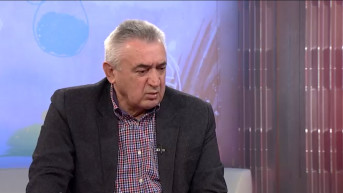
The President of the Commission of the Government of Serbia for Missing Persons, Veljko Odalovic, assessed today that ten years after the signing of the Brussels Agreement, that document was just a dead letter for Pristina and the EU, and that only Serbia had entered the story of its implementation in good faith and with good intentions.
"The saddest fact is that out of the three signatories for two, and among them the EU, the Brussels Agreement is a dead letter on paper. Serbia is the only one that started the story in good faith and with good intentions. We believed that the Brussels Agreement would be implemented. Our reality today is not that we are further from where we were ten years ago, but that we have gone back," Odalovic explained to RTS.
He pointed out that there were structures in Pristina that said they would not implement it.
Odalovic said that neither Hashim Thaci, Ramush Haradinaj, Isa Mustafa, Avdullah Hoti, and especially Albin Kurti, implemented the Brussels Agreement, and thus the CSM.
"No one responds to the international community as loud and brash as Kurti. The others were watching to achieve their goals, without dealing with it," Odalovic underlined.
He said that Serbia had started the story in good faith and that it had supported the Serbs from the north to participate in local elections in order to create the conditions for the implementation of the first six items of the "guidelines" of the Brussels Agreement.
"We would not have entered into this arrangement then if we had known that they would not form the CSM. It is no coincidence that the first items concern the CSM. And the text of the agreement says that Serbian police officers should remain working in the territories where they remained to live. The structure of the police, in accordance with the Brussels Agreement, the Ahtisaari Plan, and the Kosovo Constitution, should reflect the majority of the ethnic communities in which it operates. This was the guiding principle for the Serbs to enter Kosovo's institutions. What Serbia did was with the intention and purpose of the form of the Brussels Agreement which dictates that in Serbian areas, Serb police officers take care of order and, together with Serbian judges, be the guarantor that the law is not enforced to the detriment of the Serbs," he explained.
However, he adds, a situation has arisen since the Brussels Agreement was not implemented for 10 years, and the Serbs realized that it was a big fraud, that the agreement was not just a dead letter on paper, but that it had gone backward.
Pristina wanted to completely change the structure of local self-government by organizing elections and admitting Kosovar officers from other communities to the police, warned Odalovic, adding that they were implementing their laws without respecting the particularities for which the Brussels Agreement had been adopted.
When it comes to the European plan, he said that its new quality was that the US was getting involved in the story because they saw that the situation in Kosovo was getting out of control.
He pointed out that Pristina was doing everything to prevent the CSM from coming to life or from being only a non-governmental organization without any powers, although there were clearly agreed powers, which were collective rights, that is, that the CSM represented the Serbian community in Pristina.
"Pristina is ignoring it and will not accept it. They are scaring their population, asking for the support of citizens not to do it. But the most important thing is whether there is a willingness of the international community to implement it," Odalovic pointed out.
He said that it was devastating that almost on the day of the tenth anniversary of the inaction of the international community and Pristina on the implementation of the Brussels Agreement, the EU rewarded Pristina with visa liberalization.
Odalovic reminded that, when the EU had approved visa liberalization for Serbia, it stated that it would be implemented for Kosovo later because there were member countries that did not recognize Kosovo.
"The conditions have not changed since then. Now the countries that did not recognize Kosovo will be faced with the problem that people will come to them with the passport of a country that they do not recognize. I am not in favor of restricting freedom of movement. We are in fact advocating freedom of movement through the 'Open Balkan', but the conditions have not been created, and this is a reward for Pristina at a time when it is still obstructing the implementation of the Brussels Agreement, that is, we have a worse situation since visa liberalization was granted to us," he underlined.
He reminded that two pogroms had been carried out under the full mandate of the international community and that the international community had allowed the declaration of a state on the territory under its control.
Odalovic pointed out that young Albanians did not know the past, but that they had their own "epic", their heroes, and that was why Kurti was sending messages that the Special Court had to be demolished, so that their crimes were not unmasked and seen, and still, he adds, 1,617 persons are missing from that conflict, one-third of whom are the Serbs.
He said that at this moment the good message of the US Ambassador Christopher Hill was that Pristina was obliged to implement the CSM, but first Pristina had to carry out the demilitarization of the north so that local elections could be held because the Serbs would not participate in the elections that Pristina was organizing at the moment.
As for the continuation of the dialogue at the highest level, he says that Belgrade was always the one that played an active role and called for dialogue; did not run away from the table, and since coming to power, Kurti has not said in any message that he supports dialogue and the implementation of anything, even on the contrary, he blocked everything.
"He also blocked the issue of missing persons. That speaks of the intention that he will not solve anything there," he emphasized.
Odalović said that a similar opinion was represented by almost all politicians in Kosovo, so significant changes were needed if something was to be done to create a future through dialogue for the relationship between the Serbs and Albanians.
"Pristina is not ready for that at the moment," he underlined.
0 comments