
The opposition criticizes Kurti for the lack of information about the upcoming meeting in Brussels
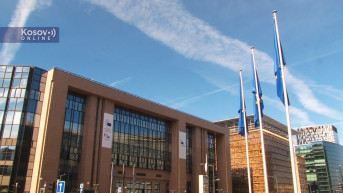
Kosovo Prime Minister Albin Kurti and Serbian President Aleksandar Vucic will have before them the European plan, known as the Franco-German plan, in Brussels on Monday. Connoisseurs of political events assess that failure to accept this proposal would have consequences, while the opposition criticizes Kurti for lack of transparency on this issue, Lajmi reports.
The mediators of this meeting expect the parties to accept this proposal and discuss the deadlines for its implementation.
On February 27, the topic in Brussels will be the European plan for further relations between Kosovo and Serbia. Prime Minister Albin Kurti once again reiterated that this plan represented a good basis for further discussions. However, he did not provide details on what he expected to be discussed at this meeting.
Member of Parliament from the Democratic Party of Kosovo, Ariana Musliu-Shoshi, says that Prime Minister Kurti left the opposition without information regarding the meeting expected on Monday in the European capital.
"As the opposition, we are still without information. We have a prime minister who never gives the specific information we are looking for. I asked him parliamentary questions about the topics he would discuss on Monday and I didn't get a single answer," the PDK deputy says.
The MP of the Democratic Alliance of Kosovo Rrezarta Krasniqi believes that a parliamentary debate should be held before Kurti travels to Brussels for a meeting.
"There was a lack of transparency regarding this process, we have not seen the Franco-German plan yet, and we heard the Prime Minister saying that it will be basic and that there will be no final recognition. The dialogue process should end with mutual recognition so that it does not continue," Krasniqi says.
From the meeting on February 27 in Brussels, professor of political science Dritero Arifi expects that the European proposal will be accepted, adding that opposition to that plan would produce serious consequences for the obstructionist side.
"It is expected that the Franco-German agreement will be accepted in some way because the Government of Kosovo has assessed that it is probably the best alternative offered at the moment. The Franco-German plan is temporary because it only has de facto recognition, but as a starting point for the normalization of relations between the two countries, we can say that it is a solid plan, which I believe will be signed by both sides because not accepting this plan will have very serious consequences for a side that is marked as obstructionist," Arifi says.



0 comments