
Panovic: We've never had clear internal consensus on Kosovo
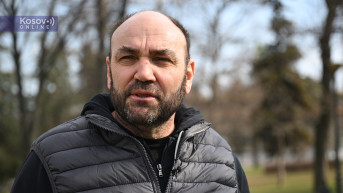
Zoran Panovic, the Program Director of Demostat, believes that the Movement for People and State, announced by President Aleksandar Vucic, will constitute a kind of new coalition alliance where, concerning Kosovo issues, detailed operational policies won't be pursued, instead, there will be more of a search for a kind of political unity of action and support for the actions and negotiations led by President Vucic.
Regarding whether those interested in joining the movement will have prerequisites related to the policy around Kosovo and the Brussels dialogue, Panovic says that the "Kosovo question has a dynamic of its own, which has been going on for a long time and is quite traumatic," making it difficult to craft a fully defined policy, and that it is not realistic to prejudge with firm oaths.
"We in Serbia have never had clear internal consensuses about Kosovo, two-thirds of which all political parties more or less stand behind, and there's no campaigning along that line. There is indeed a kind of confusion that is bad for Serbian national interests," Panovic says.
He emphasizes that the Kosovo negotiation process is complicated and influenced by various domestic and foreign factors.
"Of course, Serbia's goal is to find the best possible solution at the given moment, and if possible, one with political support. It doesn't mean only the movement should support a solution. You have the situation with the Dayton Agreement when the majority of significant opposition parties supported the agreement, which was atypical for our situation, but it was deemed to be in the interests of the Serbian people. So, we'll see how the political scene will be determined if there is a serious agreement on Kosovo or a solution offered," Panovic notes.
The Director of Demostat also finds it unusual that parties are forming a movement because, he says, it usually goes the other way – from a movement to a party.
"One of the good reasons why the movement hasn't been made earlier is that our research shows that the SNS (Serbian Progressive Party) brand is better positioned in SNS membership than some foggy movement, just as the SPS (Socialist Party of Serbia) brand is better positioned in SPS membership, which doesn't mean that with a certain motivational campaign, the movement won't get its weight. It's easier for someone to join it, SNS will certainly be the backbone, and the movement can be a comfortable solution for smaller parties like the Movement of Socialists or the Oathkeepers, who have a specific ideological weight," Panovic says.
He highlights the position of the SPS as crucial, saying that it's tricky because it is uncertain what will remain of the SPS if they enter the movement.
"They are important to Vucic to expand government support, but the question is what will remain of the SPS, whether this definitely means they're entering the SNS's orbit and will lose their recognizability? In my opinion, it's a risky move for them and is a matter of their political assessment," Panovic states.
The movement, he adds, can, in a strange way, contribute to the creation of an "enforced" two-party system in Serbia.
"Everyone who joins Vucic's movement will be in the movement, and everyone who doesn't will be in the counter-movement. I think differentiation in Serbia is moving in the direction of literally dividing into two camps, which isn't necessarily bad," Panovic says.

0 comments