
Pasic: Judicial institutions in Kosovo seek to revise history
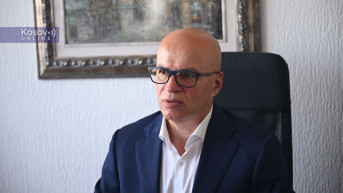
Lawyer and former military prosecutor Dragan Pasic told Kosovo Online that it is evident that judicial institutions in Kosovo are seeking to revise history and that this is one of the reasons why the issue of Racak is being reopened.
Pasic believes that, regarding Racak and the timing of the renewed focus on the case, the context is political, as verdicts are expected to be delivered in the cases against former Hague defendants, Hashim Thaci and others.
"The revision of history is being carried out primarily for domestic use in Kosovo and within Kosovo's institutions. The protests in The Hague, so to speak, raise certain questions about why former KLA leaders are being tried, as well as about the alleged crimes in Racak. The so-called 'Racak 1' represents the operational level, namely police and military commanders, while the so-called 'Racak 2' now concerns the alleged perpetrators of those criminal acts. This distinction has been made, and there is now an intention to prosecute all individuals who participated in what was considered a legitimate armed operation against the so-called KLA," Pasic said.
He recalls that the operation in Racak was not secret, that international observers, led by the Kosovo Verification Mission, had been informed, and that there was nothing indicating a covert operation.
"Now everyone who took part in the operation in Racak may find themselves on indictments issued by institutions in Pristina. It cannot be ruled out that we may see additional indictments related to the Racak case. The likelihood of that exists and is fairly high. It is evident that the Kosovo authorities treat every armed action by police and military forces as unlawful and illegal. However, these trials in absentia, as well as the conduct of the investigation in the latest case, 'Racak 2,' are contrary to the principles of a fair trial, international legal standards, and the European Convention on Human Rights and Fundamental Freedoms," Pasic said.
Pasic emphasizes that the Racak case never received a legal resolution in The Hague.
"The key element of the indictment against the late Slobodan Milosevic was precisely Racak. That event never received a legal resolution, and Racak was not clarified in criminal-law terms in other cases involving police and military generals either. It is obvious that judicial institutions in Kosovo want to revise that event, but in a manner that is not legally justified. The evidence from The Hague does not support the indictments that have been brought, nor does it support them at this stage of the investigation. The evidence is not only problematic but also legally unusable, including in the latest case."
Our interlocutor points out that the investigation is based, among other things, on media reports and news coverage, and that there is no solid material evidence.
"The testimony of individuals who, after 27 years, are expected to appear before the Kosovo Special Prosecutor's Office and the Special Department of the Basic Court in Pristina and give statements is also questionable. It is difficult for those statements to be entirely reliable, which means that solid material evidence is lacking. Also important are the forensic reports of Dr. Helena Ranta, who headed the Finnish team, as well as the report of the Yugoslav-Belarusian team. Those two forensic reports were contradictory and formed part of the evidentiary record in The Hague," Pasic said.
He added that the individuals currently under investigation will remain in detention until the proceedings are concluded with a final judgment.
"Unfortunately, it is expected that all those standing trial will be convicted, or at least most of them. As for the individuals currently under investigation, indictments are expected to be filed once the investigation is completed," Pasic said.


0 comments