
Pavkovic: An attempt to ban the Serb List in the October local elections can be expected
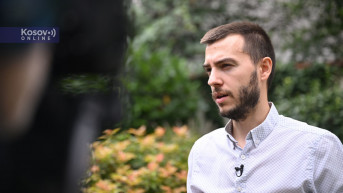
Milos Pavkovic, an associate at the European Policy Centre in Belgrade, stated that “it can be expected” that the Self-Determination Movement will attempt to ban the Serb List from participating in the upcoming local elections in October, but that such a decision would significantly affect the development of democracy and democratic processes in Kosovo.
“There is no basis for such a decision, which does not mean that Self-Determination will not try, because their position and policy are indeed to act against Serbs and the Serb List, thereby collecting political points,” Pavkovic told Kosovo Online.
Commenting on Serbian President Aleksandar Vucic’s warning that the authorities in Pristina might ban the largest Serbian party in Kosovo, Pavkovic said that this is “already a known position” of the Self-Determination Movement, which had tried to do so ahead of the February parliamentary elections by asking the CEC to abolish it as a “terrorist organization.”
“They didn’t succeed at that time. Ahead of the upcoming local elections scheduled for October 12, it is to be expected that Self-Determination will attempt a similar initiative before the CEC. I’m not optimistic that they will succeed, primarily because their claims don’t hold water, but also because the mood of the international community towards such decisions is very negative. And ultimately, this essentially affects the development of democracy, democratic processes, and elections,” Pavkovic explained.
Asked why neither the parties aligned with the Self-Determination Movement nor the opposition are considering cooperation with the Serb List, Pavkovic said that it has “always been unpopular.”
“Cooperation with the Serb List has always been unpopular. Even when the SL was in government, it was because the Serbian community in any case has guaranteed seats. But the Serb List has never in the history of Kosovo been the deciding factor in forming a government. They have always joined an almost-formed government, that is, one that already had a sufficient majority,” Pavkovic said.
He added that cooperation with the Serb List has become a particularly “sensitive topic” following the events in Banjska, and later the terrorism accusations related to the Ibar–Lepenac canal.
“Also, due to the general stance of the ruling Self-Determination Movement so far, which has been extremely anti-Serb and against the Serb List. This narrows the coalition space for other opposition parties because cooperating with the Serb List is unpopular, given that stance and the narrative imposed by Self-Determination,” Pavkovic said.
At the same time, he does not expect the Serb List to easily join any government, regardless of which party might be in a position to form it.
He believes the key question is whether it is possible to form a stable government without the Serb List.
“The results of the February elections show that no one can form a government, no one even has a majority to elect the Assembly president. So, the Serb List is needed for a stable majority, one that will not be minimal. Without the Serb List, that government will very likely be unstable and prone to collapse, especially considering that in the spring there will also be presidential elections, and the president is elected by the Assembly with a two-thirds majority,” Pavkovic noted.



0 comments