
Vucic: Situation in Kosovo particularly difficult, Kurti will again try to remove the Serb List from local elections
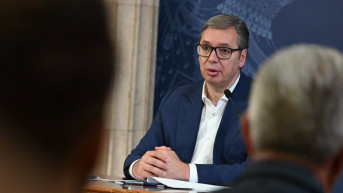
President of Serbia Aleksandar Vucic stated today that the situation in Kosovo is particularly difficult and that Kosovo Prime Minister Albin Kurti will again attempt to discredit and remove the Serb List from the local elections in Kosovo scheduled for October 12.
Vucic told reporters that one of the topics at the session of the National Security Council—aside from the verdict against the Republic of Srpska (RS) President Milorad Dodik—was the complex situation in Kosovo, particularly in relation to preparations for the October 12 elections.
“Kurti will again try to discredit and remove the Serb List and impose Albanian representatives who can’t even win two or three percent of the vote… Yet even with those three percent, the international community has until now enabled him to govern the northern, Serb-majority municipalities in Kosovo and Metohija,” Vucic said.
He stated that Serbia will continue its activities and that he will inform some of the most senior and important representatives of Europe and the world about this matter as early as tomorrow in telephone conversations.
The Serbian President emphasized that a difficult struggle lies ahead for the survival of Serbs in Kosovo.
“The situation in Kosovo and Metohija is very difficult, but what concerns me most is the situation in Bosnia and Herzegovina, because some believe they have the right to make any decision they wish, and expect everyone else to remain silent, look to the sky, and not utter a word in opposition,” Vucic pointed out.
Serbia Rejects Bosnia and Herzegovina Court Decision, Calls It an Attack on the Serb People and the Dayton Agreement
Regarding the decision of the Court of Bosnia and Herzegovina concerning the verdict against RS President Milorad Dodik, Vucic stated that Serbia does not accept the ruling, calling it an attack on the Serb people in Bosnia and Herzegovina and on the Dayton Peace Agreement.
He said that the conclusions related to the final verdict against Dodik were approached carefully.
Vucic noted that the political pressures leading to the verdict were evident, and that political parties—including the one of the Bosnia and Herzegovina Foreign Minister who often speaks about the rule of law—had threatened with protests if there were no conviction.
He mentioned that he had spoken with two world leaders who warned him how Serbia should respond.
“I told them that I understand very well what they meant by that, but that Serbia is a sovereign country and makes its decisions accordingly,” Vucic underlined.
Vucic said that Serbia, due to being of the same nation, a signatory of the Dayton Agreement, closely tied to RS, and committed to international public law, must act in accordance with the conclusions of the Council session.
“This is the most difficult situation for Serbia since 2008. The question is where this will end, which is why it’s important to insist on peace and regional stability. This decision goes against legal principles, against the Republic of Srpska, and the Serb people as a whole,” Vucic stressed.
He read aloud to the public the Conclusions of the National Security Council concerning the verdict against Dodik.
As stated in the document, “in accordance with the conclusions of the National Security Council dated 26 February this year, the second-instance verdict of the Court of Bosnia and Herzegovina, which confirmed the first-instance ruling sentencing Milorad Dodik to one year of imprisonment and a six-year ban on political activity for failing to comply with the decisions of the illegal and illegitimate representative of the international community Christian Schmidt—as a political criminal offense of verbal delict—is strongly condemned.”
The Council emphasized that these court decisions, although rendered in the 21st century, are undemocratic, uncivilized, and immoral, profoundly unlawful, contrary to fundamental democratic principles and values—from the right to freedom of expression, to the respect for the people’s choice, national sovereignty, and legitimacy of democratic decisions—and also in breach of the constitutional order of Bosnia and Herzegovina, which is based on the Dayton Agreement.
Decisions of the Bosnia and Herzegovina courts are a serious political blow to the Serb people in Bosnia and Herzegovina and to the Dayton Agreement
“Therefore, Serbia does not accept the decisions of the Court of Bosnia and Herzegovina, which also represent a security threat and a destabilizing factor,” Vucic stated.
In point two, the Council noted that the political and security situation in the region has been seriously disrupted, with a tendency toward further deterioration and the incitement of interethnic conflict directly aimed against the Serb people, and therefore called on all actors in the region for calm and rational assessment of the situation.
The Council underlined that such actions undermine the constitutional order of Bosnia and Herzegovina and the Republic of Srpska, established under the Dayton Agreement, endanger stability and trust in institutions, and undermine the democratic character of internal relations, given that they call into question the democratic will of the citizens of the Republic of Srpska regarding the election of their leadership.
“Serbia, as a guarantor of the Dayton Peace Agreement, will continue to insist on its full respect and will reject the practice of imposing decisions outside the framework of international law,” Vucic conveyed from the Conclusions.
The document affirms that the primary goal of Serbia’s diplomatic and legal activities will be the preservation of the Republic of Srpska in accordance with Dayton, accompanied by a strong and continuous campaign toward international organizations and partners.
“Serbia will, in accordance with its Constitution and the Dayton Agreement, use all diplomatic, political, and legal means at its disposal to provide support to the Republic of Srpska and its legitimate representatives,” reads point 4 of the Conclusions.
Point 5 states that Serbia will consistently advocate for the preservation of the territorial integrity of Bosnia and Herzegovina, while fully respecting the competences and territorial integrity of the Republic of Srpska. Serbia will also oppose any imposed reorganization of Bosnia and Herzegovina’s internal structure, including repressive measures against democratically elected representatives.
“Serbia will stand by the Republic of Srpska, international law, and justice, and we will remain equally committed to preserving stability as a necessary prerequisite for economic and overall social progress. Regional stability is a vital national interest of Serbia. We believe that the future of the region lies in cooperation and overcoming divisions, but also in respecting the dignity and collective political, economic, cultural, and other rights of all peoples living here,” it is stated in the Conclusions of the National Security Council.
Vucic noted that this Conclusion is a binding act for all state authorities and that it was adopted unanimously.
The President of Serbia remarked that even 10 years after the attack on him in Srebrenica, there has been neither a trial nor a verdict in Bosnia and Herzegovina for attempted murder, lynching, or any other criminal offense…
“But there is a conviction against the President of RS for a verbal delict. Just think about the kind of world we live in. And in such a world, we must act seriously, responsibly, adhere to international legal order, and be strong enough to protect our country,” President Vucic stated.
He said that Serbia will do everything in its power to preserve peace and stability, but also pointed out that Western decisions contributed to the current developments.
“They supported and orchestrated this. Now I understand why they rejected all my proposals for compromise. Whether when I met with [Mark] Rutte or when I went to Brussels. Now it all plays out in my head—what they said and what they meant. I understand why they set up Dodik, who mistakenly trusted them and went to Sarajevo to have his detention lifted. But even though I’m somewhat younger in years, I’ve learned not to believe them at all, and that they should never be trusted—no matter where they come from. I’ve learned that lesson well. I remember the Brussels Agreement—I could write a treaty on all the deceptions we’ve endured. Even a donkey learns eventually—and so did I,” Vucic explained.
He noted that a difficult period lies ahead for Serbia and invited the people to attend the commemoration of Operation Storm tomorrow evening.
“You’ve seen the enthusiasm in the West about the parade in Croatia—the military display. Not a single word on why they celebrate the killing and expulsion of Serbs. Our tears have never had and never will have anyone to acknowledge them. But we are not a nation if we fail to show respect for our victims. President Dodik will attend tomorrow, as will the Serbian Patriarch. There is still no warrant for arrest or anything similar—you’ll be able to hear from him too. I will talk to him to hear all his plans, so that we don’t remain mere observers,” he said in criticism.
Vucic stated that many people in Serbia take all of this too lightly.
“The ideas of foreigners are as follows: this will pass, some elections will come, they’ll install their own people, abolish Schmidt, and everything will function like some fairytale. And afterward, they’ll say elections in Serbia were rigged. Various agents are already prepared here—mostly tied to various Western agencies. Then they want to propose Jens Stoltenberg as their González. And then they want Picula or some other MEP, to eventually abolish both the Republic of Srpska and Serbia,” he warned.
Vucic reiterated that he has learned not to trust foreigners in anything, and that they should never be trusted, regardless of where they come from.
Asked what would happen if Bosnian authorities were to issue a warrant for Dodik’s arrest while he was in Serbia, Vucic emphasized that he would not be arrested.
“He is welcome. Dodik is the legitimately elected President of the Republic of Srpska,” he stressed.
Vucic reiterated that he is genuinely concerned about the Republic of Srpska and Kosovo.
Regarding U.S. tariffs imposed on Serbia, he said talks are being held at the highest level, and expressed confidence that the issue will be resolved.
Spain Confirms Participation in EXPO 2027, Serbia Breaks Record in Number of Participants
As good news, he shared that he had received a letter from Spanish Prime Minister Pedro Sánchez confirming Spain’s participation in the EXPO 2027 exhibition.
“This confirms that Serbia will be a record-holder in the number of participants,” he emphasized.
“We will safeguard peace and stability. I call on people to unite and stand together,” Vucic concluded his address.

0 comments