
Pavkovic: I don't believe Rama's proposal for changing the dialogue format can gain wider support
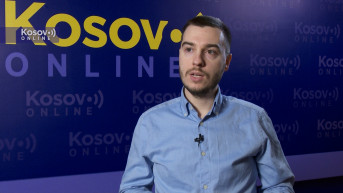
An associate of the European Policy Center, Milos Pavkovic, stated to Kosovo Online that the scenario proposed by Albanian Prime Minister Edi Rama, which practically involves a change in the format of the Belgrade-Pristina dialogue to replace the tripartite talks with a direct dialogue exclusively between Pristina and Brussels, is unrealistic.
According to Pavkovic, this idea lacks the potential to garner support where it is most needed.
"I do not expect it to gain broader international support, either among EU member states or within the Quint countries. The existing dialogue format was established by a 2010 United Nations resolution that opened the door for the European Union to moderate the dialogue between Belgrade and Pristina. Furthermore, this scenario would not receive support from Belgrade either. Rama’s statement serves a utilitarian purpose for the local public and was made primarily in the context of the upcoming parliamentary elections," Pavkovic explained.
He emphasizes the need to consider the broader context in which the statement was made.
"This took place during a joint session of the Kosovo and Albanian parliaments, where Rama was addressing primarily the members of parliament from Kosovo and Albania. It could also have been a message aimed at the wider public. Certainly, it comes at a time when the Brussels dialogue is in an evident crisis, with very limited progress in implementing agreements and a clear difficulty in finding common ground between Belgrade and Pristina," Pavkovic noted.
Rama, he adds, expressed similarly extreme views during the summer of 2023, when he also proposed halting the dialogue and organizing an international conference to resolve Kosovo's status. However, this idea also failed to resonate with the international community.
Given that Kosovo's President Vjosa Osmani has expressed similar views – suggesting that Kosovo could unilaterally implement the Brussels Agreement and the Ohrid Annex if it received guarantees from international partners for recognition and membership in international organizations – Pavkovic says that Osmani essentially proposed separating Kosovo's European integration process from the Belgrade-Pristina dialogue, because she believed that the lack of progress in the dialogue was hindering Kosovo’s EU integration process.
"There is currently no understanding for such an approach within the EU, as the EU views European integration as a key factor and motivation for both Belgrade and Pristina to make progress in the dialogue. If these processes were to be separated, we would likely face a host of new problems, as Serbia would expect the same approach. This would only further complicate both the normalization process and the European integration processes of Kosovo and Serbia," Pavkovic assessed.
When asked whether the dialogue in its current format has an alternative, Pavkovic said that the EU-mediated dialogue is itself an alternative to the unsuccessful dialogue previously conducted under the auspices of the United Nations.
"There is always an alternative; the question is whether it is better or worse. At this moment, the EU-led dialogue is the best we have, despite all its flaws and shortcomings. I believe that initiating a parallel process or seeking an alternative would set back everything achieved in the past 12–13 years of dialogue, return Belgrade and Pristina to their starting positions, and further complicate the resolution of this very difficult bilateral issue," Pavkovic concluded.

0 comments