
Shift in Dialogue at the end of Lajcak's tenure: Minor for the process, sufficient for the EU?
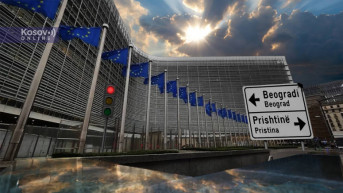
The meeting held in Brussels yesterday marked the end of another year in the dialogue between Belgrade and Pristina, a process that has been ongoing since 2011, but also the era of EU envoy Miroslav Lajcak. Observers from Kosovo Online view yesterday's round as a minor progress, which, they assess, was also important to the European Union, which wants to show that the dialogue is alive.
Written by: Milena Miladinovic
After several unsuccessful attempts throughout the year, yesterday's meeting, deemed successful by the EU, agreed on the formation of a Joint Commission for Missing Persons, which will be established in accordance with the adopted Declaration. Lajcak, who is at the end of his term, announced that the EU would soon host a meeting of the Joint Commission.
Other disputes in the dialogue process remain unresolved.
Serbia did not receive an answer at the end of the year on whether Pristina supports the European draft statute of the Community of Serb Municipalities (CSM), but instead received a smile from Kosovo's chief negotiator, Besnik Bislimi.
Petar Petkovic, Belgrade's chief negotiator, explained after the dialogue round that the Serbian delegation insisted on important issues for Serbs in Kosovo, such as the formation of the Community of Serb Municipalities and the issue of de-escalation, to which the Kosovo side remained silent.
"Even when Lajcak asked him if he had an answer to the question posed five times – he said he needed to consult, as if he did not know what it was about...", Petkovic stated.
In his statement after the meeting, Bislimi focused on his bilateral meeting with Lajcak, mentioning discussions on energy, the possibility of opening border crossings, official visits... He had nothing to say about the CSM and de-escalation.
Miroslav Lajcak, the EU's envoy for the Kosovo-Serbia dialogue since April 2020, has failed to resolve many issues in the process over four and a half years. His term expires on January 31 next year, and it is not yet known whether the EU will appoint a new envoy or if the new EU foreign policy chief, Kaja Kallas, will take over the leadership.
According to Kosovo Online's sources, the outcome of the Brussels meeting ended on a positive note, which is very important for the EU to demonstrate that the process is alive. However, they note, the most important issues remain unresolved, so the dialogue will have to wait until next year, whether under new or old authorities in Kosovo and in the United States.
Exceeded Expectations
Political scientist Ognjen Gogic emphasized that the last round of dialogue in Brussels exceeded expectations as it reached an agreement for the parties to continue working together on determining the fate of missing persons. He notes that the dialogue has long been regressing or stagnating, and nobody expected the last meeting under the mandate of the special envoy for the Belgrade-Pristina dialogue, Miroslav Lajcak, to end on a positive note.
"It could ironically be said that the dialogue even exceeded expectations because nobody had any expectations from this conversation, and yet it ended on a positive note by acknowledging that there is a consensus to continue working on determining the fate of missing persons. Although this is a topic that has been dragged through the dialogue without results for a long time, it is still positive that it ended with some agreement and consensus among the parties," Gogic told Kosovo Online. Yesterday's meeting in Brussels, he explains, primarily served to conclude Lajcak's mandate.
He observes that the dialogue was scheduled when numerous meetings are held in Brussels, and it was necessary to show that this process is "alive."
He notes that the dialogue had its own dynamics from 2011 to 2016, after which there was stagnation and crumbling of agreements.
Today, he states, one cannot speak of the dialogue in Brussels as a framework that yields results.
"The dialogue had its trajectory from 2011 to 2016. After that, we entered a period of stagnation or crumbling of agreements with only occasional, sporadic results. So, we are actually talking about a process that is in a prolonged deadlock and has started to collapse, so this format of the Brussels dialogue cannot be talked about as a framework that gives results," Gogic said.
He assesses that the dialogue has largely entered a phase of decadence when it is necessary to think about its complete reform.
However, as he adds, there is no political will for this, primarily in the EU, which is currently dealing with much more significant global issues.
Speaking about the expiration of Lajcak's mandate in about a month, Gogic notes that the special envoy surprised many with his longevity, so, he emphasizes, one cannot dismiss the possibility that he might still remain in the dialogue, given that the EU still does not have a clear stance on whether Kaja Kalas as the High Representative will lead the dialogue or appoint their representative.
"Lajcak actually won't be able to say much praiseworthy about his work because he inherited the dialogue at a level that not only wasn't improved and didn't yield results but has collapsed, so in a way, it starts from scratch and 'removing stains' and repairing damage whoever takes over the dialogue in the coming period," believes Gogic.
"For Lajcak, the only relevant thing is that the EU Council for General Affairs has now adopted these conclusions on enlargement where some progress will be noted, and thereby there are some conditions for Serbia and Kosovo to continue their European path," concluded Gogic.
Key Issues Unresolved
The last round of dialogue in Brussels, unlike previous meetings in this process over the last two years, did not end in complete failure, noted analyst from North Mitrovica Miodrag Milicevic, seeing it as positive that Belgrade and Pristina, after a serious deadlock in negotiations, agreed to work together on clarifying the fate of missing persons.
However, he notes that this time as well, key issues concerning the implementation of the agreements reached, including the CSM, remained unresolved.
"We had some progress; we cannot say it ended like the previous ones, in failure. This time we had an agreement that was finally reached after long delays and shifting deadlines, and that is indeed positive information when we talk about the dialogue - that after a truly huge standstill we had and the distrust, which is probably visible to everyone, it is clear that we now had some sort of decent progress," Milicevic told Kosovo Online. However, the issue of implementing the agreements reached between Belgrade and Pristina remains questionable, as after previous rounds of dialogue.
He believes that more detailed analyses will be made once teams are established, both in Pristina and in Belgrade, as well as at the international level.
Given that Lajcak's mandate is nearing its end, he notes, it was not realistic to expect progress on key issues - the CSM and agreements on telecommunications and energy.
"If we were to summarize the end of the year, the results are indeed modest regarding the dialogue, I would say unsatisfactory with a tendency for such an approach in the dialogue to continue into January and February," he emphasized.
Milicevic notes that stagnation within the Kosovo and Serbia dialogue has lasted almost two years.
"Considering all the turbulence and political events in Kosovo and the very difficult relations between Belgrade and Pristina, this situation has lasted almost two full years. We have not had significant progress, and all these 'successes' that have been made, if there were any, have been made through the creation of certain crises, whether it be the issue of license plates, etc.," the analyst pointed out.
He adds that no progress can be spoken of in the dialogue, considering that almost ten years have passed since the agreement on the formation of the CSM.
As he observes, regarding the CSM, the same clichés and calls to both sides to start the process are still being repeated today.
Asked what the EU Special Envoy for Dialogue, Miroslav Lajcak, will leave for his successor in the report concerning the dialogue, Milicevic says the document will have both positive and negative aspects of the dialogue, including all the challenges the international community faces.
He believes that Lajcak's successor will carry a heavy burden.
"The burden and responsibility remain for all future mediators in the dialogue, who will engage directly and attempt to finally return the political dialogue between Belgrade and Pristina to where it stopped and in the way it initially started. This will be a serious task for the international community, preceded by elections in Kosovo and political stability at the level of Serbia, including attempts to stabilize the political-security situation in the north of Kosovo. These are the prerequisites that will await some new future mediator in the negotiation process," concluded Milicevic.
Political Winds of Great Powers
The last meeting of the chief negotiators was, despite certain progress, merely a formality, emphasizes Pristina analyst Artan Muhaxhiri for Kosovo Online, and assesses that without the "political wind" of the great powers, pressures from the USA, Germany, and France, there will be no progress in the Kosovo-Serbia dialogue next year either.
"If the USA and EU and powerful countries in Europe, like Germany and France, do not exert that pressure, I doubt anything will be achieved. But, these two countries have big problems too, with upcoming elections in Germany and a newly elected prime minister in France. Therefore, they have their own issues and so I do not believe they have the energy and political resources to direct them towards the Kosovo-Serbia dialogue," stated Muhaxhiri.
He said that the last round of dialogue between Belgrade and Pristina in Brussels was better than the previous ones, but that it was a formality.
"This round of dialogue was a little better than the others, but in any case, it was just a formality because, in this context, it is impossible to expect a resolution of the substantive agreement. I think the problem is also in the EU, but in Kosovo and Serbia as well. Everyone needs a little more 'political wind,' a little encouragement to have a justification for continuing the dialogue," said Muhaxhiri.
He welcomed the fact that an agreement on missing persons was reached, but also warned that it will take a lot of time to resolve this very delicate and important issue.
"This agreement, I doubt, will lead to a solution. It needs to be pushed much more strongly on all sides," said Muhaxhiri.
He believes that we should not expect the EU to exert additional pressure on Belgrade and Pristina next year because the issue of unresolved problems in the Balkans is not currently a priority for them.
"We must understand that there are two major global crises, in the Gaza Strip and Ukraine, and until these are positively resolved I do not believe the Balkans will be in focus. However, if the Trump administration really makes the right political moves that he promoted during the election campaign to speed up the end of the war in Ukraine and to find a solution for Gaza, I think the next step would be a final agreement between Kosovo and Serbia," emphasized Muhaxhiri.
Asked whether Miroslav Lajcak's successor could speed up the process of dialogue and normalization of relations, Muhaxhiri says that, regardless of who comes to that position, they would contribute only "five to ten percent," because they do not have the political power to produce a result.
"The main directions in the dialogue come from the great powers, and one person cannot change them, they do not have the political power to change them. Therefore, regardless of who comes to Lajcak's place, those changes will be maybe five or ten percent, so nothing significant will change. It will still be insisted that both sides fulfill what they have agreed in the agreements, and some person from the European administration cannot help there. That change can only be made by leaders of big countries, presidents, prime ministers of important states like the USA, Germany, France, and others," concluded Muhaxhiri.
Progress Next Year
President of the Kosovo Business Alliance, Agim Shahini, highlighted that a shift in the dialogue will need to wait until next year, a new government in Kosovo, and the American administration, emphasizing that the EU envoy for dialogue, Miroslav Lajcak, conducted his job professionally, but was unable to influence the opinions of Serbian and Kosovar leaders.
Shahini pointed out that this year too, the dialogue has “gone into the void” more than anything substantial being accomplished in the process.
"The dialogue has gone into the void, and both Pristina and Belgrade still do not realize that dialogue can resolve all the problems that exist between the two countries. We are waiting for next year, when we will have a new government in Kosovo, and a new president in the USA, to move that point, and to end the dialogue forever," said Shahini.
According to his words, after Lajcak's departure, the person who takes over mediating the dialogue will have an easier job, considering that the previous Brussels administration did its best to demonstrate that it is necessary to conclude the Kosovo and Serbia dialogue.
"Mr. Lajcak is an international envoy who conducted his job professionally. However, his efforts could not change the opinions of Kurti and Vucic. It will certainly be easier for the new envoy, because Lajcak and Borrell and all the others have made progress, in the sense that they have realized that it is a priority for the EU and the USA to conclude the dialogue," concluded Shahini.

0 comments