
Pavkovic: Kurti headed for political retirement with Washington’s backing
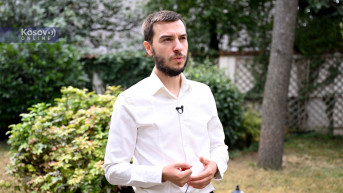
Milos Pavkovic of the Center for European Policy stated that the first half of the campaign for local elections in Kosovo, scheduled for 12 October, has passed. He noted that Albin Kurti dictates the tempo through unilateral actions and the closure of institutions, and emphasized that after the elections and the expected victory of Serbian political representatives, the situation in the north will not return to the way it was before 2022, when Serbs left the institutions. Pavkovic believes that changes will be limited and slow, and he foresees Kurti’s political retirement with the wholehearted support of Washington, RTS reports.
According to Pavkovic, the Serbian community has been placed on the defensive during the campaign, with local actors merely responding to Pristina’s unilateral moves. One of the imposed topics is the announced mandatory residence registration for all those without Pristina-issued documents, which he sees as a potential risk for repression and a trigger for the outmigration of Serbs.
“Local issues have therefore fallen into the background, which reflects the situation in the north of Kosovo and Metohija. On the other hand, some topics such as infrastructure, important both in the north and in the south, occasionally come up. For Serbs, the focus is on liberating municipalities and restoring the Serbian flag,” Pavkovic explained.
He commented on the recent Self-Determination campaign rally on the promenade in North Mitrovica, where Albanian and Kosovo flags were displayed and two anthems played.
“Here Self-Determination and Kurti are not addressing the Serbian community. They are not interested in the Serbs, who form the majority in the north, even though Albanian votes cannot bring them victory there. The aim is not to gather votes but to project the power of Self-Determination and the government in Pristina. Although they know they cannot win in the north, reinforcing sovereignty is important, as it indirectly influences voters south of the Ibar,” Pavkovic assessed.
The previous local elections in 2023 were boycotted by Serbs, and the start of the mandates of Albanian mayors in the north was marked by unrest, clashes with the Kosovo Police and KFOR. Pavkovic discussed how the transfer of power might look following the upcoming elections and a Serbian victory.
“At the very least, I expect the same professionalism and role for KFOR as in 2023, meaning that if necessary, KFOR will ensure a peaceful transfer of power. I can anticipate that Albanian mayors will express dissatisfaction and perhaps stage political protests, but it is up to KFOR to guarantee that Serbs return to their municipalities, just as it enabled Albanians to do in 2023,” Pavkovic said.
Commenting on the suspension of the planned strategic dialogue between Pristina and Washington due to Kurti’s unilateral actions in the north, he stated that the political scene in Kosovo is undergoing change.
“Kurti tried to dismiss the postponement of the strategic dialogue, saying it does not affect relations with Washington, but the reality is different. Kosovo has become isolated, Kurti has become isolated, and he is no longer a suitable political actor for Washington. The U.S. is shifting its policy toward sidelining Kurti, preventing him from forming a government. The suspension of the strategic dialogue is not the strongest weapon, but ultimately Kurti’s future will depend on the local elections. If, against all expectations, he achieves a strong result, it will influence government formation. However, for years the trend has been Self-Determination losing ground locally. If the results are poor, then his political retirement is indeed being prepared—with Washington’s full support,” Pavkovic concluded.
He outlined several scenarios for resolving the institutional crisis in Kosovo’s southern province.
Currently in force is a temporary measure of the Constitutional Court banning the functioning of the Assembly and MPs in Pristina, following the request of Srpska Lista, which was denied the post of deputy speaker. Pavkovic considers that the Court could restart the entire process of forming parliament.
A second option would be for the Court to mandate the election of a deputy speaker from the Serbian community. A third possibility is the formation of a broad “anti-Kurti” coalition and a transitional government.
Pavkovic also does not rule out the possibility of new parliamentary elections.

0 comments