
Pavkovic: Kurti unlikely to secure a new mandate for prime minister, presidential post as a consolation prize
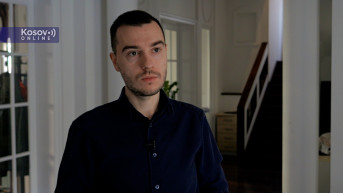
The Director of Strategy at the Center for European Policies in Belgrade, Milos Pavkovic, assesses that the question of electing the president of Kosovo after the December parliamentary elections will be the central topic of political negotiations. He told Kosovo Online that this position could serve as a kind of consolation prize for Albin Kurti if he supports another candidate for prime minister.
According to him, the president is elected by a two-thirds majority in parliament, so parties, which generally have only a minimal majority to form a government, will need much more to elect a president. Therefore, he points out, Self-Determination "enters the game".
"Self-Determination had more than 40 percent in the previous parliamentary elections, and it will likely have less now, but it will still be a significant political actor. In that sense, it will be an unavoidable partner in negotiations over the election of the president. In such a scenario, this could be a kind of consolation prize for Albin Kurti, who is unlikely to secure a new mandate as prime minister, but could receive the support of other parties to be elected president, and in return he would support another candidate for prime minister," Pavkovic explains.
He stresses that a compromise on the presidential election is important in order to avoid new snap elections.
"If a president is not elected in the first or second round, the government falls and new elections are called. Therefore, it is necessary to reach an agreement with Self-Determination. Even if other parties form a government without Self-Determination, they still could not elect a president without them. That is why this will be an important part of coalition and post-election negotiations," Pavkovic emphasizes.
Speaking about potential compromises, Pavkovic notes that if the parties want to get out of the crisis without entering a new one, they will definitely have to negotiate with Self-Determination regarding the president of Kosovo.
"In that context, I believe the parties will think rationally and will not rush headfirst into a new political uncertainty and a new political crisis," he said.
He states that this is a "rational scenario", but that there is always a significant probability that a new political crisis could occur if negotiations with Self-Determination fail.
"If Kurti, as is characteristic for him, remains stubborn and continues to insist that Self-Determination must have the prime minister, this could lead to a new political crisis. However, by giving the mandate to Konjufca for the position of prime minister, he signaled that he is ready for compromises. It would not surprise me if Self-Determination were ready for such a compromise, which would allow Kurti a calm and gradual exit from power," he said.
On the other hand, he points out, the opposition has no clearly defined positions on whether they seek a complete break with Self-Determination or are ready for compromise. He assesses that the final outcome largely depends on the results of the parliamentary elections.
"If Self-Determination achieves a significant result, it will be unavoidable in the negotiations for the position of president, and the opposition will simply have to adapt its position to those results. If, however, Self-Determination suffers a catastrophe in the elections, then a scenario is possible in which Kurti is completely sidelined," Pavkovic concludes.


0 comments