
Pavkovic: Pristina has not addressed central issues of the agreement – autonomy for the Serbian community and the SOC issue
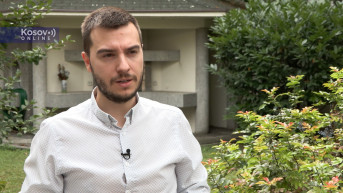
Milos Pavkovic from the Center for European Policy evaluates for Kosovo Online that Pristina has fulfilled minor parts of the agreements reached last year within the dialogue in Brussels and Ohrid, which, as he says, can be considered an indirect implementation of the agreement, while the central issues – the Community of Serb Municipalities, autonomy for the Serbian community, and the issue of the Serbian Orthodox Church (SOC) – have not been addressed at all.
The fact that Pristina sent comments on the implementation plan of the agreement to Brussels in a seven-page document, according to Pavkovic, is merely a distraction from Pristina's inactivity in fulfilling obligations not only from the Ohrid and Brussels agreements but from all others, and an attempt to shift responsibility onto Serbia.
Let's recall that Besnik Bislimi, Pristina's chief negotiator in the dialogue, sent the Kosovo side's comments on the implementation plan of the agreement from last year, which, among other things, according to Bislimi's advisor, Klisman Kadiu, presented arguments showing that Kosovo has fulfilled part of its obligations.
Pavkovic says that it is not Pristina's role, as a party in the dialogue, to assess anyone's percentage of agreement implementation because that is the task of the Joint Committee formed by the European Union to monitor the implementation of the agreements. He also states that there are very few things that can be considered as implemented by Pristina.
"If we take into account that Serbia first recognized Kosovo's license plates, and then, through reciprocal measures, Kosovo recognized Serbia's license plates, this can be interpreted as part of the agreement's implementation. Or when we talk about the return of land to the Visoki Decani Monastery, which was primarily related to the process of joining the Council of Europe, since the status of the Serbian Orthodox Church is mentioned in the articles of the Ohrid Agreement, this too can indirectly be seen as implementation of the agreement. The declaration on the missing persons and the return of the remains of some individuals who lost their lives in Kosovo and Metohija during the 1990s war can also be considered implementation. However, these are all minor, subtle parts, while the core issues, which are the central topics – the Community of Serb Municipalities, autonomy for the Serbian community, and the issue of the Serbian Orthodox Church, have not been addressed in Pristina's implementation, and that seems to be the essence of any discussions on the implementation of the agreement and the further process of normalizing relations," Pavkovic says.
When asked if Pristina's submission of proposals on the implementation plan order means that the Kosovo side will be more constructive in the dialogue in the upcoming period, Pavkovic says he does not expect this to awaken any constructiveness in Pristina.
"On the contrary, I think this is a way for Pristina to divert attention from its inactivity and shift responsibility to Serbia, thereby creating fertile ground for further non-constructive policies they have pursued so far. In that sense, I do not expect any better approach or change in Pristina's approach, especially considering that in the next six months we are facing elections in Kosovo and Metohija, and the government of Albin Kurti will likely try to politicize the dialogue with Serbia as much as possible," Pavkovic evaluates.



0 comments