
Pavkovic: Serbia has been waiting 12 years for the CSM despite concessions; Antonijevic: The solution is further away than ever
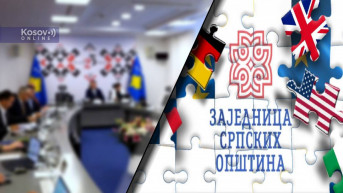
Milos Pavkovic, Director at the Center for European Policy, stated that Serbia has been waiting for the Community of Serb-Majority Municipalities (CSM) for 12 years, despite having made numerous concessions. Meanwhile, legal expert Milan Antonijevic pointed out that Serbia is now further from a solution on Kosovo than it was in 2013, Newsmax Balkans reports.
"The essence lies in that infamous association—the Community of Serb-Majority Municipalities—which has not been formed since 2013 and which, in a way, represented a major trade-off in terms of integrating the Serbian community into Kosovo’s institutional legal system in exchange for a type of territorial autonomy for the Serbian community, which the Serbian community has not received," said Pavkovic.
He added that, on the other hand, Serbia had made a number of concessions.
"Starting with the dismantling of some of its institutions, allowing people who worked in the judiciary and police to transfer to Kosovo institutions, granting Kosovo a dialing code, allowing its membership in some regional organizations... All of these were major concessions from Serbia’s standpoint," he said.
Pavković explained that in return, Serbia expected the formation of the Community of Serb-Majority Municipalities, which it has not received in 12 years.
Speaking about the rights of Serbs in Kosovo, Milan Antonijevic emphasized that the international community, namely Brussels, has the ability to condemn every incident in Kosovo and to repeatedly stress at every meeting that what was agreed upon has not been implemented.
"There are multiple issues being raised—not just the CSM but also the issue of missing persons, unresolved property claims affecting both those who live and those who no longer live in Kosovo, as well as the property of the Serbian Orthodox Church (SOC), which is being threatened—and so far, the reactions have only been declarative," Antonijevic said.
He noted that a series of sanctions had once been imposed on Kosovo’s institutions just before the events in Banjska, but those sanctions were later abandoned, even though, formally, they are still in place.
"I believe we are now even further from a solution than we were in 2013. This is partly due to the other side, the negotiators, because on the Pristina side there is no one willing to reach a binding agreement," he noted.
Antonijevic pointed out that even in the past, when Albin Kurti had the legitimacy to negotiate, no agreement was reached because mutual recognition was expected—despite the fact that no such document has ever been formally presented to either Serbia or Kosovo.
Both speakers agreed that Pristina disregards the condemnations coming from the international community and that a more concrete response from Brussels is needed.


comments