
Pavkovic: Some of Osmani’s actions are indirect support for Self-Determination
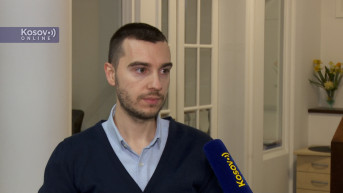
Milos Pavkovic, Director of Strategy at the Belgrade-based Center for European Policies, told Kosovo Online that Vjosa Osmani, as President of Kosovo, formally should not participate in the pre-election campaign for parliamentary elections, but that some of her actions represent a form of indirect support for Self-Determination, which is not necessarily legally problematic.
Osmani, Pavkovic adds, has not directly supported Self-Determination, however the popularity of the moves she makes spills over onto Self-Determination and provides a certain kind of support to that party, especially bearing in mind that Osmani and Albin Kurti, as he says, have over the past five years been seen as a duo jointly governing Kosovo.
“Actions such as securing recognition of Kosovo from the Bahamas are something that enjoys the trust of the entire nation. When we add to that the meeting in South Mitrovica and the announced meeting with the diaspora a day before the elections, this definitely has an impact, especially on those voters who are undecided or lean toward Self-Determination, and she can push them in that direction. This is more a form of indirect support for Self-Determination, a kind of gray zone, but not necessarily legally problematic,” Pavkovic emphasizes.
Speaking about the extent of Vjosa Osmani’s influence on voters at this moment, our interlocutor says that she holds a high position which, after the prime minister, is the most important in Kosovo, while on the other hand, through her education and contacts that primarily come from the West, she brings a kind of balance between herself and Kurti, who is often a rigid political actor.
Osmani, he notes, has good relations in Washington and Brussels and during this year has had numerous visits to both the EU and the United States.
“One of her most recent visits to Brussels resulted in the lifting of sanctions following her meetings with Ursula von der Leyen, President of the European Commission, and Kaja Kallas, the EU High Representative for Foreign Affairs and Security Policy. Through the role of president and through securing certain significant political decisions, such as recognition by the Bahamas or the lifting of sanctions, she definitely contributes to a kind of positive image of Kosovo, and this is indirectly viewed as a result of Self-Determination, which is still formally in power,” Pavkovic assesses.

0 comments