
Self-Determination or the opposition – Will there be any difference for the Serbian community after 28 December?
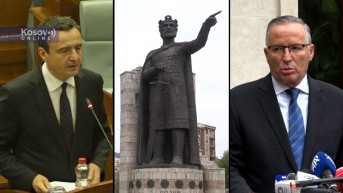
A defeat of Self-Determination (Vetëvendosje) in the snap elections on 28 December would make cooperation between the Serbian community and the central authorities in Pristina easier, interlocutors for Kosovo Online assess. They add that, for the north, a favorable outcome would be a weak coalition government formed by the current opposition actors, the Democratic Party of Kosovo (DPK) and the Democratic League of Kosovo (DLK), due to their greater susceptibility to influence from the international community. They also believe that a continuation of the crisis and institutional blockades, as well as new elections, would likewise not be a negative outcome for the Serbian community, but stress that there is no optimal result, since in none of the scenarios do they expect a significant improvement in the position of the Serbian community.
Written by: Jelena Novakov
Acting Prime Minister Albin Kurti, through unilateral actions in the north, has distanced international allies, including the United States and the European Union, which has led to opposition accusations that he has isolated Kosovo for the sake of gaining political points. Despite this, his harsh rhetoric toward the north has remained unchanged.
While Kurti faced criticism from foreign partners and the opposition, his main rival on 28 December, Democratic Party of Kosovo leader Bedri Hamza, was in Washington despite the suspension of the strategic dialogue, announcing a new period of high-level cooperation between Kosovo and the United States.
Although Kurti promised the Serbian community that it could live without fear, over the past four years it has, among other things, lost many institutions that functioned within the Serbian system. The opposition—particularly the DPK and the DLK—also opposes the institutions in the north, which they label as parallel, but they condemned these moves as unilateral because they were not coordinated with international allies, warning that such actions undermine Kosovo’s status on the international stage.
The DPK and the DLK sharply criticized Kurti as well for refusing to send the European draft Statute of the Community of Serb-Majority Municipalities (CSM) to the Constitutional Court, but only because this was a prerequisite for Kosovo’s entry into the Council of Europe. Kurti’s refusal to form the CSM is cited by Serbs from the north as the main problem, pointing out that since Albin Kurti took office four years ago they have been living in a state of constant crisis with ever fewer rights.
With a view to restoring relations with Western partners, the possibility is not excluded that a potential new government would take a step toward initiating that process, but the question remains to what extent Albanian parties would cooperate with the Serb List.
While the DLK cooperated with this party in 2020, the DPK recently stated that it does not rule out cooperation with any party except Self-Determination and the Serb List.
Influence of the International Community or Continuation of the Crisis
Security studies researcher Nikola Vujinovic believes that, for the Serbian community, the most favorable outcome of the upcoming elections would be a weak coalition government of the current opposition, which would be susceptible to international influence, or the continuation of the crisis and institutional blockades. He nevertheless emphasized that no Albanian majority differs from Self-Determination when it comes to respecting the basic rights of Serbs.
“Unfortunately, I think there is neither a good nor a least bad option—everything is bad. What I think would be best for the Serbian community is some kind of weak coalition government of the current opposition parties, because it would be most susceptible to international influence. Here we must say that it depends on the international community whether it will use that influence,” Vujinovic told Kosovo Online.
Speaking about the international community, he assessed that the United States will in no case jeopardize Kosovo’s functionality and integrity, but that it has clearly made up its mind and does not consider Kurti a partner. Rather, it would prefer DPK leader Bedri Hamza to be the new prime minister—according to Vujinovic, not by coincidence given Hamza’s recent stay in the U.S.
“So, unfortunately for the Serbian community, especially for the local self-governments that have regained power through the Serb List, there will be no easy choice. Perhaps the best solution is for this crisis to continue—new elections and institutional blockades of Albanian institutions—because that would be the moment when the international community would have to intervene. Any influence by the international community would be good for the Serbian community,” Vujinovic said.
Possible Change in Relations Between the North and Pristina
Cooperation between the Serbian community and the central authorities would change if Bedri Hamza or any other structure that does not include Self-Determination comes to power, Vujinovic said, adding that he cannot assess to what extent.
“What Self-Determination has achieved is shared by all Albanian actors. They all think that the Serb List is a terrorist organization that does not recognize Kosovo’s integrity. The truth is that the Serb List does not recognize Kosovo’s integrity and has not voted—and never will vote—for certain laws, such as the law passed seven years ago establishing the Kosovo army. So I am not sure that whoever sits in the chair of the minister for public administration and local self-government in Kosovo, who essentially controls local government and its political life, will be very benevolent toward Serbian municipalities,” Vujinovic said.
He stressed that in such circumstances the international community is again a key factor and that its decisions will significantly affect the formation of the CSM, as well as changes to certain measures resulting from Self-Determination’s actions in the north in recent years.
“But the precondition for all of that is continued instability in Albanian political relations, where Self-Determination and Mr. Hamza would not reach a coalition but would instead clash, since we see that at least some marginal parts of their parties are still in a serious conflict,” the researcher noted.
Nevertheless, Vujinovic assessed that no other majority would show greater understanding for the basic rights of Serbs.
“Any Albanian majority thinks the same about Serbs. Unfortunately, that view is shared by their NGO sector and their citizens. It is a fact that life in Kosovo and Metohija is gradually pushing ethnic hatred toward Serbs to the margins, but now everyone is competing for the diaspora. The diaspora comes imbued with a nationalist attitude toward Serbs, and all actors are playing that card. I expect that toward the end of the campaign the rhetoric against Serbs will indeed intensify, but I do not believe there will be physical or other actions, because the international community would simply not allow it, and they are now competing for its favor,” Vujinovic concluded.
DPK and DLK More Open to Cooperation
On the other hand, Dušan Radakovic, Executive Director of the Center for Advocacy of Democratic Culture in North Mitrovica, assessed that the next government, if led by the Democratic Party of Kosovo or the Democratic League of Kosovo, would take a different approach toward the Serbian community than Self-Determination and would lead to better cooperation with the Ministry of Local Government Administration.
Radakovic emphasized that cooperation between the Serbian community and Pristina would also improve if Self-Determination is not in power after 28 December.
“Some ministry will certainly be assigned to a Serbian political subject that enters the government, certainly some deputy positions—the Ministry for Returns, as provided by the Constitution. Perhaps even another ministry. In the past we had experience where it was the Ministry for Communities and Returns, a deputy minister of agriculture, the minister of local self-government, so there were cases where two or three ministries belonged to the Serbian community,” he told Kosovo Online.
He added that it is natural for the ten Serbian-majority municipalities to cooperate with the Ministry of Local Government Administration, and that the current situation with Minister Krasniqi should not be repeated.
“We will see what voters bring, but cooperation is natural. Ten municipalities must cooperate with the Ministry of Local Government Administration, and that ministry, as well as the Ministry of Finance, must provide support. So I expect it will be easier if the DPK or the DLK or some other political structure wins seats in the new government compared to Self-Determination, because over the past five years they have had no cooperation whatsoever with the Serb List,” Radakovic said.
Understanding of the Serbian Community’s Problems
These parties would have greater trust, understanding, and solutions for the concrete problems of the Serbian community, which should also be part of a potential coalition agreement if a government is formed that includes Serbian political subjects, including the Serb List, Radakovic said, pointing to the difference between a coalition in which the Serbian community can gain something and Self-Determination, which refuses cooperation primarily with the Serb List.
“It will certainly depend on which government is formed, but if it is the government we expect—one that we hope the DPK/DLK/ABK and other subjects will form—a coalition with the Serb List is possible. Then, of course, all ten Serbian-majority municipalities will be able to breathe easier and have better cooperation with the future minister of local self-government than with Mr. Krasniqi,” Radakovic concluded.
Self-Determination will not form a coalition but will instead demand new parliamentary elections in April, to be held alongside the presidential elections, Radakovic said, noting that the only exception for cooperation could be the party For Freedom, Justice and Survival if it wins a mandate.
“What I think could happen, as it did in the past, is that coalition if the DPK and the DLK have a majority. I expect it may be natural for the Serb List to be part of it in order to reach the famous 61 MPs. That coalition is possible if they lack a certain number of votes from the Serbian community—we will see whether it is eight, nine, or ten when it comes to the Serb List. That is the only solution,” Radakovic said.
Albanian Distrust Toward the Serb List
However, analyst Alma Lama assessed that the behavior of Albanian political parties toward the Serb List is the result of a lack of trust following the Banjska attack, and that improving the life of the Serbian community in Kosovo would be significantly aided if the Serb List distanced itself from Belgrade and accepted Kosovo’s institutions as its own.
“I think that the Serb List, as a party, has completely lost the trust of the Albanian community after the Banjska attack, because they did not distance themselves from that terrorist attack. Any behavior by Albanian political parties toward them I see as a lack of trust, which was damaged after that attack,” Lama told Kosovo Online.
She stressed that she believes the Serb List should represent exclusively the interests of Serbs in Kosovo, rather than behaving, as she put it, as an agent of Serbia.
“This manner of political behavior does not help Serbs in Kosovo, nor does it help coexistence in Kosovo or the integration of Serbs to live together with Albanians here. That is why I think the Serb List should change its behavior, view Kosovo’s institutions as its own, and truly represent the interests of Serbs in Kosovo,” she said.
Lama added that she fully supports cooperation between Serbs and Albanians in Kosovo, but also supports the distancing of Serbian parties in Kosovo from Belgrade’s politics.
“It does not help them, it does not help Kosovo, nor their lives here,” she concluded.



0 comments