
Pejovic: Many actors in the campaign preferred the Kosovo issue not to be in focus
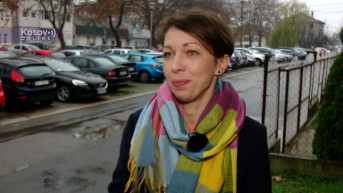
Journalist Dragana Pejovic assesses for Kosovo Online that Kosovo was not essentially present in the campaign, except in the context of party attitudes towards the Franco-German plan, with that being the centerpiece and most important topic for some, while the "government only responds to these challenges and criticisms."
At the beginning of the campaign, the specific issue was the inability of Serbs in Kosovo to participate in the elections this time, but this lasted very briefly, as Pejovic notes.
"For all actors in the campaign - at least for the majority of the opposition and the government - it was in their interest that the Kosovo issue not be in focus at all," Pejovic says, adding that several coalitions on the right side of the spectrum brought that topic back into focus but mostly in terms of their stance towards the Franco-German plan.
According to her, a part of the opposition couldn't decide on a consistent stance towards the issue of Kosovo by the end of the campaign, "so one day they say they would reject that plan, the next day they would go to the Constitutional Court and before the Assembly."
She believes that there were no messages in the campaign directed at citizens living in Kosovo, nor plans on how their status would improve.
"I think that even the election results, even the results of those parties in the elections, will not reflect citizens' views towards this issue, not only regarding Kosovo and Metohija but also towards the Franco-German plan, because, I believe, and all research shows, that citizens are very interested in this issue and very negative about that plan. I think that the parties that put that topic in focus will not be able to gather a sufficient number of votes. This only means that either they did not articulate that topic well, or the government managed to cover it with some of its own issues or answers it had on that," Pejovic points out.
She emphasizes that hardly any party can afford not to deal with the issue of Kosovo.
"That is exactly what I mean when I say there is a great interest of citizens in that, the parties know it. Rarely will anyone openly state their stance on it, and we have a situation in these elections where even some minority parties express their views on this issue; almost no one can ignore it," our interlocutor says.
According to her, there are few who had the opportunity not to answer that question at all, but she adds that these are not parties but individual actors "whose position the public would be better off not hearing" because it is not a popular position.
Asked if the Kosovo issue is the one deciding the winner in the elections, Pejovic points out that we have a situation where voters from Kosovo and Metohija probably won't be able to tilt the balance in favor of any side, but their votes are symbolically important.
"They won't be counted in one place, meaning we won't know how Serbs from Kosovo and Metohija voted, or whether they have the same position towards government parties as they did. Serbian Progressive Party mostly won with 80-something percent, even with a high turnout, so it is symbolically important. Elections could be lost on this issue if someone came out and openly stated a stance that the majority of citizens do not want to hear, so we have actors who avoid this question in the election campaign or create some exit options, saying 'we would not accept it, but we would put it in the Assembly and before the Constitutional Court,' but that does not mean 'we would reject it,'" Pejovic explains.
She reminds that parties in the campaign partially dealt with the emigration of people from Kosovo and Metohija and that this was a topic they wanted to use to show that the government's policy has not been good in recent years.
"However, when the government itself admits that emigration has occurred, it has an argument that it is not responsible for it but that the policy of Albin Kurti is. Everyone understands that the biggest barrier to Serbian interests in Kosovo is precisely the population that needs to stay there, and in that segment, there is much room if one wants to make a plan for the future, how to help Serbs stay in Kosovo – that could be a constructive approach in the election campaign," Pejovic concludes.


0 comments