
Rodic: No new messages on Kosovo in the election campaign

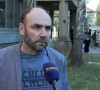
Journalist Filip Rodic assesses for Kosovo Online that, unfortunately, the resolution of Kosovo-related issues was not a key topic in the pre-election campaign in Serbia, and no new messages were heard, however, he emphasizes that, despite this, political messages about Kosovo are not mere platitudes.
Rodic believes that, quite predictably, the ruling party emphasized the Kosovo issue the most, given that, as he says, they deal with and fight over this issue on a daily basis.
"The government dealt with the issue of Kosovo in line with its usual behavior. The issue of Kosovo and Metohija is very high on the agenda of our government, and they acted within that framework, rejecting any possibility of recognizing the secession of our southern province and warning that the EU will demand that we include the Ohrid Agreement in Chapter 35 of the accession negotiations," Rodic said.
During the campaign, the patriotic bloc, he emphasizes, criticized the government and accused it of fully accepting the Franco-German plan, which, as he adds, official Belgrade rejects, claiming that only a part of the plan has been accepted and what is rejected is clearly indicated.
"So, from the perspective of the patriotic opposition, the criticism was that our government accepts the Franco-German plan, that it represents a renunciation of our southern province and sovereignty over that part of the territory, and that this is completely unacceptable for them," Rodic pointed out.
Speaking about the pro-European opposition, Rodic assesses that the Kosovo issue is a very sensitive matter for them, just like avoiding expressing their stance on whether they are for or against imposing sanctions on Russia.
"These (the Kosovo issue and sanctions against Russia) are very painful issues for them because they are fundamentally committed differently from the majority of the population of Serbia, and they must not talk much about it. They criticized the government for allegedly accepting the Franco-German plan, but not in the way the patriotic opposition did. They do not have a fundamental problem with that; it's more formal, as it was not discussed in the Assembly, and similar. This leaves a completely open space for free action after the elections," Rodic said.
When asked about the messages on the Kosovo issue that could be heard during the campaign, he states that nothing new has been heard, but it is always relevant that pressures from the West are increasing.
"We haven't heard anything new, but I wouldn't say that political messages about Kosovo are platitudes. We don't have much new to hear. What is new is that pressures from the West are intensifying to recognize the secession, to accept that Franco-German plan, and to push it into the UN and the EU," Rodic said.
However, as he notes, the novelty was the visit of representatives of the pro-Western opposition to Kosovo, where they were welcomed, as he assesses, "completely expectedly."
"We also have the 'forest departure' of Milica Djurdjevic Stamenkovski, which is a marketing thing, but it took a dose of courage to sneak down illegally. Anything can be expected from the Pristina authorities, and that was not entirely without risk," our interlocutor points out.
Rodic believes that Serbs in Kosovo, given the living conditions and everyday problems, did not expect much from the campaign.
"I think that those people down there have largely become numb to everything happening to them. They somehow stoically accept the constant mild deterioration of the situation in which they live, and I think that they themselves did not expect that something would be done in the election campaign that could be of use to them. They are very aware that a much larger geopolitical earthquake is needed to improve their lives," Rodic concluded.
He notes that the issue of Kosovo, except for the government, was not on the list of priorities. He adds that a part of the patriotic opposition abandoned the idea of highlighting that issue in their politics.
"Unfortunately, Kosovo and Metohija was not the main theme of this campaign. For the government, it was a very high-level topic because they deal with and fight over this issue on a daily basis. For a part of the patriotic opposition, it was, while the other part practically discarded that issue and joined this pro-European part of the opposition, leading a campaign that came down to nullifying Aleksandar Vucic and his overthrow, and he was their main topic. The main goal that the opposition wants to achieve is to overthrow the President of Serbia, not to introduce any policies," Rodic said.

0 comments