
Pekevski: Canada's associate EU membership will take the form of increased political cooperation
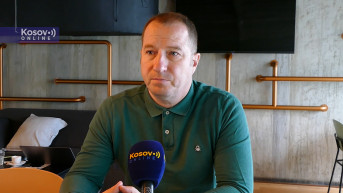
Analyst from Skopje, Sinisa Pekevski, believes that the associate membership in the EU proposed to Canada by the President of the European Commission will take the form of increased cooperation at the political level, and that it is difficult to assess whether this could be a model that might also be applied to the Western Balkans in the future.
“I think these are still discussions, and that it is too early to draw any conclusions. The process is not moving that quickly, and I do not believe it will be easy because these are only initial steps that require changes to legislation, changes to policies, and all of that takes time. In any case, associate membership will probably take the form of increased cooperation and greater engagement at the political level. A large number of things currently happening at the global level require greater involvement not only from the EU, but also from Canada as a partner, because they have close or similar positions on many issues,” Pekevski told Kosovo Online.
Asked whether associate membership can be compared with the initiative of Aleksandar Vucic and Edi Rama for accelerated integration into the single market and the Schengen Area, he replied that it is too early for any long-term plans, because major global developments are affecting the EU, which is facing restructuring.
“Major changes are taking place in Germany, with the AfD's victories in two states. Next year, we expect presidential elections in France, where the right is on the threshold of a conditional victory that will add further weight within the EU, but will also bring new developments, and we do not know how all of this will be reflected within the Union itself. Then there is the war in Ukraine and the conflict in the Middle East, which are still affecting the EU,” Pekevski lists.
All of this, he says, is affecting the European Union economically, which is why he expects the EU to focus more on putting its economy in order rather than on practical enlargement with new members, particularly from the Western Balkans.
“And that essentially means that they will not completely forget about this region, but will introduce or put forward certain initiatives aimed at keeping the process going,” the analyst believes.
Asked whether associate membership could become a new reality and give impetus to EU enlargement, Pekevski recalls that every decision and change must be approved by all European Union member states.
“That is why it is difficult for them to opt for such a solution, because they could lose some of their rights. There could also be unforeseen differences if you have introduced certain rules and are now changing them and saying that they apply to certain countries. This could also trigger opposition from certain countries, because they contribute differently to the budget, make decisions differently, and now certain countries are using this moment to veto certain decisions. For example, Montenegro's path is not that simple, as it is expected to meet certain conditions imposed by Croatia. When Serbia's turn comes, I believe Croatia will once again have major demands and use vetoes, which means that the entire process will be very difficult,” Pekevski concluded.



0 comments