
Atanasovski: Messages from the Berlin Process Summit are clear – the EU enlargement process is alive
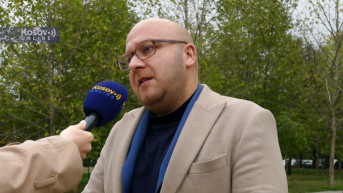
Analyst from Skopje Blagojce Atanasovski says that the messages coming from London at the Berlin Process Summit are clear for the countries of the region: while North Macedonia continues to face well-known problems with the French proposal and the failure to start negotiations with the European Union, the dialogue between Belgrade and Pristina continues to burden relations between Kosovo and Serbia and hinder their European integration, and the political climate in Bosnia and Herzegovina remains a major obstacle to that country’s integration.
Atanasovski believes that the Berlin Process Summit should serve to keep EU enlargement open, since there is a so-called “enlargement fatigue.”
“Many believe that after Croatia joined in 2013, the EU would no longer expand, but I think that the Berlin Process itself emerged from the need to set the tone that the enlargement of the EU to include the remaining six Western Balkan countries is not dead and will continue. I believe that the messages are going in that direction, with such phrases underscoring the fact that the process is alive and that the necessary reforms must be implemented by the governments of the six countries, whose path should lead toward full EU integration,” Atanasovski emphasized.
When asked about the messages addressed to Western Balkan leaders, the Macedonian analyst added that corruption and organized crime are constantly mentioned as the wounds of the region’s societies, alongside the need for institutional and judicial reforms and the improvement of living standards.
“All the countries that want to become EU members must accelerate their reform processes. This will help identify obstacles and barriers, and in this way, the countries themselves will move much closer to full membership. Currently, we are on different paths – the closest to membership are Albania and Montenegro. We in North Macedonia have well-known problems with the French proposal and the failure to start negotiations with the EU, the dialogue between Belgrade and Pristina burdens the relations between Kosovo and Serbia, and the political climate in Bosnia and Herzegovina is a stumbling block for that country’s integration,” he said.
He also pointed out that there are other initiatives that could yield results, such as the Open Balkan, but noted that these are largely protocol-based.
“I think the Open Balkan initiative was going in that direction, introduced under the Berlin Process or encouraged by the US administration in the Western Balkans, to create a kind of open-border system among the countries, similar to that within the EU, without institutional or trade barriers. Unfortunately, we see that only Serbia, Albania, and North Macedonia have joined the Open Balkan, while Montenegro, Kosovo, and Bosnia and Herzegovina have refused to participate. I believe that only some form of robust diplomacy from EU leaders or major EU countries can push Balkan leaders toward cooperation, which, unfortunately, is still much more often used for nationalist rhetoric than for promoting cooperation among the countries and peoples of the Western Balkans,” Atanasovski concluded.


0 comments