
Pelpas: Athens-Tirana dispute will not affect Greece's position on Kosovo
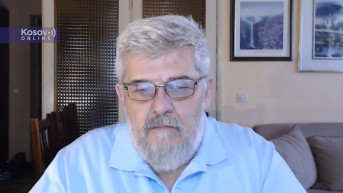
The dispute between Athens and Tirana over the case of the Greek mayor of the Albanian city of Himara will not influence Greece's position on Kosovo. Greece maintains a clear position of not recognizing Kosovo's independence, and there are no indications of a change at the moment, Nikos Pelpas, a correspondent for Greek television ERT, says for Kosovo Online.
"Some diplomatic circles in Greece believe that through Kosovo, Greece gains favor with Albania, especially regarding the minority issue and the determination of the exclusive economic zone at sea, an open issue with Albania. In my opinion, Greece's position on Kosovo will primarily be guided by the results of the Belgrade-Pristina dialogue process. If there is significant progress towards normalization in the relationship, then there might be a change in position. Other countries that don't recognize Kosovo will follow the same principle," Pelpas says.
He dismisses the possibility that Greece might be more lenient on the Kosovo issue to resolve outstanding matters more efficiently with Albania.
"I don't believe there will be leniency. In recent years, Greece has taken steps to get closer to Pristina because the prevailing view is that if Serbia can have trade relations with Kosovo, why not Greece? Greece has never had political or economic relations with Kosovo. Kosovo has had a liaison office in Athens for only two years. The prevailing view now is that something needs to change, but I don't believe Greece will separate its opinion from the five EU countries and independently decide to recognize Kosovo. I have the impression that this decision will depend on Serbia's position. If there is a complete normalization of relations between Belgrade and Pristina, and if Serbia doesn't officially recognize Kosovo, because no one is asking for that, I think all five countries will recognize Kosovo. However, I believe no country will do so before the dialogue is concluded," Pelpas says.
He points out that the Kosovo issue also poses a problem within the EU, as Kosovo won't be able to join the EU "as 22 out of 27 EU member states desire" if the matter remains unresolved.
"An entity presenting itself as a state cannot be admitted if at least one country doesn't recognize it. I don't believe that if there is no solution between Belgrade and Pristina, Spain or Cyprus, which are firm in not recognizing Kosovo, will accept Kosovo as an EU member. That's why I believe the EU is trying to convince Serbia to 'force' it to recognize Kosovo indirectly, not de jure but de facto, so that even those countries not recognizing Kosovo change their position," Pelpas says.
He doesn't rule out the possibility that the Brussels Agreement and its Ohrid Annex from this year might be included in Chapter 35 of Serbia's accession negotiations.
"It can be included in Chapter 35, and I don't believe Greece will be against it and use its veto right. Many things are changing in the EU. The German Chancellor has reiterated the view that the EU needs to change its decision-making process, meaning that there shouldn't be a consensus principle for all issues but a strong majority to decide. After the June elections for the European Parliament, this decision-making principle in the EU will likely be reconsidered — whether there should be consensus or a strong majority for decision-making," our interlocutor notes.
Due to the case of elected Himara mayor Fredi Beleri, who is in prison on charges of buying votes during local elections in Albania, Greece has blocked the EU accession negotiation process with Albania. Pelpas says that Greece's stance is based on the assessment that Albania has done nothing to respect minority rights.
"The Supreme Court did not allow him to be temporarily released to take the oath as mayor. What angered Athens was that Edi Rama, two days before the court decision, stated that Beleri's request would be rejected. This signified to the Greek government that the judicial authorities in Albania are not independent," Pelpas explains.

0 comments