
Petkovic: Belgrade strongly supports Serb List's decision to participate in elections
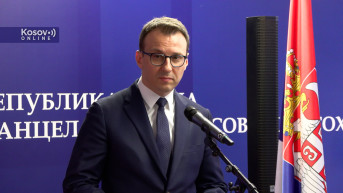
The Director of the Office for Kosovo and Metohija, Petar Petkovic, stated that the Government of Serbia supports the Serb List's decision to participate in the Kosovo elections on February 9, emphasizing that this decision is in the best interest of the Serbian people in Kosovo.
In an interview with Kurir, Petkovic highlighted that it is clear Albin Kurti's unequivocal goal has been to prevent the Serb List from participating in the upcoming elections by any means, so he could replace them with obedient individuals from Serbian ranks who would serve his interests.
“Belgrade's principled stance is that the best judgment on such matters lies with the Serbs in Kosovo and Metohija and their only legitimate political representatives, the Serb List. Thus, the Serb List's decision to participate in the elections is strongly supported by Belgrade because we believe it is a good decision in the interest of the Serbian people. It is evident that Kurti's clear goal was to prevent the Serb List from participating in the upcoming elections to replace them with his own obedient Serbs, without whom, it seems, he can hardly secure a parliamentary majority,” said Petkovic.
He firmly believes that the Serb List’s response to Kurti’s tactics will be a convincing victory, securing all 10 guaranteed parliamentary seats.
“This is why we have seen increasing pressure on the Serb List and persecution of its officials recently. Kurti's plan clearly included false accusations and attacks to remove the Serb List from the electoral process. This is evident from the recent barring of Serb List MPs from attending the parliamentary session in Pristina, with Kurti's MPs claiming they oppose Kosovo and have not distanced themselves from alleged ‘terrorism.’ This dangerous claim underscores the true intent to discredit the Serb List ahead of the February 9 elections, as President Vucic has extensively discussed. Imagine if, in Belgrade, the criterion for entering parliament was recognition of the self-proclaimed state of Kosovo. By such standards, more than half of the opposition wouldn't cross the threshold of the National Assembly. We would never treat MPs the way Kurti and [Glauk] Konjufca treat the Serb List,” Petkovic noted.
He pointed out that Pristina has used the sabotage of the Ibar-Lepenac canal as an excuse to intensify its oppressive rule in northern Kosovo.
“Deploying heavily armed individuals with long-barreled weapons to children’s playgrounds is the ultimate display of force. They are clearly not there to protect swings and seesaws but to send a message to parents—who have already been stripped of nearly all political and human rights—that even their children are no longer free,” Petkovic warned.
He described this as a deliberate tactic to create collective fear and a sense of insecurity.
“This is not just psychological warfare but a real threat. Recall the case of Azem Kurtaj, a member of the so-called Kosovo Security Force, who shot Serbian children without cause or remorse. The Serbian people in Kosovo and Metohija are resilient and brave, but they are not made of stone. You cannot oppress them indefinitely without serious consequences. People are leaving Kosovo and Metohija because many cannot endure the atmosphere of fear and emergency that Kurti is deliberately fostering in the north,” emphasized Petkovic.
When asked about progress in identifying those responsible for the incident at the Ibar-Lepenac canal, Petkovic stated that Serbia does not make premature accusations but noted that it is evident Kurti is doing everything to politically capitalize on the situation.
“If this sabotage hadn’t occurred, he would have had to invent a crisis to strengthen his position before the elections and bolster support for his aggressive policies toward the Serbian issue in Kosovo. Anything beyond this would involve directly pointing fingers at Pristina, which we don’t want to do. We are conducting our own investigation within our capabilities, given that our judicial authorities are not present on the ground, and we are open to any form of cooperation to ensure Kurti doesn’t escape with baseless accusations against Serbia,” said Petkovic.
He also found it suspicious that just nine minutes after the canal sabotage, Kurti requested KFOR to allow the Kosovo Security Force (KSF) immediate access to northern Kosovo, which the KFOR commander rejected, citing the 2013 agreement that prohibits KSF presence in the north.
“This insidious plan by Kurti was exposed by President Aleksandar Vucic, who publicly outlined five potential motives for the canal attack, all of which are gradually proving accurate,” Petkovic noted.
When asked if any connection between the detainees and the incident has been established, Petkovic remarked that recent events show a chaotic situation with indiscriminate arrests in northern Kosovo.
“Out of ten detainees, two remain in custody. The situation is so chaotic that it’s evident Pristina is struggling to gather evidence because everything so far has been political propaganda. A lot of politics, no evidence. Despite the loud accusations against Serbia shortly after the canal attack, Kurti had to admit that the investigation couldn’t be rushed, especially since it was ‘the weekend.’ If their investigation amounts to showcasing ceremonial uniforms collected from who knows where, it’s clear there’s no real investigation—just a poorly executed charade for the international public,” Petkovic asserted.
He concluded that dialogue remains the only venue for resolving the Kosovo and Metohija issue, and Belgrade consistently insists on it.
“While Pristina’s representatives come to Brussels with no intention of reaching agreements, as long as there is a framework for dialogue, there is a chance for its eventual revival. The situation in Kosovo and Metohija cannot be resolved without dialogue, nor can there be a lasting and sustainable solution without the consent of all interested parties. We will continue to call for a return to meaningful dialogue,” Petkovic emphasized.
Regarding expectations from Donald Trump’s administration on resolving the Kosovo issue, Petkovic noted that many expect miraculous solutions from the newly elected U.S. president.
“In a world increasingly driven by crises and instability, strong political leaders advocating peace and stability are needed. Many hope Trump will rise to this challenge. Time will tell whether these expectations are justified. Regardless, Serbia must rely on its own strength and the wisdom of its leadership,” Petkovic concluded.



0 comments