
Petkovic: We gave Sorensen a list of 50 escalatory moves by Pristina; the CSM is the backbone of the Dialogue
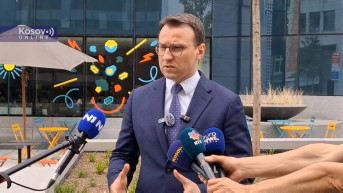
The Director of the Office for Kosovo and Metohija, Petar Petkovic, stated that during a meeting in Brussels with Peter Sorensen, the EU Special Representative for the Belgrade–Pristina dialogue, he handed over a list containing 50 specific escalatory moves by Pristina. He emphasized the level of persecution faced by Serbs in Kosovo and Metohija by Kosovo institutions and police. Petkovic underscored that the Community of Serb-majority Municipalities (CSM) is essential for halting the persecution and achieving de-escalation, calling it the "backbone of the dialogue."
“We spoke about Albin Kurti’s conduct, the shutdown of institutions, the prevention of Serbian children from participating in sports, and the fact that the so-called mayors in northern Kosovo are implementing anti-Serb policies that are clearly escalating the situation. We also discussed the illegal and forceful attempt by Hetemi in Leposavic to expel internally displaced persons who were allocated apartments due to their status and who, naturally, do not want to leave them,” Petkovic said.
He also informed Sorensen that the liaison officer has been prevented from visiting Serbian prisoners in Pristina and across Kosovo six times in a row and that the issue of missing persons was also discussed.
“This is a crucial humanitarian issue for us, aimed at locating all missing persons to ease the suffering of their families. There has been some progress in this regard, and we hope that a meeting of the working group and then the joint commission will be convened soon to unblock the process, as Belgrade has been persistently insisting on it,” he added.
Petkovic reiterated that they submitted a list of 50 concrete escalatory actions taken by Pristina.
“We talked about all these moves and pointed out the level of persecution of Serbs by Kosovo institutions and the police. We also raised the issue of MTS and Elektrosever, despite it being resolved on paper, because critical MTS infrastructure is located in the closed post office facilities across Kosovo,” Petkovic explained.
He noted that they discussed all important topics, including the difficult position of Serbs in Kosovo, as well as numerous examples of police and judicial abuse by Kosovo authorities toward Serbs.
“I made it clear what can and cannot be part of the dialogue. Yesterday we heard Bislimi bringing up alleged issues like Presevo and Bujanovac, but those are not part of the dialogue. The dialogue is about Kosovo and Metohija, the position of the Serbian people, the formation of the CSM, and what we can do to reach compromise-based solutions for peace and stability that both Serbs and Albanians need. Presevo and Bujanovac are in Central Serbia and cannot be part of this dialogue, even though Pristina tries to push them in. I clearly told that to Sorensen, and he understood,” Petkovic stressed.
Since today’s meeting was a preparatory one, the Office for Kosovo and Metohija director expects an invitation soon for the continuation of the dialogue in a bilateral format between Belgrade and Pristina. Asked why there was no trilateral meeting this time, Petkovic repeated that it was a preparatory session.
“Pristina had their preparatory meeting yesterday, today it was Belgrade’s turn, and a joint meeting will likely follow soon,” he said.
He added that Sorensen's role is to facilitate negotiations, allowing each side to present their agendas and priorities for the continuation of talks.
“I told Mr. Sorensen clearly what the EU’s role is regarding the formation of the CSM. Without the CSM—without collective rights for Serbs in Kosovo—our people are facing repression. We urgently need the CSM to stop the persecution and ensure de-escalation. That is the key issue in the dialogue. Other topics can be discussed in parallel, but the CSM is the backbone of the process—that’s why we entered the dialogue 13 years ago. Without it, there can be no normalization. How can there be normalization when Serbian institutions are being shut down every day, which are the basis for forming the CSM? That’s the agenda. That’s the agreement that was signed, and the EU signed it as well. The visit by Kaja Kallas and António Costa made it clear that de-escalation is a condition for further progress by Pristina. But de-escalation isn’t happening. Since the EU’s well-known statement on June 3 calling for urgent de-escalation, 80 new escalatory acts have occurred. The question arises whether the EU's appeals are merely declarative, while someone is actually encouraging Kurti to continue. On the other hand, Kurti is nervous because his side has met 25 times and still can’t form an Assembly or Government—so they’re taking it out on the Serbs. This must stop. The dialogue exists to halt the escalation and implement agreed solutions,” Petkovic said.
He concluded by saying that Serbia has alerted all international actors about Albin Kurti’s campaign of terror against the Serbs.
“We’ve raised the alarm with everyone. I’ve met with Sorensen multiple times—today for the first time in the official EU building in Brussels—but he is fully informed. We are actively working on this all the time,” Petkovic concluded.

0 comments