
Petritsch: Democracy in Kosovo is being misused for party-political reasons

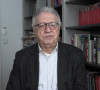
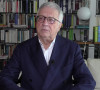
Former EU Special Envoy for Kosovo Wolfgang Petritsch has stated that democracy in Kosovo is being misused for partisan reasons and that Kosovo is facing a prolonged period of political uncertainty and institutional deadlock, which is affecting both reforms and Pristina’s international standing. He also noted that the treatment of minorities is the best test of whether a functioning liberal-democratic system exists.
In an interview with Radio Kosovo, Petritsch identified the lack of political compromise, the polarization of the political scene, and challenges in the dialogue between Kosovo and Serbia as the main obstacles to Kosovo’s democratic stability and progress toward European integration.
“It seems to me that the idea of democracy is being misused in the sense that elections are repeatedly held for party-political reasons. The main problem I see, the greatest challenge for democratic Kosovo, is the lack of willingness to reach political compromise. The very idea of democracy is the ability to find sustainable compromise even under difficult circumstances. That is its essence. Another important issue, which also concerns Kosovo, is the way minorities are treated within a state, whether they are ethnic, linguistic, cultural, or other minorities. The way a country treats its minorities is in fact the best test of whether it has a functioning liberal-democratic system. And it is precisely in this area that I see room for improvement,” Petritsch stressed, as reported by RTK.
He pointed out that, on paper, Kosovo possesses many of the elements that make it a European democracy, but that the problem lies in implementing them in practice.
Petritsch emphasized that the issue of the Serbian community and Serbian citizens in Kosovo should be addressed in a serious manner.
“However, I know that Belgrade is a major obstacle in this regard. But you, as a state whose independence was supported by half the world, where in 1999 NATO, under the leadership of the United States, intervened militarily, are a unique example of how a people that was under military threat—in this case from Serbia and its army—was liberated. This, in fact, increases the responsibility of every government and every president to ensure that the country moves forward, transforming itself from a problem for Europe and the international community into part of the solution. Especially now, when we are facing global challenges unprecedented since 1945. My impression is that every discussion in Kosovo revolves around internal problems and the inability to develop dialogue—dialogue within the country itself. And I am not yet speaking about the EU-facilitated dialogue. I am talking about everyday political dialogue between political parties. They are all democratic parties,” explained the former High Representative of the international community in Bosnia and Herzegovina.
Petritsch stated that an increasing number of Europeans, including in Austria, view Kosovo as a growing problem rather than as a country facing challenges.
“At present, Kosovo finds itself in a situation where it is receiving less and less support from the European Union and the international community. People are not prepared, in these extremely difficult circumstances for Europe, where we have wars—even two wars—in our neighbourhood, in Ukraine and in the Middle East, which is also part of Europe’s neighbourhood, to devote additional attention to unresolved issues. We must ensure that every country in Europe resolves its own problems. That is more important now than ever before,” Petritsch said.
Asked about the dialogue process, he stressed that much has already been achieved and added that Pristina must fulfil its obligations.
“The European Union has always played a very constructive role. I recently had a lengthy discussion with Mr. Sørensen about the situation, and he is truly committed. I believe he is one of the best people you could have for such a process and for this dialogue. He knows Kosovo and the region very well. He is a highly experienced and dedicated EU diplomat. But in the end, everything will depend on Pristina doing the right thing. I know that Belgrade is the biggest problem, but we must bear in mind that Belgrade also has something to lose. Many Serbs still believe that Kosovo belongs to them. This is irrational and highly emotional. It is important for Kosovo finally to consolidate itself as a sovereign state. Therefore, Pristina must do more to fulfil its obligations. That is the most important thing. And if Belgrade does not follow this process, that should not be regarded as Kosovo’s problem,” Petritsch explained.
Referring to the Ohrid Agreement, he added that if Belgrade is not prepared to move forward, then Pristina should take steps in that direction.
“I believe we must create positive and constructive conditions. I know we are talking about northern Kosovo, where the majority-Serb community lives. More than ten years ago, it was agreed that there should be some form of self-government. I am not talking about the Republic of Srpska—quite the opposite. We Europeans are fully convinced that Kosovo should become a functional and stable state. There can be no issue resembling the Republic of Srpska, as we see in Bosnia. That is out of the question. However, in administrative, linguistic, educational and other areas, there are many fields in which Serbs need to be integrated into the concept of a common state. This is difficult, I know, because the current leadership in Belgrade does not support it, but that is the art of politics—to achieve what appears unattainable. We must move in that direction. But when I look at the political scene in Pristina, I see constant conflicts—always conflicts between parties and personalities—instead of a joint and coordinated effort to determine how to move forward toward fuller sovereignty. How to move forward on concrete issues such as the Stabilisation and Association Agreement or membership in the Council of Europe? These are clearly defined steps that can be far more successful than in the past,” Petritsch underlined.
Asked whether he believed the EU-facilitated dialogue had lost momentum, he replied that some issues had taken on a life of their own and that the process was no longer functioning as effectively as before.
“The biggest problem, in my view, is largely at the personal level. Seven or eight years ago, acting on behalf of the President of Austria, I organised a meeting between Mr. Vucic and Mr. Thaçi in Austria, in Tyrol, during a major symposium. It was the first public meeting attended by the Austrian President and the two leaders. I gained the impression that they respected one another and that personal dialogue was possible. Unfortunately, Mr. Thaçi is no longer on the political scene and is facing a very difficult situation in The Hague. Mr. Kurti, however, has not succeeded in establishing a functional relationship with Mr. Vucic. Of course, the same can be said of Mr. Vucic—why is he not doing more to communicate with Mr. Kurti? Nevertheless, in the past, Vucic managed to establish a working relationship with the leader of Kosovo Albanians, Mr. Thaçi. So why is it not working now with Mr. Kurti? This is something Mr. Kurti should reflect on and consider what he can do to improve relations, because Serbia will always remain Kosovo’s neighbour. Serbs in Kosovo will always look to Belgrade for solutions, but they should also be encouraged to seek solutions from Pristina,” Petritsch stressed.
He noted that dialogue still exists but functions more on the Brussels side, while it does not function effectively between the two capitals, Pristina and Belgrade.
Nevertheless, he said that progress is being made at the technical level and added that it is beneficial that this aspect does not attract excessive public or media attention.
“Peter Sørensen is doing an excellent job, but he can only be as successful as Pristina and Belgrade want him to be. As I mentioned earlier, Kosovo aims to join the European Union and become part of the European family of states. But Europe is facing an extremely difficult political situation. I mentioned the wars in its neighbourhood. There is also the relationship with the Trump administration, which is currently at one of its lowest points. Mr. Trump has other concerns—domestic challenges and political difficulties as the midterm elections approach. Therefore, I believe we Europeans must work together and ensure that we solve our own problems. The geopolitical situation is an absolute challenge, and we cannot afford for one or two countries—I am referring to Bosnia and Kosovo—to create more problems than necessary,” Petritsch stated.
Asked about relations between the United States, the European Union and Kosovo, he pointed to a new approach in Washington focused exclusively on business interests.
“Consider what is happening with American companies in Albania—there are massive protests against this kind of engagement that is purely business and nothing else. The same situation exists in Bosnia, where pipeline works are being carried out by an American company that is evidently completely incapable, and whose only ‘advantage’ is that its owners are friends of Mr. Trump and wish to build this pipeline. These developments run entirely counter to Europe’s interests. European rules and standards apply in Bosnia, they apply in Albania, and they should apply in Kosovo as well. Therefore, these processes must be properly regulated, and Kosovo must secure sound economic development. I have spoken with Kosovars, and they tell me that the economy is not performing well. That is the principal issue that must be addressed,” Petritsch explained.
Asked what Kosovo should do to strengthen its credibility and partnership with Brussels and Washington, he stressed that the key issue is conducting dialogue aimed at finding a viable solution for the rights of the Serbian community, which forms a majority in certain areas.
“Let us set aside the term ‘Association’ if Mr. Kurti dislikes it. Let us be pragmatic and find a solution that implements the spirit of the agreement. In my opinion, what matters is not what you call it, but what its content is. You must ensure that you take ownership of the proposals. Because when something comes from Brussels, the problem is often that you may not like it. Therefore, it is better to do your own homework and offer solutions for the Serbian community while guaranteeing the rights it requires. This will remain a long-term issue, but the process should begin now, with the creation of an effective mechanism for implementation, oversight and cooperation,” Petritsch said.
He added that he does not believe the rights of the Serbian community constitute Kosovo’s biggest problem with its partners, but that the issue carries significant symbolic weight.
He reiterated that Kosovo’s Constitution already provides extensive minority rights, although the Serbian issue remains more specific and more contested.
In that regard, he recalled that five countries still do not recognise Kosovo and added that, in his view, those governments would recognise Kosovo once a satisfactory solution for the north is found.
Addressing current political issues in Kosovo, Petritsch identified the presidential election system as problematic.
Once the current phase is over, he suggested, Kosovo should review its system of governance and introduce certain constitutional amendments in order to avoid recurring institutional deadlocks whenever a presidential election takes place.
Regarding announcements about the withdrawal of part of NATO’s troops from Kosovo, Petritsch said that the Alliance is heavily influenced by Washington, which has already announced plans to reduce its military presence in Europe.
“And this obviously affects Kosovo as well. Therefore, I believe it is essential to make progress on all the issues we have discussed in this interview so that Kosovo can move closer to establishing its own sovereign armed forces. You will have to assume responsibility for your own security. You will have to become the guarantor of security for Kosovo and for the region. You must become a stabilising factor. At present, you are contributing more to instability throughout the region, and that is not good. We need Kosovo to become a constructive partner in Europe,” Petritsch stressed.
Speaking about the European integration of the Western Balkans, he noted that Montenegro has made significant progress and overcome many of the problems that continue to hinder Kosovo.
“Consider the fact that Montenegro, despite having only around 600,000 inhabitants, is a multi-ethnic state. It has an Albanian community, relations are fairly good, and it also has Serbian and other non-Montenegrin communities. It likewise has a difficult relationship with Belgrade, yet it manages. That is quite positive for the region. North Macedonia is also making considerable efforts. Relations between Slavic Macedonians and Albanians are also complex, but they are working through them. Yet you do not hear of problems such as those we encounter in Pristina, where political parties do not speak to one another. That is not a good sign for Kosovo. The European Union is expanding toward the Western Balkans, but there is also a clear mandate from the member states: reform yourselves, resolve your problems, and then you can join the European Union. And that applies to Kosovo as well,” Petritsch concluded.
0 comments