
Petritsch: Pristina must offer Serbs concrete cultural, linguistic and administrative competencies
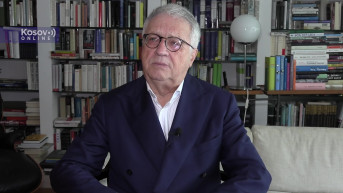
Former Austrian diplomat Wolfgang Petritsch believes that the deadlock in the EU-facilitated dialogue carries more immediate consequences for Kosovo than for Serbia, emphasizing that the first step must come from Pristina, which must offer Serbs concrete cultural, linguistic, and administrative competencies in line with the Brussels Agreement, Radio Free Europe reports.
Petritsch assesses that, due to the blockage of the Brussels process, Kosovo is paying the price in terms of security, stability, and its orientation toward the future, while its politics remain largely internal and insufficiently adapted to the broader European and geopolitical context.
“Every time I am in Pristina or speak with people there, I get the impression that there is only Kosovo and nothing else. That is a completely wrong approach. Albin Kurti has evident qualities, but if he does not understand that he must act as part of a team—both domestically and at the European level—things will not go well for Kosovo’s development,” Petritsch told Radio Free Europe/Radio Liberty.
He states that the first step must come from Pristina, which must offer Serbs concrete cultural, linguistic, and administrative competencies in accordance with the Brussels Agreement.
According to him, this would signal a new cooperative approach and create the possibility of a genuine relationship with Serbian representatives. Even if Serbia were to oppose this, it would then appear as the party blocking the process.
Petritsch notes that guarantees from Brussels are necessary in this regard.
“From the very beginning, it was clear that Europeans would not allow the creation of another the Republic of Srpska. We have paid a high price for that in Bosnia and Herzegovina, and we do not want that to be repeated in Kosovo. Therefore, it is clear that there are cultural, linguistic, and administrative issues that need to be addressed,” Petritsch said.
In an increasingly unstable world, small and politically fragile states are “the first to fall” when crises erupt, Petritsch added.
With uncertainties surrounding the role of NATO and the future of U.S. engagement, Petritsch warns that Kosovo “cannot afford the status quo.”
According to him, progress in implementing the Brussels Agreement is not merely a technical detail, but an essential condition for stabilizing Kosovo’s very existence.
“NATO bombing of Yugoslavia made Kosovo in 1999 the only country in history to be liberated by an alliance that armed itself. And that, in my opinion, places a special responsibility on it: to act wisely, to cooperate, to do what is necessary, and to go a step further—to become part of the family of European states,” Petritsch concluded.


0 comments