
Petritsch: Sorensen needs strong support from Brussels, Berlin, and Paris for success
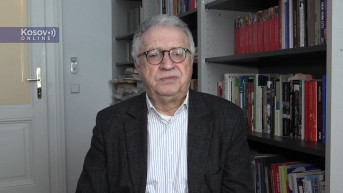
The newly appointed EU Special Envoy for the Kosovo-Serbia Dialogue, Peter Sørensen, is an experienced diplomat and a serious mediator, but for success in this role, he will need strong support not only from Brussels but also from Berlin, Paris, and other key EU capitals, says Wolfgang Petritsch in an interview for Kosovo Online. Petritsch, who served as the EU’s special envoy for Kosovo in the late 1990s, also commented on Kosovo’s recent elections, drawing a parallel with Austria, where the election winner struggles to form a coalition. He advocates for a multi-party government that includes the Serbian community.
“I know Sørensen personally and believe he is a very experienced diplomat. Unlike Miroslav Lajcak, he does not speak ‘our language,’ but he is a serious mediator. However, he will need full political backing from Brussels and key capitals like Berlin and Paris,” Petritsch pointed out.
He believes that Lajcak lacked precisely that—real political support from the EU’s High Representative, specifically from Josep Borrell, Kaja Kallas’s predecessor.
“I hope that Kallas, who is understandably focused on the war in Ukraine, will still find time to use her political influence to accelerate progress in this matter. Only then will Sørensen have a real chance of making progress. He is an experienced diplomat, but he needs the EU’s political weight. Without it, he won’t be able to engage with Kurti or advance talks with Belgrade,” Petritsch asserted.
He emphasized that given the current geopolitical challenges, particularly the wars in Ukraine and the Middle East, the EU must actively seek solutions while hoping for U.S. support. At the same time, both parties in the dialogue must be pushed toward normalization, as agreed a decade ago.
EU’s Influence in the Western Balkans
Asked whether the EU still holds influence in the Western Balkans and the Kosovo-Serbia dialogue, given criticism from the U.S. and Donald Trump’s stance, Petritsch noted that the EU’s power is waning due to Washington’s unilateral distancing from Europe.
“The EU is not a state. With 500 million people, we are a major market and economic player, but divisions among member states weaken us. That does not make working in the Western Balkans any easier,” Petritsch explained.
He suggested that Belgrade should take a more constructive approach toward finding solutions for Kosovo Serbs, as it is in Serbia’s natural interest to ensure a better life for them.
Institutional Issues and the Role of the Serbian Community
Regarding what Pristina should do to reach a constructive resolution—especially given the closure of Serbian institutions in Kosovo—Petritsch warned against unilateral measures, calling them counterproductive.
“That does not solve citizens' problems. People don’t expect unilateral moves; they want fair solutions. Northern Kosovo remains part of Kosovo, but because of the Serbian majority there, increased autonomy is necessary. Institutions exist for the people. If Serbs live there, then those institutions must include Serbs,” he said unequivocally.
When asked whether Serbia should be allowed to provide financial assistance to Kosovo Serbs, Petritsch responded that it is possible, as long as it is done transparently.
“In the past, there have been unfortunate activities, but that’s because the issue remains unresolved. As long as that is the case—which Kurti must acknowledge—Belgrade will continue attempting to support the Serbian community, even if Pristina disapproves. This should motivate Pristina to seek a compromise and sustainable solution,” he stated.
Association of Serb Majority Municipalities as a Solution
When asked whether the Community of Serb Majority Municipalities (CSM) is a solution to these problems, Petritsch responded, “Essentially, yes.”
“It has been ten years since both sides signed that agreement, and governments must adhere to it. It will be difficult with Kurti, but if he forms a new government, he would be wise to prioritize this project. I believe it would address many other related issues, such as economic development, stopping emigration, and job creation—provided there is an institutional framework in place,” Petritsch explained.
Kosovo’s Elections and Political Landscape
Regarding Kosovo’s recent parliamentary elections, he described the outcome as expected.
He noted that Kurti remains the most dominant figure among Kosovo Albanians, but his support is declining—an expected trend in democracies.
“A parallel with Austria is that, evidently, no other party wants to form a coalition with him. That’s a downside for any party leader. We see the same thing in Austria, where a far-right party was unable to form a government,” he compared.
Without interfering in Kosovo’s internal affairs, Petritsch advised the opposition to try cooperating and forming a government.
He also emphasized the importance of including the Serbian community and ensuring all ethnic groups feel represented in a multi-party government.
“The reason I favor a multi-party government is that Kosovo needs a willingness to compromise. Internal compromises must be made, especially across ethnic lines. There must also be readiness to engage in a productive dialogue with Belgrade,” Petritsch concluded.
In response to the statement that Kosovo's Prime Minister Albin Kurti has worsened relations with the United States due to the unilateral measures he has implemented, it is noted that, from the standpoint of Kosovo’s political interests, Kurti has lost the U.S. as the historical main supporter of Kosovo's independence, which represents a political problem and a defeat for him personally.
He does not dare to assess whether other parties would be able to engage in better dialogue with Donald Trump or his special envoy Richard Grenell, but he once again emphasizes the importance of compromise.
"A small country must listen to its larger partners. This is a prerequisite for the progress of the entire region, especially in dialogue," added Petritsch.
When asked whether Trump could propose a new Washington Agreement, given that such an agreement was signed during his first term, Petritsch recalls that Trump was not successful at the time due to Kurti's resistance.
He states that this has contributed to Washington now viewing Pristina with more skepticism than before.
"In the difficult situation the world is facing, the priority should be to first find a political, fundamental solution. That is the most important thing. However it is defined, it is a matter of dialogue, and it is a crucial issue for Europe, as Kosovo and Serbia, along with the entire region, are in Europe and aspire to be part of the EU. Therefore, foreign interference, whether from the United States or Moscow, can be seen as problematic," Petritsch assessed.
He believes that new progress should be made in the dialogue under the new leadership of the EU.
"Europe must take a stronger stance. This applies to both economic and political matters, as well as the future order that should prevail in the Western Balkans. Then, the next steps will follow, as Aleksandar Vučić has repeatedly emphasized—the path of Serbia to the EU. Kosovo also aspires to become an EU member in the future. The focus now must be on unity. Economic unity is a good approach, but it requires a fundamental agreement as a prerequisite," Petritsch explains.
When asked what the withdrawal of U.S. troops from Europe would mean, particularly for Kosovo and the Western Balkans, he responds that such a move would weaken the U.S., arguing that Trump and his associates have overlooked the fact that a presence in Europe is of great importance for the U.S. as well.
"From the American perspective, saying 'we are withdrawing' would not be a good solution for them. For Europe, it would mark the beginning of difficulties, but at the same time, it would serve as an incentive to develop into a Union capable of defending itself. That is why I believe Belgrade and Pristina have the responsibility to reach an agreement. That agreement, the normalization of the situation, would also mean strengthening Europe," Petritsch concluded.

0 comments