
Petrovic: Violent extremists seen as heroes by many in Kosovo; reintegration more important than punitive policy
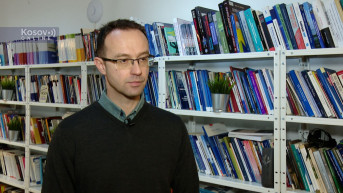
Predrag Petrovic from the Belgrade Centre for Security Policy (BCSP) says for Kosovo Online that there is a relatively lenient punitive policy in Kosovo regarding terrorism, primarily because a portion of the population considers those who fought in Syria as heroes.
Commenting on the US State Department's report on small penalties imposed by the Pristina judiciary on members of terrorist organizations, Petrovic emphasized that one of the reasons was that Kosovo authorities did not want to further antagonize people who sympathized with the fighters from Syria.
"A part of the population sees them as heroes, as people who were willing to give their lives for higher ideals. It is important to emphasize here that it is not crucial for the punitive policy to be very strict because a significant part of radicalization actually takes place within the prisons. Therefore, one of the recommendations is for the penal policy not to be overly stringent. What may be lacking more in Kosovo is the absence of more serious reintegration and resocialization programs for those who returned from Syria," Petrovic highlighted.
He also addressed the State Department's assessment that citizens of Kosovo were easy targets for recruitment by violent extremist organizations. As he noted, the risk exists, but it is moderate.
"I understand that Western states have significant concerns about Kosovo Albanians, considering that we had one of the leaders and commanders of the Islamic State Mujahideen from there, and there was an attack at Frankfurt Airport committed by a Kosovo Albanian. The fact is that the risk exists, but it is of a moderate nature," Petrovic said.
He doesn't believe that visa liberalization for Kosovo citizens, starting on January 1st, can intensify the security risk for the Western Balkans and Europe.
"I don't believe that liberalization can further increase that risk. People identified as violent extremists are known to the authorities. I believe that the significantly greater risk for Western states comes from organized crime originating from this region," our interlocutor emphasized.
When asked why Kosovo is known for extremists who become part of the Islamic State, Petrovic responded that the reasons were mainly socio-economic.
"People living in Kosovo are susceptible to radicalization primarily because the socio-economic situation there is very poor. People living in rural areas, who do not have a good level of education, are particularly at risk, making them susceptible to radical ideas," Petrovic concluded.


0 comments