
Plaka: A clear message for the Western Balkans – the EU has a positive stance but also concrete demands
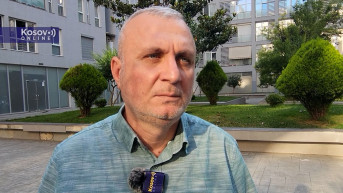
Armand Plaka, a lecturer at Epoka University in Tirana, political analyst, journalist, and expert on German politics and culture, stated that the messages from the summit in Skopje carry multiple meanings and clearly reflect the European Union’s position toward the countries of the Western Balkans.
“Of course, the messages are of different kinds and meanings. First of all, there is a message for the host country, but also for all neighboring countries. What caught my attention was the way the speeches were arranged, giving the appropriate importance from Prime Minister Rama to other regional leaders in order to express the priorities the European Union has for this region, which has always been a ‘Gordian knot’ for past EU administrations, as well as for the current one,” said Plaka.
He pointed out a shift in the EU’s approach to the Balkans, especially after the war in Ukraine.
“Of course, throughout these years—especially with developments over the last two or three years due to the war in Ukraine—we have seen a kind of reconfiguration of European policy toward the Western Balkans. This has affected priorities as well. It has been a consistent trend, although it wasn’t always visible, but now it became more explicit with this summit in Skopje, where once again the perspective of the EU’s ‘open door’ or ‘extended hand’ to our region was highlighted—while clearly signaling that nothing will be handed out as a gift or guaranteed,” he emphasized.
Plaka added that past views on the region’s European perspective have been misguided—both overly optimistic and entirely pessimistic. The EU, he emphasized, has a positive stance but with concrete requirements.
“The European Union has shown a positive tendency and has made that clear multiple times. However, the EU has insisted on the implementation of reform programs and structural changes to address issues perceived as ‘gangrene’ in the region. In our region, there are some problems that can be described as ‘endemic diseases,’ such as the high level of corruption, which can only be tackled and eliminated through deep reforms—reforms that are ongoing for years and being undertaken by all countries in the region,” he said.
Speaking about progress, Plaka noted that the future looks positive.
“I see only one case where there’s an incompatibility between the policies of regional countries and the foreign policy of the European Union. That concerns Serbia, which is not fulfilling what is considered an obligation toward the EU—mainly due to strong pressure from the Kremlin,” Plaka stated.
Unlike Serbia, Plaka highlighted Albania’s clear course, noting that it has always aligned with Brussels’ foreign policy and was the first to support any EU initiative related, for example, to sanctions against the Russian Federation—even when some long-standing EU members were opposed.
He warned that reforms are also essential when it comes to democratic standards.
“We must fight harder for other goals such as the level of democracy, freedom of speech, and freedom of the media. I am confident these challenges will be overcome step by step and within the expected timeframe for membership,” he said.
Commenting on regional initiatives, Plaka noted that the concept of the “Open Balkan” has lost significance.
“There was a certain ambiguity regarding regional cooperation, as until recently there was an initiative supported by two leaders, Vucic and Rama, but we can say it has failed. This initiative (Open Balkan) was, of course, compatible with the official plans of Brussels, and even Berlin, for economic integration and a common market. At this point, I believe the idea is being reconfigured by the new leaders in Brussels, and this was highlighted at the recent summit in Skopje,” Plaka concluded.

0 comments