
Plaka: The political crisis completely shifts France’s commitment to the Balkan question
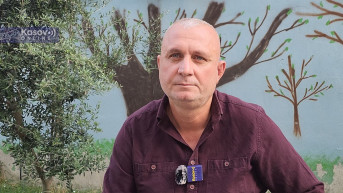
Lecturer at Epoka University in Tirana and political analyst Armand Plaka assessed that the region should be concerned because, due to the current crisis in France, as well as in other key EU states, “the future of the Balkans is on the periphery of their interests.”
“We should be concerned about the situation in France, taking into account our interests. It seems that the future of the Balkans is on the periphery of this country’s interests. The cause is the current problems and strong challenges that official Paris is facing and because of which, it seems, they are completely shifting France’s commitment to the Balkan question,” Plaka told Kosovo Online.
Commenting on the current political crisis in France which culminated in the dismissal of the prime minister, this analyst emphasized that the key problem of the new government will be “the definition of foreign policy to the extent that it is possible.”
“We know that the pillars of foreign policy must have continuity. Every new government cabinet has the opportunity to resize this policy, always maintaining traditional priorities. In that context, I think that France and Germany, which are the main duo of the EU, will continue to pay attention to developments in our region, and to events on the global level, especially the crisis in Ukraine,” Plaka is convinced.
He says that the Western Balkans has been in danger for the last ten years from “the heating up of Euroscepticism and the exponential growth of radical right-wing groups.”
“What is currently happening in France I see as a new chance that is being given to this country, and to our region. I hope that the positions of the new government will be strengthened and that the most immediate problems will be resolved, such as the budget or pensions, i.e. internal problems,” this analyst is convinced.
He bases his optimism on the fact that the new French Prime Minister Sébastien Lecornu is a former minister of defense and “compatible with the new plans and the spirit of NATO.”
“It is about a plan of ‘reforms for common defense’ in order to face what is known as the Russian threat or the new global order. I sincerely hope that France will keep the same course and that our perspective will not be endangered, and may even be further enhanced—I mean the entire region, given that Albania, as well as other countries (of the Western Balkans), have a clear pro-European stance,” Plaka believes.
He partially explains the causes of the crisis in France also by the strengthening of right-wing parties in Europe, which has not bypassed this country either, with the rise in popularity of Marine Le Pen’s National Rally.
“If an appropriate formula is not found and if the demands of radical groups of the left, the unions, and new protest groups are not met, the country could go to early elections,” Plaka warns.
As another important moment for France’s further fate, he points to the presidential elections which are planned to be held in 2027.
“The presidential elections in 2027 could bring a very big shock. We will have a new president, and perhaps a completely different political line. I do not want such a scenario of a victory of radical right-wing groups, because that would be a very bad fate for our region, and even more so for Albania. Their public positions, consistently, have been obstructive, and often bleak for the European perspective of the Western Balkans,” Plaka emphasizes.
He recalls that France has for years been suffering from internal political instability.
“That is not only because of the current situation, but also because of the continuous crises that have occurred, especially in the last mandate of President Macron. We remember the large ‘yellow vests’ protests, as well as the manner in which protests happen in Europe. All that shook the state to its foundations—what is known as the French Fifth Republic, whose foundations were laid by the immortal, famous leader, General de Gaulle,” Plaka assesses.
He sees the appointment of the new French Prime Minister Sébastien Lecornu as a positive step.
“Not only because he has long experience and was part of an important party, but his movements within the former government cabinet were such that they brought him great popularity, especially among left-wing groups and parties,” Plaka concludes.


0 comments