
Prattipati: Pristina's actions that increase tensions hinder productive US–Kosovo cooperation
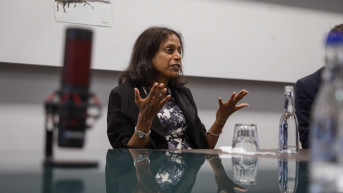
The US Chargé d'Affaires in Pristina, Anu Prattipati, stated in an interview with Gazeta Express that Kosovo is missing opportunities as a result of the political blockade. She emphasized that strong partnerships require peace and stability, and assessed that actions by the Pristina authorities which raise tensions in the region make it more difficult for the US to engage in productive cooperation with Kosovo. She also expressed particular concern over the closure of parallel Serbian institutions without coordination with the affected community, as well as statements about unilateral moves to integrate education and healthcare into the Kosovo system. Ahead of the local elections, Prattipati said that Serbian parties should not be prevented from participating.
In the interview with Gazeta Express, Prattipati stated that the administration of President Donald Trump "is looking for strong allies" to advance shared priorities and that opportunities to strengthen economic ties "could be missed if this blockade continues."
She underlined that Kosovo, without functioning key institutions and with “an uncertain path toward their formation,” is not a reliable partner for the US.
She reminded that Kosovo’s leaders were elected to resolve the challenges facing the country and that it is their responsibility to resolve the political stalemate.
“The United States can offer support, but cannot make decisions on behalf of Kosovo’s leaders or its people. For the US–Kosovo partnership to thrive, Kosovo must ensure the necessary conditions. Forming a government after elections is a basic democratic function, and this ongoing political blockade is causing Kosovo to miss opportunities. The Trump administration is seeking strong allies to advance shared priorities; opportunities to strengthen economic ties could be lost if this blockade continues. Ultimately, this is a decision for Kosovo’s elected representatives, but we urge them to work together to fulfill the mandate entrusted to them by the people,” she stressed.
Prattipati added that it is not the role of the US to interpret Constitutional Court rulings or how they should be implemented, but rather that political leadership must work together to form institutions in accordance with the Constitution and the Court’s decisions.
Speaking about the upcoming local elections, Prattipati emphasized that Serbian political parties are part of Kosovo’s political landscape and should not be denied participation.
“I refer to what Vice President J.D. Vance said in his speech at the Munich Security Conference in February: ‘You cannot win a democratic mandate by censoring your opponents.’ He later added: ‘I believe that excluding people, ignoring their concerns, or worse, shutting down the media, the electoral process, or political participation, does not protect democracy. It is the fastest way to destroy it.’ All parties must support citizens’ rights to elect their representatives. That means preventing any attempts to block Serbian parties from participating in elections. Using any administrative or procedural tricks to prevent candidacy of parties or individuals who otherwise meet the criteria would undermine the legitimacy of the elections,” Prattipati underlined.
She pointed out that strong partnerships require peace and stability and noted that actions by the Pristina government that raise tensions in the region hinder the US’ ability to cooperate effectively with Kosovo.
She reminded that Prime Minister Albin Kurti’s caretaker government is responsible for the safety and welfare of all Kosovo citizens.
“We are particularly concerned about the closure of parallel Serbian institutions without coordination with the affected communities, as well as statements about unilateral moves to integrate education and healthcare into the Kosovo system. We do not dispute that these institutions should eventually be integrated into Kosovo’s system. However, how that process is carried out is crucial. Any plan to change the status of parallel institutions must be fully coordinated and discussed in advance with elected leaders and members of the Serbian community in Kosovo, and aligned through established channels such as the EU-led dialogue, with a clearly defined timeline and plan. There is no responsible way to do otherwise,” Prattipati emphasized.
She stated that the US is committed to a strong and productive relationship with Kosovo and wants to cooperate on issues that promote stability, security, and regional prosperity. She recalled that this commitment was confirmed by the visit of senior official Brendan Hanrahan from the US Bureau, who encouraged the government to create a favorable environment for further American investments.
“The Trump administration has made its stance clear: the US government prioritizes security, stability, and fair economic relations. If the government of Kosovo shares these priorities and is committed to promoting stability and peace, the opportunities for cooperation are nearly limitless. We see potential in a range of sectors, including energy, defense, infrastructure, information and communication technology, and cybersecurity. On the other hand, if the US sees the Kosovo government taking steps that undermine these priorities, our ability to cooperate will be limited,” Prattipati concluded.


0 comments