
Prenkaj: Anti-Western sentiment in Kosovo could lead to political isolation
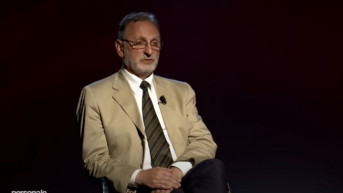
Diplomat and former Kosovo ambassador Albert Prenkaj said that the statement by British Ambassador to Kosovo Jonathan Hargreaves about the Special Court verdict was taken out of context, warning that Kosovo should not foster anti-Western sentiment which, he claims, could lead to political isolation.
Hargreaves recently said that the former KLA leaders were convicted of individual crimes and that the decision of the Specialist Chambers was not a verdict against Kosovo. Prenkaj explained that an ambassador has an obligation, in accordance with the instructions of their country, to promote and protect its interests, but also to cooperate with the local authorities in order to preserve and strengthen mutual relations.
“We cannot expect one country, no matter how friendly it may be, to show the same sentiment or emotion that may be expressed across the political spectrum, in civil society or among citizens,” Prenkaj told Ekonomia Online.
According to him, in this particular case, the United Kingdom respects the court established by the Kosovo Assembly in cooperation with the international community, as well as the first-instance verdict, without assessing whether the verdict is fair or not.
Prenkaj stressed that the public in Kosovo should be aware of the risks involved in incorporating this issue into Albin Kurti's political narrative, through which, he says, Kurti has shaped his approach to the Western factor for six consecutive years.
“Incorporating this issue into Albin Kurti's political narrative, through which he has shaped his approach to the Western factor for six consecutive years, carries the risk of knowingly leading the country toward a further loss of political and diplomatic space,” Prenkaj assessed.
He warned that such a process could develop into isolation, consciously or unconsciously, or into a path toward political and diplomatic marginalization.
“Fostering and strengthening an anti-Western mentality is strategically wrong. Such an approach risks closing even the few channels of communication that Kosovo has with the West,” Prenkaj said.
In his assessment, there is room for criticism, debate and disagreement, but discussions with friendly countries should not undermine the foundations of the state's and institutions' value system, nor the social values that Kosovo shares with those countries.
“A constructive and level-headed debate, with concrete options and demands for a way out of the situation in which the state and society find themselves, through cooperation and coordination, can offer an acceptable solution,” Prenkaj said.
He added that reactions, particularly emotional and instinctive moves, are not a way to solve problems.
Prenkaj believes that, just as issues of freedom, independence and state-building were achieved through certain processes, the issue of preserving the independence of the Specialist Chambers, as well as confronting the “deep scar” they have left on Kosovo's history and future, should also be addressed through coordination with the West.
“Creating an anti-Western environment would amount to capitulating to projections that predicted a conflict between Kosovo and the West and its distancing from the West,” the former Kosovo ambassador assessed.
“This is not the time to burn all our bridges. Kosovo needs communication, coordination and political prudence – especially with those it still considers its strategic partners,” Prenkaj concluded.



0 comments