
Prenkaj: There could be disagreements even among EU members supporting qualified majority voting
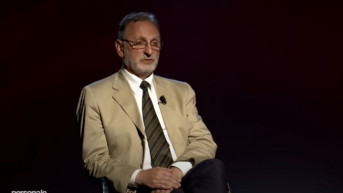
The introduction of qualified majority voting on issues concerning the EU's Common Foreign and Security Policy could significantly limit individual member states' ability to block common EU decisions, former diplomat Albert Prenkaj says, but he notes that disagreements could also arise among the countries that proposed the change, particularly when it comes to opening clusters in the negotiating process.
Prenkaj points out that key European Union decisions have so far generally been made by consensus, recalling that former Hungarian Prime Minister Viktor Orban blocked a 90 billion euro loan for Ukraine, thereby halting important assistance to that country.
He notes that an EU reform process is underway, which is "being considered from several perspectives," including reform of the decision-making process, the common foreign and security policy, as well as institutional competences.
In a written statement to Kosovo Online, Prenkaj says that High Representative for Foreign Affairs and Security Policy Kaja Kallas is facing disagreements with larger member states when it comes to reforming the EU's foreign and defense policy, and that on several occasions individual member states, as well as senior officials in Brussels, have disagreed with Kallas's public positions.
In addition, European Commission President Ursula von der Leyen is advocating the transfer of some of the European External Action Service's competences to the Commission, which is to some extent contrary to Kallas's position, as she advocates greater autonomy for the EEAS.
"Central and northern European countries – France, Germany, the Netherlands, Belgium and Austria, as well as the Scandinavian countries of Denmark, Sweden and Finland, together with Spain and Romania – put forward five proposals for reforming decision-making in a letter. Among other things, they insist on moving away from the possibility of blocking decisions with a veto toward the principle of 'constructive abstention,' as well as applying the so-called 'passerelle' clause, which allows the European Union to change its decision-making procedure without formally amending the founding treaties," Prenkaj explains.
He adds that this could, among other things, enable the use of qualified majority voting in certain areas of foreign and security policy.
"Qualified majority voting is already applied in a large number of EU decision-making areas, and the Lisbon Treaty further expanded its use, particularly in the areas of justice and home affairs, as well as in certain aspects of economic governance and the coordination of public policies. However, when it comes to sensitive areas, such as taxation, amendments to the founding treaties and key decisions within the Common Foreign and Security Policy (CFSP), consensus remains the basic decision-making principle. Although there is currently a debate about a possible shift to qualified majority voting within the CFSP through the 'passerelle' clause, such a change has not yet been established as a general rule," Prenkaj notes.
He also recalls that German Chancellor Friedrich Merz recently said that the European integration process must be accelerated, after which additional conditions and proposals from other member states followed.
"Establishing qualified majority voting on issues concerning the Common Foreign and Security Policy could significantly limit the ability of individual member states to block common European Union decisions, including issues on which some member states still do not recognize Kosovo's independence. However, I believe that disagreements can also be expected within the member states that submitted proposals to introduce qualified majority voting if such a reform is adopted," Prenkaj says.
He adds that this could concern the issue of prohibiting the linking of "unrelated issues" to the matter being decided, as well as respect for the principle of "sincere cooperation" between European Union member states.
"This could be particularly significant in the context of the possible opening of new clusters in accession negotiations with candidate countries, such as Montenegro, Albania, Serbia and other Western Balkan countries," Prenkaj notes.
When it comes to Kosovo, Prenkaj recalls that Pristina is still waiting for the European Commission to conduct a comprehensive assessment as part of the European integration process.
Such an assessment should cover, among other things, fulfillment of the Copenhagen criteria, which require stable democratic institutions, a functioning market economy, as well as the ability to take on and effectively implement the obligations arising from membership in the European Union.
"At this point, Kosovo is facing a serious institutional crisis due to delays in implementing the election results and continuing disagreements over the formation and constitution of state institutions. The prolonged deadlock in this process is putting the state and society in a state of serious constitutional and institutional uncertainty," Prenkaj added.



0 comments