
Prenkaj: Citizens of the Serbian community have the highest standard of human rights with constitutional guarantees
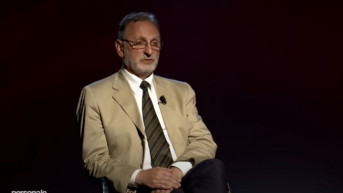
Former Ambassador of Kosovo to Italy, Albert Prenkaj, believes that citizens of the Serbian community in Kosovo enjoy the highest standard of human rights with constitutional and legal guarantees, and that the claims of Serbian Patriarch Porfirije, presented in a letter sent to world statesmen as well as to Pope Leo XIV, are unfounded. Those claims state that the Law on Foreigners calls into question the survival of the Serbian people and Orthodox holy sites in Kosovo.
Patriarch Porfirije, as a reminder, in a letter addressed to important European and global statesmen ahead of March 15, when the implementation of the Law on Foreigners was announced, called on foreign officials to use their authority so that the authorities in Pristina would suspend the implementation of what he described as an extremely discriminatory Law on Foreigners.
He also warned that the implementation of this law would not only jeopardize the functioning of the University in Kosovska Mitrovica, primary and secondary schools attended by Serbian students following the curriculum of their own state, and the entire healthcare system providing medical care to Serbs from Kosovo and Metohija, but also the survival of the Serbian people and Orthodox holy sites.
Prenkaj assesses that the letters were sent to three powers: the United States as one of the global powers, Russia as a traditional ally, and the Vatican as an important center of Christianity.
“Touching on the essence of human rights, Patriarch Porfirije aims to prompt global offices to draw the attention of Kosovo officials. The visit of the European envoy for negotiations, Mr. Sorensen, to Prime Minister Albin Kurti resulted in an agreement to begin implementing the Law on Foreigners and the Law on Vehicles, ‘with some additional measures’ regarding citizens of the Serbian community in Kosovo, as well as those who have activities in Kosovo but are not its citizens. We are witnessing that Prime Minister Kurti is making unprincipled compromises on issues that are turning into negotiating topics under supervision, and even with interventions from the international community,” Prenkaj told Kosovo Online.
He also emphasizes that accepting documents issued by the “illegal authorities of the so-called ‘Office for Kosovo and Metohija’ is unlawful and represents a violation of Kosovo’s state sovereignty.”
“I believe that with such and similar positions, the Serbian Orthodox Church does not serve ecumenism with the Holy See, other churches, or interreligious dialogue with other religious communities,” Prenkaj says.
The Vatican, he points out, is known as a universal moral authority with open dialogue with all political, cultural, and religious centers.
“I think that through ecumenism and dialogue, the Holy See maintains consistently good relations with the local Catholic Church in Kosovo, the Serbian Orthodox Church, as well as with the Islamic Community of Kosovo,” he notes.
Speaking about relations between Kosovo and the Holy See, he states that the Diocese of Prizren was recently elevated from the status of an administration of the Holy See to the status of a separate diocese, no longer subordinate to the Archdiocese of Skopje.
He also recalls separate meetings of Kosovo officials, Prime Minister Kurti and Vjosa Osmani, in the Vatican with Pope Francis in 2023, meetings of Osmani with Pope Leo XIV and the Secretary of State of the Holy See, Cardinal Pietro Parolin (2025), and the meeting of former Kosovo President Ibrahim Rugova with Pope John Paul II.
“Visits of high-ranking Kosovo officials to the Vatican since the declaration of independence, and even before, are an important priority of Kosovo’s foreign policy. Kosovo has unilaterally opened a special Mission to the Holy See. However, Kosovo has still not been recognized by the Vatican. One of the main explanations by Vatican officials is that the Holy See is in ecumenical dialogue with the Moscow and Belgrade Patriarchates and recognizes countries that are members of the United Nations,” Prenkaj states.
He also recalls the official visit of Serbian President Aleksandar Vucic to the Vatican in 2019 and his meetings with Pope Francis and Cardinal Pietro Parolin, as well as the Serbian President’s statement before departing for the meeting with the Pope: “I am going to the Pope to ask him not to recognize Kosovo.”
There were attempts, Prenkaj says, by the Vatican to organize a papal visit to Serbia.
“Pope Benedict XVI in 2013, for the 1,700th anniversary of the Edict of Milan, announced a visit to Nis, the birthplace of Emperor Constantine the Great, who is a saint in the Serbian Orthodox Church. The then Patriarch of the Serbian Orthodox Church, Irinej, said he would welcome the Pope’s visit, but the Russian Orthodox Church reportedly opposed the idea,” Prenkaj stated.
The former Kosovo ambassador in Rome also points to a statement from February 17, 2008, by the then spokesperson of Pope Benedict XVI, Father Lombardi, that “the unilateral declaration of independence of Kosovo – based on the recommendations contained in the UN plan of mediator Martti Ahtisaari – creates a new situation which the Holy See will, of course, follow carefully, and will also have to assess all requests it receives in that regard.”
This statement, Prenkaj emphasizes, was interpreted by Kosovo officials as implicit recognition.
0 comments