
Prorokovic: Kurti knows that there is no consensus in the CoE for Kosovo's admission, which is why he delays fulfilling the conditions
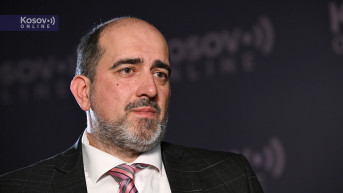
Senior Researcher at the Institute for International Politics and Economics, Dusan Prorokovic, states that currently within the Council of Europe, "there is no consensus regarding the admission of the so-called Republic of Kosovo to full membership," and that, as he notes, Albin Kurti is aware of this, which is why he delays fulfilling the conditions set before Pristina until a general stance is formed within the CoE.
Prorokovic points out that international organizations dislike being overruled, therefore, in cases where there is no consensus, "criteria and conditions are made up that the candidate must fulfill to acquire full membership status." In the case of Kosovo, they've limited it to three things – the return of land to the Visoki Decani Monastery, the Community of Serb Municipalities, and the issue of land expropriation in the north.
"Is that enough? It isn't. When you mention Kosovo in the CoE, the first association is Dick Marty and his report on organ trafficking. So, Kosovo has been extensively discussed within the PACE, many topics have been examined over the past 20 years, there are things demanded to be implemented by various international organizations and Albanian authorities, and I'm not sure if everything has been implemented, and now we've come to these three. Albin Kurti understands this, that there is no consensus. Even if he fulfills those three conditions, a fourth or fifth would probably emerge until a general stance is formed in the CoE that the so-called Republic of Kosovo should be admitted, and that is why he is delaying this," Prorokovic says for Kosovo Online.
However, our interlocutor believes that Kosovo is on the right track to be admitted to the CoE, and Serbia should already be thinking about how it will position itself in a year, two, or three.
"They have a formal majority for admission there, meaning it's not a matter of formality but a political decision. As political decisions are reconciled under different pressures and trades, we will have to decide as well. However, this doesn't concern me much because the CoE has largely lost the function it had, let's say, in the first decade of the 21st century. That organization was primarily dedicated to Russia and the post-Soviet space, where it was supposed to implement certain rules and principles. Russia stepped out, as did Belarus, and I doubt Turkey will stay in that organization for long. The CoE is not an international organization that exists because of the Balkans. The moment they let go of the post-Soviet space, they no longer have a purpose for their existence, and it will be very difficult for them to regain it," Prorokovic says.
Although admission to the CoE is desired in Pristina because it is considered an "asset" that would ease their way to membership in other organizations, Prorokovic does not think that is the case.
"The potential admission of the so-called Republic of Kosovo to the CoE is not pleasant for us, but I don't see that it is particularly spectacular and that it would open doors for them to be admitted to other international organizations, regardless of how it is argued. In Pristina, they see the CoE as the first step towards admission to UNESCO. I doubt it would play out that way. They don't even have that formal majority in UNESCO, not to mention political issues," Prorokovic emphasizes.

0 comments