
Prorokovic: The number of envoys for the region may be increasing because destabilization is expected
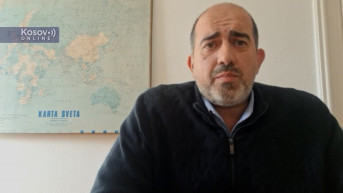
Senior Research Associate at the Institute of International Politics and Economics in Belgrade, Dusan Prorokovic, told Kosovo Online that there are several possible reasons why more and more European countries are appointing envoys for the Western Balkans. One of them, he notes, is the expectation of a crisis or destabilization in the region, which is prompting renewed attention, especially in light of potential talks between Trump and Putin and the possible resolution of the Ukraine crisis, which he says will affect not only the Western but the entire Balkan region.
Given the recent appointments of envoys for the Western Balkans in Slovakia, the Czech Republic, and the United Kingdom, he adds that there is another possibility: either the European Union or some of the more influential Western countries, like the UK, will become more actively engaged in the Balkans.
“The third possibility is that additional funds will be allocated from the EU budget, and where there is money, there are also special envoys – then various structures within EU member states adjust accordingly,” Prorokovic says.
He points out that Serbia’s experiences with special envoys have not been particularly positive and that despite the presence of several envoys in recent years for the Kosovo issue, there have been no significant results.
“What they managed to secure in Belgrade – a verbal agreement to the Franco-German plan, could have been done without special envoys. Ultimately, that was the result of coordinated pressure from Scholz and Macron, and the envoys didn’t play a major role. Their usual task is to enhance communication on a specific issue. We have had special envoys in 1999, and from 2006 to 2008 during the Kosovo status negotiations, and again since the pandemic, once more regarding Kosovo and Metohija,” Prorokovic recalls.
At this moment, however, he observes that the appointment of special envoys for the Western Balkans implies a broader range of topics they may need to address, as the Kosovo issue is no longer the only open question.
“There is the issue of destabilization in Bosnia and Herzegovina, the growing Russian influence, the situation in North Macedonia, Albania, Montenegro, and now the latest developments in Bulgaria and Romania, which aren't part of the Western Balkans but are part of the Balkans. I don't know how special envoys will manage to deal with all these topics. It would require someone to be a major expert in Southeastern Europe or Balkan affairs to cover everything. So not only do we have poor experiences with special envoys, but now we are seeing a new situation where they are being given a very broad set of issues to handle, essentially coordinating the work of their own embassies on the ground. That is another indication that this work is more likely to end in failure than in success,” Prorokovic concludes.



0 comments