
Pupin Initiative on the State Department report: A more pragmatic approach toward Serbia without insistence on Kosovo’s recognition
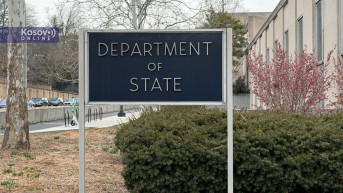
The Pupin Initiative, analyzing the U.S. State Department’s report on the Western Balkans, assessed that Washington is increasingly approaching Serbia through a pragmatic framework based on strategic partnership, energy, and infrastructure, while adopting a significantly softer tone regarding relations between Belgrade and Pristina. The analysis also notes that the document does not directly insist on the formal recognition of Kosovo, but instead emphasizes the need for an “agreement acceptable to both sides,” while simultaneously opening the possibility for the launch of a strategic dialogue between Serbia and the United States during the course of this year.
As stated in the analysis, the report was submitted to the U.S. Congress in accordance with the provisions of the National Defense Authorization Act (NDAA), which in recent months has been the subject of intense debate in American political circles and the media.
The report directly builds upon the broader strategic logic of the NDAA for 2026, which increasingly views the Balkans through the prism of energy security, infrastructure connectivity, technological competition, and the containment of Russian and Chinese influence, and less through the principles of state-building and the role of a global policeman.
Generally Positive Tone Toward the Region and Serbia
According to the Pupin Initiative, the overall tone of the report is generally positive toward both the region and Serbia, especially in comparison to previous reports, because the region is no longer viewed exclusively through the prism of conflict and crisis, but rather through the potential for partnership, investment, and strategic cooperation.
“In that context, Serbia is not singled out in a negative manner, but is included within the broader framework of ‘strong and positive relations,’ which indicates that Washington today places significantly greater emphasis on shared interests than on old political narratives,” the analysis states.
No Direct Pressure on Serbia Regarding Kosovo’s Status
Regarding Kosovo, the Pupin Initiative points out that there is no pressure concerning recognition, but rather that the United States continues to encourage Belgrade and Pristina to continue working toward normalization in order to reach an agreement acceptable to both sides.
“The rhetoric of the report is noticeably more flexible compared to the earlier period, and there is no direct pressure on Serbia regarding the formal recognition of Kosovo. The emphasis is on an ‘agreement acceptable to both sides,’ which leaves significantly more room for diplomatic maneuvering and reflects a more pragmatic approach by Washington toward regional issues,” the Pupin Initiative analysis states.
Positions Fully Aligned With Trump’s Ideology
The positions presented in the report, according to the Pupin Initiative, are fully aligned with the ideology of U.S. President Donald Trump, whose administration, as stated, is focused on empowering local actors to resolve their own challenges instead of maintaining excessive dependence on international intervention or oversight.
“The United States no longer seeks the role of a global policeman nor the principle of state-building, but rather partners capable of independently bearing the burden of their own security and regional stability. In that sense, the Balkans represent a continuation of that trend, which is positive for the region because local leaders and states are given primacy in political, security, and economic matters, with American support only where there is a clear common interest,” the analysis notes.
Potential Indicator of the Launch of a Strategic Dialogue With Serbia
The report also contains indications regarding the potential launch of a strategic dialogue between the United States and Serbia, which the Pupin Initiative assesses as a highly important signal, because it would mean that others would no longer decide Serbia’s fate, but rather that Serbia would become a partner in direct communication with Washington.
“This implies a concrete institutional mechanism through which policies in the fields of security, energy, economy, technology, infrastructure, and regional stability would be regularly aligned and coordinated, which would represent one of the most significant changes in relations between Serbia and the United States in recent decades,” the report states.
Strategic Connectivity as the Central Theme of the Report
The Pupin Initiative assesses that strategic connectivity is the central component of the report, while the United States views Serbia as a key regional actor due to its geographical position, infrastructure potential, and growing technological sector.
“Key energy projects include the Southern Interconnector between Croatia and Bosnia and Herzegovina, the planned Serbia–North Macedonia gas interconnector, and the further integration of the Western Balkans’ electricity grids with the European market. In practical terms, this represents the creation of a new regional energy architecture aimed at reducing dependence on a single supplier, primarily Russia, and integrating the Balkans into broader European and Mediterranean energy and logistical flows,” the analysis adds.
Cooperation With American Financial Institutions
Regarding cooperation with American financial institutions such as EXIM Bank, the Pupin Initiative notes that Serbia is already directly involved in this process, because EXIM Bank recently approved financing for the development of a new 5G network for Telekom Srbija, which, according to the assessment, represents an important shift away from Chinese technological influence and dependence on Huawei infrastructure, while strengthening ties with American technological and financial partners.
Infrastructure and Energy Vulnerability of the Region as a Security Issue
The report clearly demonstrates that Washington views the Balkans’ infrastructural underdevelopment and energy dependence as a strategic and security issue, rather than merely an economic problem, and that the United States plans to invest in infrastructure projects throughout the region in partnership with American companies in order, among other things, to reduce energy dependence on Russia.
“Particular priorities include the Croatia–Bosnia and Herzegovina gas interconnection, the planned Serbia–North Macedonia interconnector, the development of hydro-energy capacities in Serbia and the region, as well as the integration of the Western Balkans’ electricity grids with the European market. In this way, Washington seeks to limit the influence of Russia and China in these sectors and strengthen the Western presence in the region,” the analysis states.
Opportunity for Regional Investments in Energy, Technology, and Infrastructure
The analysis further notes that the State Department report clearly demonstrates that the United States sees the Balkans as an area for major strategic investments in energy, digital infrastructure, 5G, transport, and other critical sectors.
Specifically identified priorities include the gas interconnection between Croatia and Bosnia and Herzegovina, the planned gas interconnector between Serbia and North Macedonia, the development of hydro-energy capacities in Serbia and the wider region, and the integration of the Western Balkans’ electricity networks with the European market.
“This demonstrates Washington’s intention to limit the dominance of Russia and China precisely in these sectors, while simultaneously strengthening Western economic and technological presence throughout the region,” the analysis adds.
Security Issues Remain a Point of Disagreement, But Without Major Changes in U.S. Policy
The analysis notes that the only points which could be interpreted as negative for Serbia are the references to Kosovo and Albania as founders of the Peace Committee and the continuation of support by the U.S. administration for the Kosovo Security Force.
“However, it is important to emphasize that the Peace Committee has still not been fully developed and institutionally consolidated, while the American position regarding the transformation of the Kosovo Security Force has existed since 2018. Therefore, there is no fundamentally new policy here, but rather continuity of already well-known American positions,” the analysis adds.
Serbia as a Natural Partner in the New American Strategy for the Balkans
The Pupin Initiative concludes that Serbia is increasingly positioning itself as a key regional pillar in the new American strategy for several reasons.
Among other things, Serbia allocates significant resources for defense and, despite its military neutrality, maintains stable and pragmatic relations with NATO, including recent joint military exercises.
In addition, Serbia is recognized as a key regional actor contributing to regional stability and possessing the capacity to independently conduct its own security and foreign policy, which is in line with the new American doctrine of relying on strong local partners.
Furthermore, the analysis notes that Serbia possesses one of the most developed technological sectors in the region, with approximately five billion euros in ICT service exports, a significant portion of which is directed toward the American market.
“Thanks to its geographical position and infrastructure potential, Serbia is emerging as a key transit and connectivity hub for the Balkans, with the potential to become one of the principal actors in the new geopolitics of corridors and supply chains,” the analysis adds.
It is also noted that the report indirectly opens space for accelerating Serbia’s energy diversification, because Washington considers dependence on any single energy actor to be a long-term strategic vulnerability.
“Cooperation with American financial institutions already exists in practice, while EXIM Bank’s financing of Telekom Srbija’s new 5G infrastructure represents an important step toward stronger technological integration with the United States and the gradual reduction of dependence on Chinese suppliers,” the Pupin Initiative concludes in its analysis.

0 comments