
Radic: It would be understandable for Americans to raise the question of who should be at Bondsteel
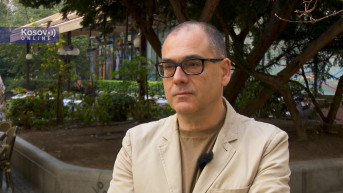
The assumption that Donald Trump's new term might bring about the gradual closure of the Bondsteel military base, according to military analyst Aleksandar Radic, could materialize in the form of U.S. troops leaving Bondsteel and being replaced by NATO forces from the broader Southeastern European region.
"Trump previously demanded that European member states take on greater responsibility, and in that context, it might even be understandable for the Americans to raise the question of 'who should be at Bondsteel'—whether it should be Europeans or American forces," Radic told Kosovo Online.
He added that the Balkans are of interest to European countries, making it entirely rational to expect Trump’s administration to say: "This is a primary European security concern; KFOR should remain at full capacity, but it will be a European problem, not an American one." This would mean that U.S. reservists from Montana, Alaska, California, North and South Dakota would no longer need to be deployed.
"KFOR's future is secure in this respect because security risks remain, but on the other hand, it is entirely rational for it to become more of a European issue. Traditionally, European countries with a vested interest in the Balkans assume the role of KFOR commander. Currently, the commander is an Italian general, preceded by Turkish and Hungarian commanders, but predominantly it has been an Italian general," Radic explained.
He recalled that by the end of KFOR's first decade, discussions began about what NATO's mission should be in the future and the actual threat of armed conflict between forces led by Belgrade and Pristina. At that time, there was already talk of creating three "gates" or gradual exit points for KFOR’s withdrawal and transforming it into a mission with a symbolic presence.
"During that period, there was talk of Americans leaving Camp Bondsteel. The U.S. first withdrew all complex combat systems and heavy equipment, as they no longer needed tanks and combat helicopters. By the end of the decade, only a few M113 armored personnel carriers remained, purely by chance. Currently, the Americans at Bondsteel have only light equipment and transport helicopters, such as Black Hawks, which are used for communication and medical transport. Their presence is limited to the National Guard, which is territorial defense. These personnel are reservists on the budgets of U.S. federal units and are routinely rotated," Radic elaborated.
He noted that if Washington ever decides it's time for the Americans to leave, it will not lead to radical changes apart from the symbolic absence of the American flag at the base. According to Radic, it is clear that Pristina finds it very important for the American flag to fly there, even though KFOR is essentially a NATO mission.
He compared the situation to Bosnia and Herzegovina, where the full-capacity combat mission of SFOR was long ago renamed EUFOR.
"There, too, traditional powers interested in the Balkans, along with other countries from our region that have historical and geographical stakes in the area—Austria, Hungary, and Romania—are involved. So I see no reason why it would be surprising if, at some point, the Americans decide to leave Bondsteel and be replaced by forces from the broader Southeastern European region," Radic concluded.


0 comments