
Radojkovic: By blocking the Agreement on membership in the Board of Peace, Kurti is sending a message to Osmani and the US
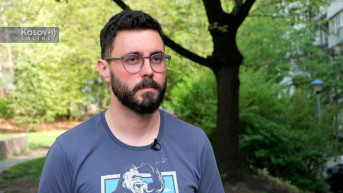
By deciding not to approve the Agreement on Kosovo’s membership in the Board of Peace, a move opposed by a Self-Determination MP, Albin Kurti’s government is in fact sending a message both to former president Vjosa Osmani, from whom it has politically distanced itself, and to the US administration, which has suspended the launch of a strategic dialogue, historian Stefan Radojkovic believes.
Radojkovic points out that Albin Kurti and Vjosa Osmani grew increasingly distant during her mandate, while at the beginning of the year it became clear that the majority held by Self-Determination in parliament would not nominate her for president.
“So this is a direct message addressed to her, but it is also directed at the administration of Donald Trump, which suspended the launch of the strategic dialogue between Pristina and Washington precisely because of the behavior of Kurti’s government toward the Serbian community and the institutions that were supposed to form the backbone of the Community of Serb-majority municipalities, due to unilateral moves within his political campaign,” Radojkovic told Kosovo Online.
He believes that Kurti, considering that the international community often pressures Pristina over the issue of the status of the Serbian community in Kosovo, decided to show a degree of resistance and defiance toward a large part of the international community, primarily toward Washington, as well as toward the Board of Peace.
“It was probably assessed that the Board of Peace should serve as a substitute for the United Nations, and we all know that the Pristina administration wants to be recognized as an equal member and to be represented as a state in the United Nations,” Radojkovic added.
He assesses that even Kosovo’s accession to the Board of Peace was not a wise move by the former Kosovo president, as, he says, it stemmed from “ad hoc needs for her campaign,” but also because, in the long run, it does not suit the Pristina administration, which nurtures the illusion that it will become an equal member of the United Nations.
Asked how Kosovo’s membership in the Board of Peace is viewed in Pristina today, he responds that it is likely seen precisely in that way – as an “ad hoc” move by Vjosa Osmani that was useful during the campaign to bring her closer to Donald Trump.
He points out, however, that in Pristina they have realized that Donald Trump’s disposition is a volatile commodity, meaning that he may be favorable at one moment as long as someone behaves in line with his expectations, but can quickly turn against them.
“It became clear that the Board of Peace is an ‘ad hoc’ body that will exist only as long as Donald Trump’s mandate in Washington lasts, which does not suit the Pristina administration in the long run, if it is thinking strategically about its position. Why would Pristina antagonize the United Nations, which is the only international organization that can recognize statehood, if that were to happen. In that sense, antagonizing that international organization at a time when there is tension between Washington and the United Nations due to Donald Trump’s policies in the Middle East is not sustainable or wise in the long term from the perspective of the Pristina administration,” Radojkovic concluded.


0 comments