
Radojkovic: Self-Determination has a stable majority, a potential return of Thaci would not affect that trend
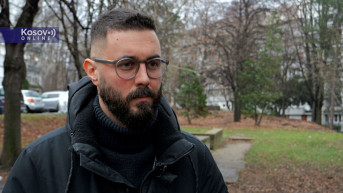
Historian Stefan Radojkovic told Kosovo Online that, if Hashim Thaci is not convicted in The Hague, he doubts that Thaci’s return to Kosovo’s political scene would threaten Self-Determination, which has a stable majority.
According to Radojkovic, trends in Albanian society in Kosovo over the past six years go beyond the period in which Thaci dominated.
“Self-Determination already has a stable majority of votes. Sometimes it is close to 50 percent, sometimes below 50 percent, but it generally moves within those proportions. That indicates a stable trend, and it is unlikely that a single person could change a trend across an entire society. Of course, it is not impossible, and one should not disregard the factor of chance or unforeseen circumstances. History has shown that such things can happen, but Thaci has been absent from the political scene for a long time, and his influence is probably no longer that strong even within his own party,” Radojkovic assesses.
He also points out that in The Hague it is not only Thaci who is on trial, but a group of people who were part of the circle that ran the PDK and who were an important political factor among Albanians in Kosovo.
“Things have now gone so far in a certain direction in favor of Self-Determination that I simply do not see the possibility of any structural, fundamental change in that sense,” Radojkovic emphasizes.
He cites the example of the return of Vojislav Seselj, the leader of the Serbian Radical Party, from The Hague, where he was tried before the Tribunal, which, he says, had the effect that the SRS (Serbian Radical Party) showed a slight rise in popularity only during that month, after which it very quickly returned to its previous level.
“It turned out that sentiment within what was once the large Serbian Radical Party had shifted in favor of the Serbian Progressive Party, and that Vojislav Seselj was not a real challenger to Aleksandar Vucic, who at the time was Prime Minister of the Republic of Serbia and president of the Serbian Progressive Party. This shows that a slight rise in popularity may occur, but I do not see that anything substantial could change,” our interlocutor says.
A potential return of Thaci, according to Radojkovic, could be a lifeline that the Albanian opposition is trying to grasp, as it is clear to them that for quite some time they have been unable to dent the popularity of Albin Kurti.
“But it is not only his popularity, it is also the popularity of the party he represents and its work on the ground, where it is clear that support for Self-Determination is not regionally concentrated, but that it has supporters in all municipalities in Kosovo and Metohija, especially among Albanian communities throughout Kosovo and Metohija,” Radojkovic concludes.


0 comments