
Radomirovic: War and post-war propaganda does not stop, the target is the Serbian community in Kosovo
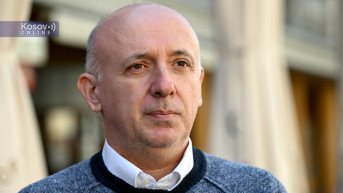
Journalist Vladimir Radomirovic assesses that war propaganda is still at work in Kosovo and that the NATO bombing in 1999 practically showed how Western media served the interests of their states because they disseminated unverified information that suited their governments.
"War and post-war propaganda continue unabated, and it is clear that Serbs and the Serbian community in Kosovo and Metohija are the targets. Self-Determination on the day of the Serbian tragedy claims that Albanian children were killed and that Serbs also killed Albanians on March 17th. It's as if we are not witnesses to what happened, as if we don't know what actually happened and what propaganda RTK and Albanian media played in 2004," Radomirovic said for Kosovo Online.
He believes that such reporting is a result of no one being held accountable for the false news spread in 2004.
"These journalists and editors are still working in leading Albanian media outlets. Self-Determination has once again shown that its sole goal is the complete persecution of the Serbian people in Kosovo, and it's incredible that Western ambassadors in Pristina and Western governments do not react to this obvious national hatred towards a community in Kosovo," Radomirovic believes.
According to him, recent events are just a continuation of the propaganda that peaked just before and during the NATO bombing of the former FR Yugoslavia.
"Every war involves propaganda, especially when you have such a disparity in media power as we had in 1999 and before that year when the West had all the media on their side, and Serbia or the FR Yugoslavia could not effectively counter it," Radomirovic says.
As the most dangerous example of spreading false information, he cites claims by Western media at the beginning of the bombing about the existence of a secret plan by Serbia and the "Operation Horseshoe" action aimed at alleged ethnic cleansing, expelling Albanians from Kosovo.
"Later, we found out that this information was provided by the Bulgarian service to Germany, and from the German service, it was passed on to the media, which, without any verification, broadcasted that information. This led to the indictment of Slobodan Milosevic during the war and everything else we had the opportunity to see," Radomirovic emphasized.
He also recalls that high-ranking NATO officials claimed there was a concentration camp with 100,000 Albanians at FC Pristina stadium, which was debunked, in part thanks to the fact that the then AFP correspondent Aleksandar Mitic went to the stadium and confirmed that it wasn't true.
Radomirovic says that at one point, NATO realized it was losing the media war, which is why it engaged the media expert of the then-British Prime Minister.
"When NATO felt it was starting to lose the media war, when images of suffering that did not suit the member states were coming, Tony Blair sent his media advisor Alastair Campbell to NATO headquarters to help. When the train was attacked in Grdelica Gorge, when it was clear that a civilian target was hit, that dozens of civilians were killed, NATO, at Campbell's urging, sped up the footage from the aircraft's camera that hit the train to make it appear that the train was coming at an unexpectedly high speed and that the pilot had no chance to react, although the truth was that he could see the train and deliberately hit it to cause maximum casualties," Radomirovic says.
As one of the most tragic examples of war propaganda, he cites the bombing of Radio Television of Serbia on April 26th, 1999.
"When NATO bombed RTS in April 1999, killing 16 and injuring dozens of our colleagues, Western media remained silent and even supported it. In Washington, when Richard Holbrooke brought the news that RTS had been bombed, there was applause in the room. American journalists, thanks to this overall propaganda, supported the killing of their colleagues in Belgrade," Radomirovic notes.
According to him, the propaganda from 2003 served as a model for Western media reporting in later wars.
"The bombing of FR Yugoslavia, or the propaganda successfully carried out, also led to propaganda in 2003, before the attack on Iraq, when all Western media outlets effectively supported the attack on a sovereign country and transmitted obvious fabrications and lies from their officials about Iraq having weapons of mass destruction," he says.
He assesses that some Eastern countries, like China, Russia, Qatar, or Saudi Arabia, have launched their media to counter those from the West, and that for Serbia, it is crucial to have professional media representatives who will know how to counter any form of propaganda.
"Serbia can defend itself only with strong media, journalists who are professionals in their field, who speak multiple foreign languages and can communicate on an equal footing with their colleagues from the West and the East, explaining the situation in Serbia, explaining what is really happening here, that Serbia is not a country that wants to persecute minorities on its territory or a country that seeks conflicts or war, but a democratic and free state that wants to communicate with all countries in the world," Radomirovic concludes.


0 comments