
Smajlovic: It is important to reach a credible truth; in ten years, no one will be interested in what really happened in Kosovo anymore
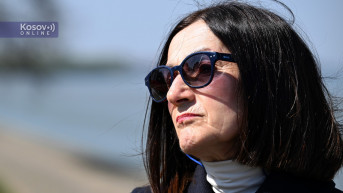
Journalist Ljiljana Smajlovic assesses that even after 25 years since the NATO bombing in Kosovo, there is still present war propaganda, and she fears that this narrative will continue, which is why it is necessary to establish all undisputed facts from the past regardless of whether they would change the opinion of Albanians or the United States.
"You must, for your own sake, strive for as much truth as possible and always show your people that you have established everything that could be established and that your attitude towards credibility and truth is different from your enemies. This is a very important weapon. And we should not be discouraged that we failed to change Kurti's statement and Washington's stance. What is important for us is to document as much detail as possible and show that we care about what our people think, even though they are automatically on our side. That is not enough; efforts must be made to prove everything that can be proven with facts," Smajlovic said.
She says she is not surprised that 24 years after March 17, RTK television and the Self-Determination Movement of Albin Kurti, as she put it, "resurrected" a story in Western media denied and declared false, that the trigger for violence against Serbs was the drowning of three Albanian boys forced by Serbs to jump into the swollen Ibar River.
Smajlovic says this is an egregious example of propaganda and she fears that this narrative will only intensify in the coming years.
"Who will notice that the text was corrected after publication? Self-Determination did not retract their statement. I feel sorry for my colleagues at RTK, but this is perhaps an egregious example that they are serving a terrible propaganda. They may now think they saved their soul by changing two sentences in some text on the website, but nothing has changed. From this year onwards, if Kurti remains in power, but perhaps even if he doesn't, if this passes, it will only intensify. In ten years, we will be divided into two camps. We will tell one story, they will tell another, and no one will be interested in what really happened. Most of the time, no one is interested in what really happened," Smajlovic notes.
She emphasizes that a large number of pieces of information that Western media or NATO disseminated in 1999, before and during the bombing, were classic examples of war propaganda that took various forms, from sophisticated to intellectually offensive.
"In Dorcol and other parts of Belgrade, leaflets were distributed stating in poor Serbian that while people feared bombs, Slobodan Milosevic had villas and yachts in Greece. They didn't realize that such leaflets were for us an association with Nazi Germany and had no effect," she said.
As much more serious and striking examples of war propaganda, Smajlovic points out the case of Racak, the alleged mass executions at a stadium in Pristina, as well as the alleged crimes of Zeljko Raznatovic Arkan, and the testimony in The Hague of a journalist whom NATO had declared a victim of "Serbian forces" a few years earlier.
"Even at Slobodan Miloevic's trial and others, they abandoned Racak as a massacre. We know that Walker was waiting for some incident and immediately stated that people in that village were shot in the back of the head. You know, the worst thing about the worst war propaganda is when state authorities and blocs of states organize it. No one from NATO, Brussels, or Washington will say, 'This is not true, this did not happen.' So, the propaganda that has someone's strong political support wins," Smajlovic said.
She recalls that Western media announced at the start of the war that the FC "Pristina" stadium in Pristina had been turned into a concentration camp for 100,000 Albanians, modeled after the National Stadium in Santiago in 1973 in Chile.
"But you had a correspondent from the LA Times who immediately proved that it was one of the biggest lies," Smajlovic noted.
Similarly, she says, there was the alleged role of Zeljko Raznatovic Arkan in Kosovo in 1999.
"When the bombing began, all American journalists were housed in the Hyatt, and Arkan also moved there, making sure the journalists saw him every day. Then we watched a report where George Robertson, NATO Secretary-General, informed that Arkan with his troops was killing Albanian civilians in Kosovo. Western journalists watched that report and knew Arkan was there in the hotel, but no one refuted Robertson. I guess they did not want to argue with the NATO Secretary-General," Smajlovic said.
She adds that it was almost absurd the testimony of the former editor of Koha Ditore at the Hague Tribunal against Slobodan Milosevic.
"Milosevic asked him, 'NATO announced that you were killed?' He laconically replied that it was true but that at the time, he didn't want to refute that information to avoid discrediting NATO. We found that humorous, but that's exactly how it's done in war," Smajlovic said.

0 comments