
Radosavljevic: It is essential for international partners to be informed about the real situation of Serbs in Kosovo
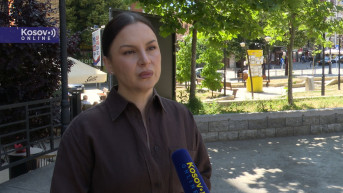
Jovana Radosavljevic, a parliamentary candidate of the Serbian List who participated last week in an informational luncheon for members of the Swiss Parliament on the position of Serbs in Kosovo, organized by the Embassy of Serbia in Bern, stated that she presented the situation of the Serbian community in Kosovo to her interlocutors, with particular emphasis on transitional justice issues, which are becoming increasingly pressing, as well as on legal proceedings conducted against Serbs, often without relevant evidence. Such visits, she noted, are essential in order to ensure that as many international decision-makers as possible are informed about the realities on the ground in Kosovo.
Two days after the luncheon, during a debate in the Swiss Parliament on extending the mandate of the Swiss contingent within KFOR, the issue of protecting the rights of the Serbian community in Kosovo was raised for the first time. During the discussion, members of parliament pointed to violations of the human rights of Serbs by the majority Albanian community and requested clarification from the competent authorities regarding what Switzerland is doing to address the issue.
Speaking to Kosovo Online, Radosavljevic said that she had drawn attention to the conditions in which Serbs in Kosovo live.
“I had the opportunity to speak about the situation we are facing, namely the institutional pressures coming from Pristina, the security concerns we have, the pressure to preserve our identity, as well as the position of the Serbian Orthodox Church. These were some of the issues I raised at the time, and I can say that Swiss parliamentarians were highly interested, which became evident two days later in parliament through the opening, for the first time, of the issue of the position of Kosovo Serbs within the broader debate on extending the mandate of SWISSCOY, which was ultimately extended until 2029. That was also the objective of the presentation I delivered in Bern,” Radosavljevic said.
Although the majority of MPs supported the continuation of Switzerland’s military engagement within KFOR, the debate was marked by members of the Swiss People’s Party insisting that it is impossible to speak of stabilization in Kosovo without openly discussing the vulnerability of the Serbian community.
Radosavljevic emphasized that Switzerland does address the position of Serbs in Kosovo to a certain extent, particularly in the context of human rights and transitional justice.
“This is an issue that is becoming increasingly pressing in Kosovo. In the context of the recent arrests, including yesterday’s arrests for alleged war crimes in Gnjilane and Štrpce, as well as a broader trend that has emerged, many questions arise regarding the manner in which and the agenda under which these arrests are being carried out. I must point out an important fact. Between 1999 and 2018, UNMIK and EULEX prosecuted around 48 war crimes cases. Approximately half of the defendants were Serbs. In the period from 2019 to 2025, after the Kosovo judiciary assumed responsibility for these cases, the number rose from 48 to 68, the vast majority of whom were Serbs—more than 95 percent. The number of trials in absentia has also increased significantly. We now have 24 or 25 such cases, whereas over the previous six-year period there were 68 cases, in addition to countless new cases that I have not included here,” Radosavljevic pointed out.
She also noted that there are numerous problems associated with these proceedings, and that one reason there were not so many war crimes cases in the past was because institutions such as EULEX and UNMIK dismissed cases that lacked a sufficient evidentiary basis.
“What the Kosovo Prosecutor’s Office is doing is opening these cases on the basis of highly problematic evidence. Another issue is that we very often see a connection between individuals accused of war crimes and disputes concerning property in Kosovo. Furthermore, a major problem is that the evidence is frequently based on witness testimony, which is also highly problematic, given that there have been cases where statements changed over time. This raises questions as to whether such testimony is sufficient to justify opening and prosecuting these cases,” Radosavljevic explained.
She added that the Swiss Embassy in Kosovo has also recognized this issue and the trend, particularly regarding trials in absentia, of which there have been more than 23 in a very short period of time.
“These are just some of the issues I had the opportunity to raise and discuss with Swiss parliamentarians. My visit there, as well as the broader initiative of the Serbian Embassy, demonstrates that it is truly necessary to continuously seek to inform our foreign partners about the realities on the ground, with the aim of improving the position of Serbs in Kosovo and Metohija. In addition to the extension of KFOR’s mandate until 2029, there is also the possibility of increasing the number of troops on the ground. I believe the most important aspect is the fact that a debate and open discussion about what is happening here has begun in Switzerland and in its parliament, and that over time this becomes part of public discourse rather than an unknown issue, both for Swiss politicians and for the wider Swiss public,” Radosavljevic stressed.
She further stated that actors in international politics often lack sufficient relevant information about the position of the Serbian community in Kosovo, making it necessary to organize more advocacy visits of this kind in order to better inform decision-makers about the situation.
“My experience, as well as previous meetings I have had with international representatives both in Kosovo and abroad, shows that this is a very long and difficult struggle, and that the problem is that most of them are generally not inclined to support our position. The issue is that they often do not have enough information at their disposal. Therefore, I believe that meetings and advocacy visits such as these are essential so that as many decision-makers on the international stage as possible can be informed about the actual situation on the ground and, in that way, perhaps help us improve conditions here,” Radosavljevic concluded.

0 comments