
Radovanovic: Legal status of the SOC should be resolved with strong guarantees
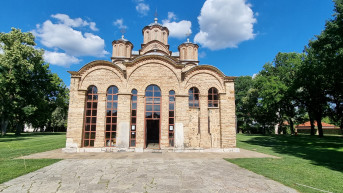
The issue of the legal status of the Serbian Orthodox Church (SOC) cannot be resolved between the authorities in Pristina and the Church itself for many reasons, and that is why we believe the best way to address this issue is either within the framework of the Belgrade–Pristina dialogue, since the legal status of the SOC has been placed on the dialogue agenda, or through some form of international guarantees for the Church's legal position, Aleksandar Radovanovic, legal advisor to the Eparchy of Raska and Prizren, told Kosovo Online.
These guarantees, Radovanovic added, in either case, must be strong and include mechanisms for protection in case of non-compliance.
"We have seen over the past two and a half decades that what depends on the Kosovo institutions often isn't implemented on the ground. Moreover, we need guarantees to ensure that provisions concerning our legal status cannot be changed, just like what happened with the Ahtisaari Plan. Based on that plan, Pristina received numerous benefits, but later simply removed the most important guarantees for the SOC from its legal system," Radovanovic pointed out.
The Eparchy of Raska and Prizren, let us recall, called on July 3 for the legal status of the Serbian Orthodox Church in Kosovo to be urgently addressed. In a statement at the time, it was said that it is clear to everyone that the Church’s survival in the region depends on resolving this issue and obtaining special and internationally guaranteed rights.
When asked how realistic it is for Pristina to agree to deal with the SOC’s status either within or outside the dialogue, Radovanovic said it is not possible to speculate on Pristina’s willingness.
"But we believe that with sufficient will from the international community, this issue must be brought to the table. This is about preserving a cultural, historical, and spiritual heritage that is centuries old, and we believe that civilized countries within the international community must have the sensitivity to protect and enhance it. And no one can protect and improve our cultural heritage better than we can, those who have cared for it for centuries. As for Pristina itself, even if some may not see it that way, resolving the SOC’s legal status would also benefit Albanians, in terms of building a better, more open, and more tolerant society. Such a society is better for the lives of all citizens," the legal advisor of the Eparchy of Raska and Prizren stated.
Aside from the SOC’s property, which is certainly important, Radovanovic emphasized that the identity of the holy sites must also be protected.
"We need protection for our history, protection from any kind of expropriation, full rights to manage the reconstruction, restoration, and maintenance of our holy sites, the ability to manage the representation of our cultural monuments ourselves, as well as a general framework that would allow us to live and progress normally. It's important to note that we had this until 2012, as part of international guarantees included in the Kosovo constitution, but most of those rights were taken away through reforms at the time and have never been restored, despite assurances that nothing in the SOC’s rights would change. As I have already mentioned, such an approach would benefit everyone, regardless of nationality, religion, or any other identity one might have," Radovanovic said.
On the other hand, he noted, if the current situation continues, where the SOC is increasingly prevented from caring for its holy sites and its property, it is damaging both for the Church and for the authorities in Pristina.
"We deeply believe that it benefits no one to be presented as a system that discriminates against an ancient religious community or as a system that seeks to take over someone else's cultural monuments and alter their history and identity. If the authorities in Pristina come to understand this, we believe it will be easy to find a way for coexistence, as was the case for several centuries in the past," the legal advisor of the Eparchy of Raska and Prizren concluded.

0 comments