
Rakocevic: The images of burning houses of returnees are apocalyptic, but they cannot destroy the will of the Serbs to survive
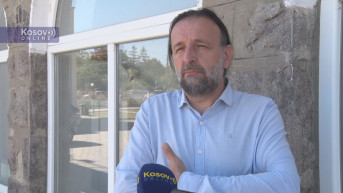
The images of the burning of the house of the returning Janackovic family from Novo Selo Madjunsko were apocalyptic, writer and journalist Zivojin Rakocevic said for Kosovo Online, claiming that, unfortunately, there were worse ones, as well as that thousands of Serbs no longer dared to go to their properties.
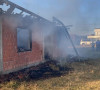
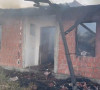
The house of the Janackovic family was set on fire for the second time yesterday in Novo Selo Madjunsko, near Vucitrn, and previously it was completely robbed.
Rakocevic points out that he knows that village, and those people, and that they were strong families, great hosts, and good farmers.
"Those people were really an example to everyone and the system usually deals with such people, and that public opinion that that host can't come back and must not come back, because he will find a new home because he will create something for himself, he will have a strong family, because it will survive, that opinion is decisive and it is dominant with the neighbors, with the public, with the institutions, and they all tell him 'you can't go back,'" Rakocevic pointed out.
The pictures from Novo Selo were apocalyptic, Rakocevic said, warning that there were worse ones.
"You should go to a cemetery, and see what a cemetery looks like, which is very often a dump, which is very often a cattle shed and there are also stray dogs. It is so painful, not to mention how it is destroyed and what that valley that goes towards Samodrexha looks like and what about our cemeteries, and what about our houses. Novo Selo Madjunsko is only the beginning of it, but that smoke, that fire, the way that house is burning and how those people are looking at it, and how someone can come and watch someone burn down their house for the second, third, or fourth time, all of that has profound consequences," Rakocevic said.
In a statement for Kosovo Online, Radomir Janackovic said that his house had been set on fire immediately after they had refused to sell it to the Albanians.
"You must know that those hosts who are there, who are looking at their property and who will not sell it, are that force of Kosovo Serbs from whom no one can take this land and which is directly incorporated, both in neighboring Samodrexha, and in the Temple in Priluzje, and in everything that seems to be destroyed. It is not destroyed and you cannot destroy that tolerance, that will, and that need for freedom and that need to be on your own land," Rakocevic said.
He reminds that in the last five years, a system has developed in Kosovo that anyone who wants to recover their property, house, or apartment, is directly threatened, and that their property will either be burned, or usurped, or they will be reported as having committed a war crime.
"Thousands of Serbs no longer dare to go out to their properties, to do something on them, to have some kind of plans with that property, because someone will see them there, point the finger and say – ‘you did this and that, you are guilty, you slapped me, mistreated me, you are a soldier, a policeman, an official of Milosevic... You are a Serb and you cannot go there’. And I know many people who, from here to Urosevac or Strpce, are no longer interested in their property at all because they are not even allowed to mention that something could be done with that property in any sense," Rakocevic concluded.

comments