
Rakocevic: March 17th - a rewarded crime preceded by an ominous silence
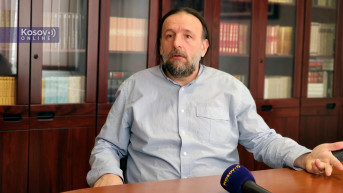
Journalist and writer Zivojin Rakocevic recalls that in the days leading up to March 17, 2004, an unusual silence fell over Kosovo, after which a mob composed of thousands of Albanians began to demolish and burn everything in its path. Although there was a belief that the idea of Kosovo's independence would disappear after the pogrom, as he notes, the international community rewarded this act of civilization crime, and the Serbs thereafter were left without cities, without the possibility of return, marked by a scar and the symbol "the worst happened to you, but you survived."
Zivojin Rakocevic, then the chief editor of Radio Kim, recalling March 17, 2004, and the events in Caglavica near Pristina, emphasizes that several days before the pogrom, an unusual silence enveloped Kosovo, which, as he notes, from the Serbian perspective, signaled that something was brewing.
"Such an ominous silence engulfed Kosovo several days before March 17, which means that something was brewing from within, that these para-structures were deciding our lives, our civilization, and everything we have in Kosovo and Metohija. Then came the explosion and the voice from Kosovska Mitrovica, of Valentina Cukic, who said, 'Chaos has begun here, I don't know what's happening, there's shooting, what's happening with you.' I called Professor Mitra Reljic, who was on the university campus in Pristina, and asked, 'Do you see anything moving towards us from the window by the windmill?' She said the crowd was heading to Caglavica, and at that moment, we were hit by a storm that bombarded Caglavica for a full 12 hours and bombarded our lives," Rakocevic recounts.
On that day, Jovica Ivic was wounded in Caglavica.
"We first saw the bloody stains from his injury on the street beside the road. High school students, and his friends from Gracanica, came. There was a protest, there was that, let's say, tension to which we were already accustomed. We lived with the dead, with the wounded, with news of someone being abducted, someone being beaten; we didn't even register the stonings. As a people, as a community, as a media community, we simply registered all of it, but we were brought to a point where we only reacted to the dead and wounded," Rakocevic emphasized.
He also recalls conversations with fellow journalists who, as he notes, amidst the fire and disaster, tried to help and simultaneously report on the situation.
"I will never forget the conversation with my colleague Zoran Babovic from Kosovo Polje, a journalist from RTV Most, RTV Pristina, and RTS. When he called in, we realized that everything was falling apart, that everything was burning, that there was nothing left. Our most important questions were where we were, where we stood, where we were fighting, where we offered any resistance, how far the fire had come, and how we would survive. Perhaps the most important news was the one he wrote, 'The Serbs have stopped at Ugljare, to defend themselves there, the situation is such that the wave has been stopped.' Somewhere in the ether, among people, in conversation, that sentence about the wave being stopped, that evil being halted, somehow calmed us all down. And that plea, which at least gives us a moment of hope, somehow soothed us," he emphasizes.
There were, as he says, a million details and faces changing, fire devouring homes, and brave people who, under pressure, did not want to leave their homes.
"I remember the elderly woman from the Markovic family whom we escorted out of the house because she was completely paralyzed by the blows of the demonstrators who had broken into her home and smashed everything in front of her eyes. She sat completely frozen at the table with a bag of belongings next to her, and her world was almost over, her gaze was almost gone, and her eyes were almost done. All that was left for us was to take her out and watch her home disappear in the next wave. As far as I can understand, now in place of her home stands that multimillion 'Bau market', some huge shopping center, but every time I pass by that center, I see her face in the midst of it all, and I see how at that moment we were trying to save lives, people, to maintain the situation, to somehow stop dozens and dozens of attacks, but that fear, it arises when you take a breath when you stop, when you see what happened, when someone there, next to you, is hit by a sniper," Rakocevic recalls.
The situation in Caglavica did not calm down the next day, on March 18th, when, as Rakocevic claims, someone decided to open the road for traffic through the area.
"The Serbs did not want that road to be open for traffic that day because there would certainly be casualties, but someone was eager to show that the Albanians were the victims and that it was all some conflict between two sides. March 17th and the conflict in Caglavica were not a clash between two sides at all; it was a general attack on civilization, a general attack on our schools, libraries, churches, frescoes, monasteries, icons, life, on animals. And then you realize that you have to survive and that wave is about to engulf you, and the only solution is to rationally explain to yourself at that moment what your next move is and what you are doing in the next second, who you are trying to save, who you trust, what the next step is, and there is no panic. You are compressed from within, all fears have left you, and you are left with just your bare life against thousands of people who have come to destroy everything you have," he emphasizes.
The Serbs, he claims, believed that March 17th was the absolute end of the idea of Kosovo's independence and that the democratic, modern world witnessing it with its own eyes would say, "You cannot entrust such a level of freedom, such a level of governance to such a system. You cannot do that, it's not natural, it's not normal." However, as he emphasizes, the opposite happened.
"Our lady of Ljevis burns, animals are being hanged, pigs in Obilic, in Caglavica at one point, you see that the mob slaughtered the entire chicken coop, they killed all the livestock. They burned everything they came across, and then you say, 'The international community must see this, the world must see this,' and they will say, 'No, you have to share this life with others, you obviously cannot at this moment create a functional society, and that functional society must share responsibility with someone else because you are not capable of creating a system that will enjoy some ideal global independence.' However, the opposite happened; the international community rewarded the violence of March 17th, rewarded that civilization crime that can be compared to the worst crimes in history, but we must always remember that this crime happened in peacetime, in the presence of 30,000 soldiers, in the presence of 5-6,000 UNMIK officials, secret services, Kosovo Police, systems, institutions, nothing existed. Everything disappeared all at once, and the international community overlooked all of it," he states.
"After March 17th, the Serbs were expelled from almost all cities in Kosovo, and there was no return."
"We even had people living in extremely impossible conditions in Stimlje; we had people who hadn't left their apartments in Pristina for two years, but they were in Pristina. We had some kind of community integrated with the Theological Seminary in Prizren; we had those people who went out into the streets in the city, but that force on March 17th was precisely directed, perfectly organized, and it was finding people in their apartments, throwing them out, beating them, some were even killed—nine people perished, as we know. We no longer know who later died in hospitals; the scale of that force of beatings couldn't be systematized at all," Rakocevic said.
He adds that Serbs, even 20 years after the pogrom, are discovering what happened to them, and they still suffer the consequences of the force of March 17th today.
"For 20 years, we've known that thousands of icons ended up on the black market. Probably, in the next 20 or 30 years, we'll continue to find relics stolen from our churches and monasteries on that same market. We'll never know how many thousands of graves were smashed that day. We know about Devic, we know about Belo Polje, we know about the cemetery in Pristina. Those beautiful 19th-century crosses above the church in Pristina were broken; those slabs covering the bones of the deceased were smashed. We continue to suffer the consequences of that force today," he said.
March 17th and 18th have engraved themselves into the consciousness of the Serbs in Kosovo, Rakolevic claims, and these dates have become a symbol that says, 'the worst happened to you, but you survived.'


comments