
Rakocevic: Serbian monuments in Kosovo can only be protected by the people they belong to, who live with them organically

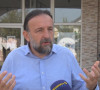
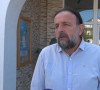
"Nobody can protect the Serbian cultural heritage in Kosovo except the ones to whom it belongs," the writer and journalist Zivojin Rakocevic assessed for Kosovo Online, emphasizing that every voice in the international community was absolutely invaluable, and it was urgent and necessary to "preserve, defend, witness, and maintain our heritage" in all world institutions at any given moment.
Rakocevic highlights that the Serbian heritage in Kosovo has been protected by the Serbian Orthodox Church from the moment "the first stone was hewn". This protection spans centuries and involves care, work, love, prayer, art, culture, and spirit.
"Nobody can protect the Serbian cultural heritage in Kosovo and Metohija except for those to whom it belongs. Of course, scientific institutions, cultural institutions, the state of Serbia, and the institutes that have been responsible for it over the years should continue their work. There is no question of anyone taking over the Serbian cultural and spiritual heritage in Kosovo and Metohija because they lack the capacity to do so," Rakocevic stated.
Rakocevic, however, reminds us that in the eyes of the world, places like Palmyra, the National Museum in Iraq, and the Bamiyan statues in Afghanistan have disappeared.
"It is a moment of evil where everything that forms your spiritual, cultural, national, and state identity can disappear, and this entire mosaic can simply crumble. That's why it's very important to have an active, living, precise, clear, scientifically and methodologically grounded voice about what we inherit in Kosovo and Metohija in all world institutions. In addition to explaining to ourselves what Kosovo and Metohija is and what our heritage in Kosovo and Metohija is, it is urgently necessary to preserve, defend, witness, and maintain our heritage in Kosovo and Metohija at all times in all world institutions where we can do so," Rakocevic stated.
He emphasizes that it must be clear that Kosovo has three dominant cultural heritages – Serbian, Albanian, and Ottoman. It is entirely clear that the new administration in Pristina, thanks to the "idea of creating a state nation", wants to create a Kosovo cultural heritage.
"It doesn't exist. It's not there. Everything that exists and, most importantly, belongs to these groups cannot become Kosovan. The essence is the following: making a falsely unique Kosovo cultural heritage for our churches and monasteries to become the property of Kosovo institutions is inconceivable, it is a complete catastrophe because there is nothing benevolent toward them. Even this recent statement (Hajrullah Ceku's) about the need to protect Banjska and that it was illegally renovated is absolutely senseless. But deep down, in their struggle against the Serbs, the Serbian Orthodox Church, the Serbian state, and Serbian culture in Kosovo and Metohija, these important sites, the most crucial ones, visible both in UNESCO and many hundreds across the field in Kosovo and Metohija, are seen as a key danger. They are the key markers and witnesses that Pristina finds obstructive to what they believe is their full statehood and consolidation," Rakocevic said.
He reminds that similar things have happened in Montenegro and that the same laws were being prepared for Kosovo because it's part of a broader action to “change ownership“.
"We can negotiate about anything, but we cannot discuss the deepest intimacy of our culture, our people, our statehood, and our spirituality. Discussing to whom this spiritual intimacy belongs or should belong is absolutely unacceptable, and it is unequivocal that we should not invest anything in such discussions," Rakocevic said.
Rakocevic emphasizes that, because of all this, every voice in the international community is absolutely precious.
"We must explain, talk, and know that the Decani Monastery is the most beautiful Balkan church, that Gracanica was one of the most important European cultural monuments of its time at the moment of its construction, and there is no discussion about it. Only those who own them can protect them, only those who have invested centuries in them can preserve them, and their people who live organically with them, who are absolutely integrated into every stone of Gracanica and Decani, and they exist here because of Gracanica, Decani, Ljevis, Patriarchate of Peja; otherwise, there would be no people as it doesn't exist in other regions. So, this is an organic unity that we must witness at all times," Rakocevic said.
However, Rakocevic warned that processes were dynamically evolving which moved us away from this.
"Constructions are being made according to which these are some separate entities that we will visit as tourists, that it's a potential for tourism. Yes, it is, but that is only a minor secondary matter in the history of our relationships, ownership, and our future concerning these monuments," Rakocevic concluded.

comments