
Rakocevic: Totalitarianism in Kosovo, a crackdown on the Serbian language has begun
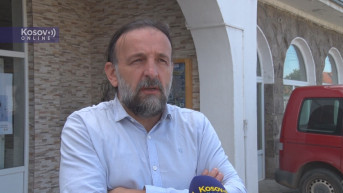
In Kosovo, it has become entirely natural that if you utter "Kosovo and Metohija", you will no longer have access to institutions, and you will be removed from public life," journalist and writer Zivojin Rakocevic said following the decision of the Independent Media Commission (IMC) to ban the broadcasting of Arena channel due to the transmission of video messages from Serbia in which the "events in Banjska" were praised.
A few days before the ban on Arena's broadcast, the Board of Directors of Radio-Television of Kosovo suspended Zeljko Tvrdisic from the position of director of RTK2, a channel in the Serbian language, also due to reporting on events in Banjska.
Rakocevic emphasizes that in Kosovo, a "totalitarian society is beginning to crack down on language".
"Here, it has become entirely natural that if you say 'Kosovo and Metohija,' you no longer have access to institutions or anything that matters to your life. In other words, you are removed from public life. You eliminate sports channels where something is broadcast in any format from your audience, you prohibit it from your citizens. In the worst ideologies, this was done, but there was still some possibility of preserving oneself, of saving oneself," Rakocevic said for Kosovo Online.
He points out that the situation is such that when language, words, and symbols start to become a trigger for the other side and a mechanism to eliminate you from life, you realize that you have reached the highest level of discrimination.
"As far as the profession and professionalism are concerned, we have long crossed all boundaries of decency, normality, and European standards. We have written perfect laws, and the Independent Media Commission and all the others are regulated according to the highest European standards, but there is something else, and that something else is the 'lowest possible implementation of perfect European laws'. And then you can delete, exclude, you can do whatever you want. You can say 'I don't like this' for anything that seems suspicious or has certain allusions to something, and at that moment, there is no channel, no news, report, or news program; there is only a nationalistic ethnic feeling that the words of a certain language and messages from that language are your enemies, and then you consider that you have completed your task," Rakocevic said.
He points out that Kosovo is the only European space without newspapers, including newspapers in the Serbian language.
"After the pandemic, the Albanians stopped printing their newspapers. I don't know if something has started now, but as far as we are concerned, as far as the Serbs are concerned, and when it comes to newspapers in the Serbian language, it's simply over with these sanctions. Some copies of certain newspapers are smuggled, and occasionally, something comes and you read it, but these are natural human habits that are definitely denied to you," Rakocevic said.
Rakocevic claims that this problem has been raised with all international institutions, but there is still no effect.
"Who cares about that? We are moving towards a bright future, and in a bright future, there will be no printed media. Everyone will tell you, 'well, everything is on the phone now, and you can read everything there'. However, it's not just printed media. When it comes to us, even books don't arrive. The postman in Pristina, especially if he sees a book in Cyrillic, will make sure it ends up in the trash. That's why I tell everyone who sends books to Kosovo and Metohija not to do it because they won't arrive," Rakocevic emphasizes.
The goal of all this, Rakocevic points out, is entirely clear.
"It's that realm of absurdity where language, printed media, journalism, and professionalism have become triggers and means for us to renounce and adapt to someone else's freedom, someone else's language, and someone else's symbols," Rakocevic concludes.



0 comments