
Rakovic: Kosovo has started the physical process of appropriating Serbian sacred sites, and that will last
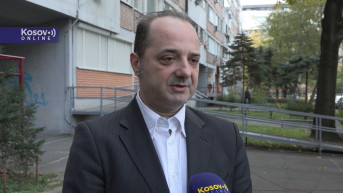
Historian Aleksandar Rakovic assesses for Kosovo Online that Kosovo authorities have "moved from words to actions" and have now started with the physical appropriation of Serbian cultural and spiritual heritage.
Rakovic says that over the last 30 years, Albanians have done everything to prepare, both in a "historiographical" sense and for the physical appropriation of Serbian sacred sites.
"The process of appropriation has now begun, and this procedure will last. They will start by appropriating smaller churches, and eventually, they will move on to the most important Serbian sacred sites," Rakovic emphasizes.
He says that the preparation for the physical seizure of the Serbian Orthodox Church's property began with the rewriting of history through various pseudoscientific works and historical textbooks.
"They claim that Albanians built the Visoki Decani, Gracanica, and the Church of Our Lady of Ljevis are Catholic churches... What they wrote about is what they are now starting to conquer," Rakovic says, adding that this scenario has already been seen in Montenegro but did not succeed there because Serbs make up the majority of the population.
"Here, they don't have that problem because they have already expelled the Serbs," Rakovic explains.
According to him, the Roman Catholic Church plays a significant role in all of this.
"The goal is to 'prove' that everything in the territory of Kosovo and Metohija is Albanian heritage. Hence, it is logical that they attribute the larger part of that heritage to the Roman Catholic Church, which has already expressed claims to Serbian sacred sites in Kosovo. They definitely believe that now is the right moment to begin implementing the idea of religious interventionism," Rakovic emphasizes.
He reminds that the territory of Kosovo is not the only one in the region with a large number of Serbian Orthodox churches and monasteries.
However, he points out that nowhere does a state seize religious buildings.
"In Hungary, the Serbian Orthodox Church has a large number of sacred sites, but despite the small number of Serbs there, the authorities do not seize church property. A similar situation exists in Croatia. They managed to expel the Serbs, but their sacred sites remained, and no one touches them," Rakovic says, adding that it is a big question of how it would be possible to protect the property of the Serbian Orthodox Church in Kosovo.
"We have an enemy who is unscrupulous, aggressive, and ready to apply any form of force. I don't know how to answer the question of how to organize the defense of our sacred sites," Rakovic acknowledges.

0 comments