
Eparchy of Raska and Prizren: The Ministry of Culture in Pristina is restoring the church in the village of Gornje Vinarce without the approval of the SOC
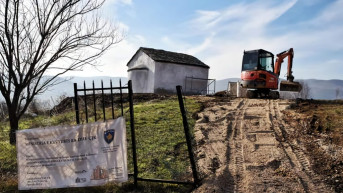
The Eparchy of Raska and Prizren stated that the Ministry of Culture of Kosovo, without the approval of the Serbian Orthodox Church, had initiated the "restoration" of the Orthodox church in the village of Gornje Vinarce in North Mitrovica, declaring it "Catholic". All this is done with the intention of appropriating the heritage of the SOC.
"In its campaign to appropriate the material and spiritual heritage of the Serbian Orthodox Church, the Ministry of Culture in Pristina has self-initiated the 'restoration' of the Orthodox church in the village of Gornje Vinarce, seven kilometers from Mitrovica, on the northern side of the Ibar River", it is stated on the Facebook page of the City of Mitrovica. In addition to not contacting the Serbian Orthodox Church regarding the restoration of this facility, the Ministry in Pristina has gone a step further and declared this church 'Catholic', with an apparent intention to appropriate the heritage of the Serbian Orthodox Church", the Eparchy of Raska and Prizren stated.
They added that the church, under the name "Catholic Church in Gornje Vinarce", had been included in the list of "protected monuments of the Ministry of Culture".
"The online text, citing sources from the ministry, mentions that the roof of stone slabs has been repaired, a sidewalk has been built, and the church has been plastered inside, and the photos show temporary doors have been installed. A sign from the Ministry of Culture of Kosovo mentioning the name 'Catholic Church in Vinarce' and two companies performing the work, which is claimed to be nearing completion, is placed in front of the church", the eparchy added.
They emphasized that the Orthodox church in Gornje Vinarce had existed since the 14th century when the village had been purely Serbian, with 15 Serbian households, as recorded in the Turkish census.
"After the expulsion of the Serbian population, the church in Gornje Vinarce was desecrated, set on fire, graffiti was written, and the entrance doors were broken. Unfortunately, this is the state of many of our churches damaged or destroyed by Albanian extremists during the war in 1998-1999. This is another testimony that the church, considered Serbian by the local Albanian population, was desecrated and set on fire; otherwise, it would not have been the case, as is the case with many other churches and monasteries attacked, now declared 'Albanian churches' in the media or through the Ministry in Pristina", the eparchy emphasized.
The Eparchy of Raska and Prizren has expressed strong protest against the process that apparently represents the intention of Kosovo authorities to "restore" churches that Albanian extremists destroyed or damaged. They are now doing so without any consultation with the Church to which these facilities belong, changing their identity despite existing historical evidence.
"The Eparchy of Raska and Prizren will inform international representatives and organizations dealing with religious rights and the protection of cultural heritage about this latest incident. Kosovar institutions do not respond to the complaints of the SOC and do not fulfill their legal obligations towards our Church, even in the case of judgments by the highest courts. Our Eparchy does not oppose the restoration of its sanctuaries, many of which still lie in ruins, destroyed by Albanian extremists in 1998-1999, but strongly opposes the use of alleged restoration to take over Serbian cultural heritage and change the identity for the purpose of historical revisionism. Therefore, the restoration of the destroyed Serbian churches after the March Pogrom was conducted under the supervision of the Council of Europe, which guaranteed the protection of the rights of the SOC", they added.
They emphasized that the goal of Kosovo institutions was to independently renovate churches that had been destroyed by changing their identity.
"If the first part of the strategy of Albanization of this area was the expulsion of the Serbian population after 1999 when around 200,000 Serbs and non-Albanians were forced to leave these areas, and the systematic destruction of Serbian Orthodox churches and cemeteries to erase all traces of our historical existence, now, contrary to all norms and Kosovo laws, the goal of Albanian institutions in Kosovo is to independently renovate these churches that were destroyed, changing their identity", the eparchy stated.
They highlighted that such behavior by Kosovo institutions was the main reason for the impossibility of normal cooperation between the SOC and institutions openly working to deny Serbian history, identity, and heritage.
"All in order to create an ethnically pure Albanian territory. Therefore, on this occasion, we call on international representatives to react to these incidents and take measures to stop future violence against our churches. Changing the identity of churches directly provokes ethnic and religious intolerance, is punishable under the laws of Kosovo, incites ethnic and religious tensions, and prevents the calming of a situation that has worsened multiple times, especially in recent years", the Eparchy of Raska and Prizren concluded.
0 comments