
Rakovic: VMRO-DPMNE's victory will contribute to warmer relations with Serbia, but without changes in policy towards Kosovo
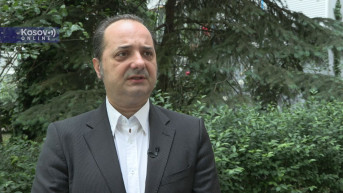
In the presidential as well as parliamentary elections in North Macedonia, VMRO-DPMNE (Internal Macedonian Revolutionary Organization – Democratic Party for Macedonian National Unity) emerged victorious, and historian Aleksandar Rakovic says this will lead to warmer relations with Serbia but won't bring changes in North Macedonia's policy towards Kosovo.
"Things will be somewhat easier for Serbia, but the stance towards Kosovo won't change," Rakovic stated for Kosovo Online.
He highlights the importance of Ivan Stojilkovic's entry into power, noting his good relations with Serbian President Aleksandar Vucic and the President of the victorious VMRO-DPMNE party, Hristijan Mickoski.
"They have a clear communication channel with the Serbian President, and in that sense, it seems there will be warmer relations than before," he notes.
He points out that Mickoski, during a press conference last night, when asked by an Albanian journalist if there would be changes in the relationship with Kosovo's independence, reminded that it had been precisely during VMRO-DPMNE's time that Macedonia had recognized Kosovo's independence.
However, as Rakovic recalls, Nikola Gruevski left the session at that time, leaving the Albanian Deputy Prime Minister to lead that point.
"I hope there will be warmer relations and some changes that will slightly favor Serbia, but very little. There won't be any major changes; perhaps there will be some minor concessions that the Social Democratic Union of Macedonia wouldn't make. Maybe now there will be room for something like that, but there won't be a change in relation to Kosovo," he noted.
He says that citizens were dissatisfied with the SDSM (Social Democratic Union of Macedonia) and DUI (Democratic Union for Integration) coalition, and that is why that coalition performed as it did. However, he says, such a defeat was beyond expectations, even though it was certain that VMRO-DPMNE would win.
In this situation, Rakovic points out, VMRO-DPMNE only needs three more MPs to form a government; they are also capable of forming a mono-ethnic government with a small party from Kumanovo, which has five or six MPs.
However, as he notes, Mickoski will definitely involve the other option, the Albanian coalition VLEN, to show that he has the coalition capacity to form a multi-ethnic government and to demonstrate that he doesn't intend to seek revenge like when the SDSM government was formed, so even though VMRO won in the Macedonian structure, it wasn't part of the government.
"Mickoski will extend a hand to all those whom he thinks should be given a hand, and he announced that there would be actions against those from DUI, who are essentially KLA, involved in criminal activities. Mickoski, as a Macedonian, won't initiate these actions himself, but I assume he will leave that to VLEN, the other Albanian coalition," he said.
When asked how much Albin Kurti's support during the campaign influenced these election results, Rakovic says that Albin Kurti isn't a factor.
"If he thinks he is, those are his illusions, and besides, it was clear here what the election results would be, not that they would be this drastic, but the results were clear even before the election," he said.
As for Kurti, he adds, as part of that Greater Albanian structure, he will have his partners among Albanians in North Macedonia, but in this situation, VMRO-DPMNE will have the most leverage, more than ever. Moreover, he adds, it should be noted that this is the largest victory of a party since the introduction of the multi-party system in Macedonia.
"No one has ever won like this, and a party that was in opposition won, so Mickoski and his party will manage the situation in Macedonia," Rakovic concludes.


0 comments